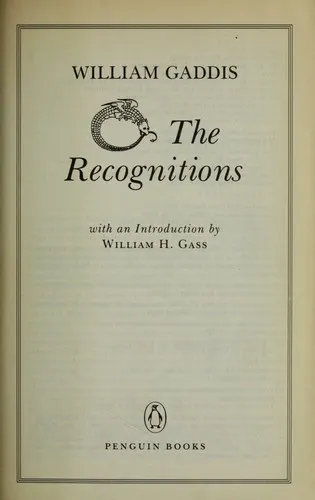
Books like The Recognitions
Camilla’s harmless masquerade has scarcely begun before the mask threatens to become the face. These novels likewise treat counterfeit, performance, and corrupted language not as themes alone, but as the very substance of their worlds.
If you liked The Recognitions, you’ll love these
Not lookalikes — kindred books. Each one shares something essential with The Recognitions, and we tell you exactly what.
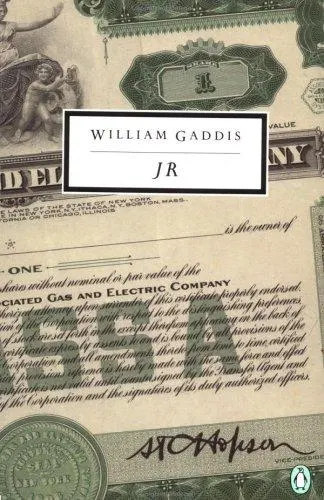
Gaddis’s second novel is the indispensable next step. An eleven-year-old schoolboy discovers that capitalism can be played almost entirely through telephone calls, paperwork, and borrowed phrases; around him, adults struggle to make art while money reproduces itself with grotesque ease.
Nearly all dialogue, with few signposts, J R turns overheard speech into a vast comic score. Its verbal collisions do for finance what The Recognitions does for art and religion: expose a culture in which nobody quite understands the language governing their life. Yet it is warmer and much funnier than its reputation for difficulty suggests. Winner of the National Book Award, it confirmed that Gaddis’s apparent chaos was meticulous composition. Missing it means missing his most exhilarating experiment in making an entire society talk at once.
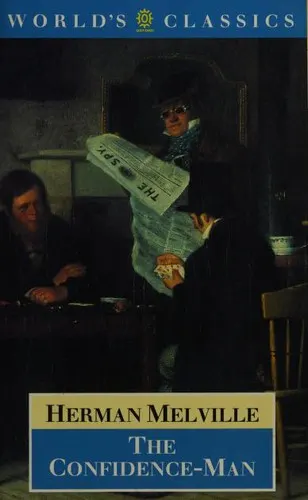
On April Fools’ Day, aboard a Mississippi steamboat pointedly named the Fidèle, strangers test one another’s charity, credulity, and appetite for belief. Identities shift; conversations become traps; confidence may mean trust, fraud, or both.
This is the nineteenth-century ancestor The Recognitions seems to demand: a novel in which authenticity cannot be separated from performance, and metaphysical inquiry arrives disguised as salesmanship. Melville keeps changing rhetorical styles—sermon, philosophical dialogue, commercial pitch, vaudeville routine—until the reader must decide whether skepticism itself is another con. Long neglected after its 1857 publication, it is now recognized as one of Melville’s strangest and most audacious books. Few novels so ruthlessly implicate the reader in the desire to be deceived.
A historian named William Kohler sits down to write the introduction to his major study of Nazi Germany and instead begins excavating his own rancorous life. The result is not a confession seeking absolution but a monumental demonstration of how intelligence, grievance, and beautiful language can collaborate in bad faith.
Readers who admired Wyatt’s spiritual ordeal will recognize Gass’s refusal to separate aesthetics from moral danger. The prose is sensuous, punning, typographically inventive, and often savagely funny; songs, lists, emblems, lectures, and domestic debris accumulate into an architecture as deliberate as Gaddis’s. Gass spent twenty-six years on the novel, which won the American Book Award and remains a fiercely argued-over landmark of postwar fiction. It is repellent, magnificent, and unforgettable—the kind of book whose sentences keep sounding in the mind long after one has escaped its narrator.