Author
Books like Sarah Waters
14 books we recommend to Sarah Waters readers, drawn from Fingersmith, Tipping the Velvet, The Night Watch, The Little Stranger, Affinity and The Paying Guests — each with the reason why.
If you loved Fingersmith
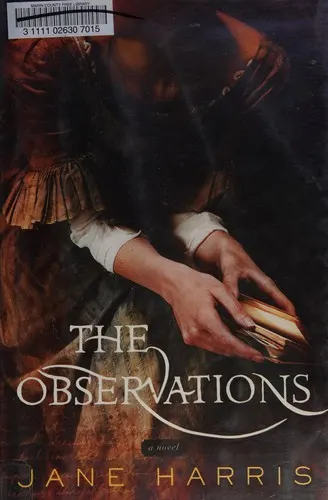
Bessy Buckley, a sharp-tongued young woman with a concealed past, becomes a maid in an isolated Scottish house, where her mercurial mistress requires her to keep a journal. That apparently simple arrangement soon feels charged with surveillance, dependence, and dangerous fascination.
Harris gives Bessy a voice as irresistible as Susan Trinder’s: funny, defensive, observant, and not always trustworthy. The novel understands how intimacy across class lines can become both refuge and instrument of control, while its secrets emerge with superbly managed suspense. Shortlisted for the Orange Prize, it deserves to be much more widely read; for anyone craving another audacious Victorian tale narrated from below stairs, it is nearly indispensable.
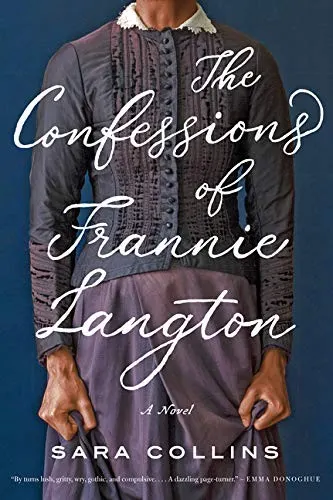
Frannie Langton sits in a London prison accused of murdering the couple she served, unable—or unwilling—to give a straightforward account of what happened. Her testimony reaches back to a Jamaican plantation and forward into a passionate, precarious relationship with her mistress.
Like Fingersmith, this is a gothic novel in which desire cannot be separated from money, ownership, race, and power. Collins makes confession itself suspenseful: Frannie is fiercely intelligent, compromised, wounded, and determined to claim authorship of a life others have defined for her. The queer love story has genuine heat and consequence, while the mystery keeps tightening around it. Winner of the Costa First Novel Award, it is both a gripping page-turner and a formidable reclamation of who gets to speak in historical fiction.
If the great pleasure of Fingersmith was realizing that the floor beneath the story had been engineered to move, read The Quincunx. Young John Huffam’s uncertain claim to an inheritance draws him into a vast network of documents, rival families, missing evidence, and people whose assistance always carries a price.
Palliser does not merely imitate the Victorian novel; he builds an enormous, sinister clockwork version of one. Every revelation rearranges earlier events, every legal technicality threatens ruin, and apparent coincidences begin to look like design. Yet the book’s labyrinth is grounded in hunger, fear, and the vulnerability of anyone without money or status. Its scale may be daunting, but that is part of its singular appeal: few novels offer such total immersion or reward suspicion so lavishly.
If you loved Tipping the Velvet
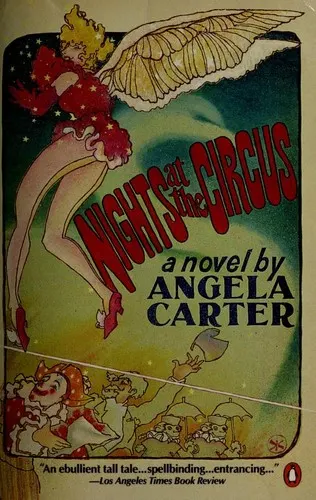
Sophie Fevvers—music-hall celebrity, aerialist, and possible winged woman—has Nan Astley’s genius for making spectacle into self-invention. As a skeptical journalist investigates her story, Carter creates a bawdy, extravagant world in which femininity is simultaneously costume, trap, confidence trick, and source of power.
Winner of the James Tait Black Memorial Prize, this is Carter at her most exuberant: sensuous, funny, politically sharp, and gloriously excessive. If you loved the theatrical swagger and gender play of Tipping the Velvet, Fevvers’s voice is something you need to hear.
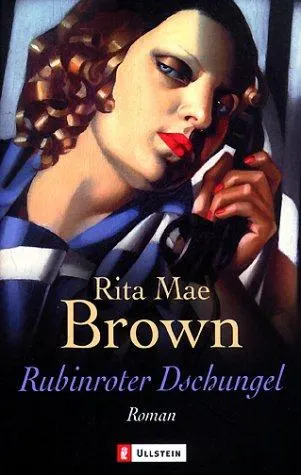
Molly Bolt grows up poor, clever, lesbian, and magnificently unwilling to apologize for any of it. Her first-person narration has the same propulsive insolence that makes Nan’s adventures so pleasurable: every class barrier, sexual convention, and pompous authority figure becomes something to outwit.
First published in 1973, Rubyfruit Jungle became a landmark of lesbian fiction because it refused tragedy, shame, and decorum. It is leaner and more contemporary than Waters, but its appetite for experience—and its devotion to a heroine determined to author herself—make it an essential companion.
If you loved The Night Watch

A wounded young naval officer recuperates in wartime Britain while trying to understand what kind of love—and what kind of man—he can honorably choose. Renault writes queer desire with the same charged restraint Waters gives it: an ordinary conversation can carry the danger and intensity of a declaration.
Published in 1953, the novel became an enduring queer classic not through melodrama but through its intelligence about secrecy, loyalty, and self-deception. Its characters are permitted difficult moral choices rather than easy victimhood. If The Night Watch moved you by showing how tenderness survives inside concealment, The Charioteer is essential.
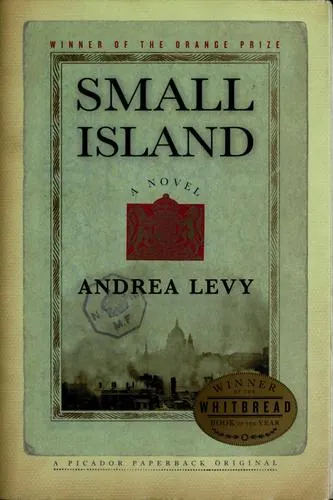
Levy’s four narrators arrive at a shared history from sharply different directions, each voice exposing the blind spots of the others. Like Waters, she makes history intimate: war and empire enter bedrooms, rented rooms, marriages, and humiliating everyday encounters. The structure continually forces you to reconsider people you thought you understood.
Winner of both the Orange Prize and the Whitbread Book of the Year, Small Island has the sweep of a national story without sacrificing the prickly individuality of its characters. It is funnier and more outwardly exuberant than The Night Watch, but equally alert to thwarted desire, compromised kindness, and the lives omitted from official memory.
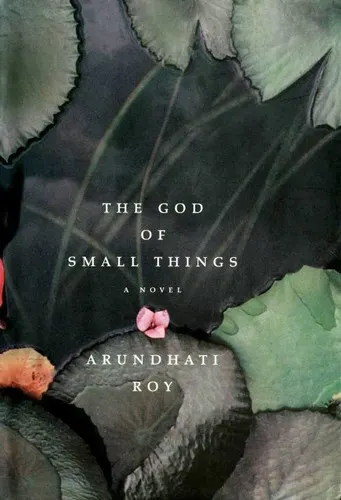
Roy announces a family catastrophe almost immediately, then circles through time to reveal how it acquired its terrible force. That temporal design offers the deepest kinship with The Night Watch: knowledge does not dissolve mystery but changes the emotional meaning of every small gesture.
The prose is more lush and playful than Waters’s, yet both novelists understand that private desire collides with social rules long before anyone openly names the conflict. Roy’s Booker-winning debut has inspired unusually fierce devotion because its language, images, and broken chronology remain alive in the mind for years. Few novels make rereading feel so much like discovering a second book concealed inside the first.
If you loved The Little Stranger
Jackson’s classic offers the same exquisitely sustained uncertainty: is Hill House genuinely malevolent, or does it merely amplify the loneliness and hunger for belonging that Eleanor brings inside? Every cold spot, misplaced sound and subtly wrong angle can be read psychologically or supernaturally.
Like Faraday, Eleanor is both painfully sympathetic and impossible to trust completely. Jackson’s intimate, slippery prose traps us inside that divided consciousness, where desire quietly alters perception. Few haunted-house novels have been as influential, and fewer still remain so unnerving: its terror comes not from apparitions but from the possibility that a house has discovered exactly what its guest most wants.
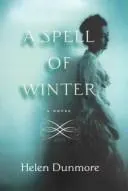
Helen Dunmore’s inaugural Orange Prize winner turns a decaying country estate into an emotional climate. Catherine and her brother Rob grow up amid family absences, fading privilege and secrets that the adults refuse to name; beyond the estate, the modern world and the First World War press steadily closer.
Readers who loved Waters’s mingling of class decline, thwarted desire and physical atmosphere will recognize the spell immediately. Dunmore makes cold rooms, overgrown grounds and household rituals feel charged with buried feeling. Yet the novel is more sensuous and feverish than The Little Stranger: its menace rises through intimacy rather than investigation. The result is the rare historical novel whose past feels not safely finished but dangerously alive beneath the skin.
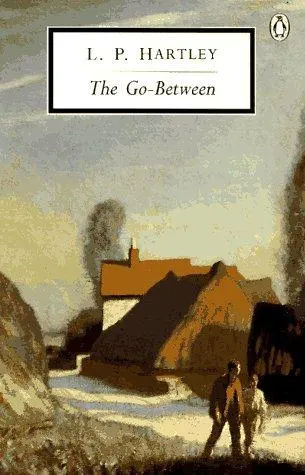
There may be no ghost in The Go-Between, but it understands the deeper horror of Hundreds Hall: an English country house is a machine for enforcing rank, secrecy and desire. Looking back on the summer of 1900, Leo Colston recalls arriving at a wealthy schoolfriend’s estate and being drawn into carrying messages between adults whose social codes he cannot decipher.
Hartley’s celebrated novel gives innocence a retrospective, unreliable voice; the older narrator knows more than the boy he describes, but not necessarily enough to master what happened. That double vision will grip anyone fascinated by Faraday’s evasions and class resentment. Elegant, suspenseful and emotionally devastating, it shows how a social order can haunt a life as completely as any poltergeist.
If you loved The Paying Guests

An inherited Dutch house, kept in immaculate order by the solitary Isabel, is disrupted when her brother’s girlfriend Eva comes to stay. Irritation sharpens into fascination, and every domestic object begins to feel charged with ownership, appetite, and buried history.
Like The Paying Guests, this is a painstakingly controlled slow burn in which queer desire overturns a woman’s understanding of both her home and herself. Van der Wouden makes repression intensely physical: you notice a spoon out of place, a noise through a wall, the unbearable presence of another body. Shortlisted for the 2024 Booker Prize and winner of the 2025 Women’s Prize for Fiction, this remarkable debut delivers the rare combination Waters achieves—sensual intimacy, historical reckoning, and suspense generated by what people cannot admit.
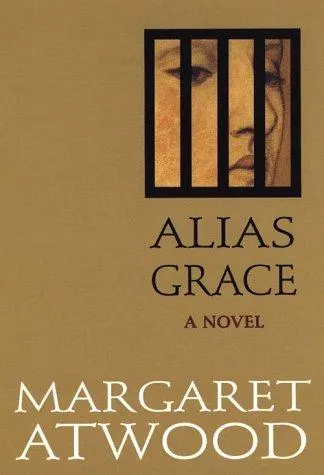
Grace Marks is a celebrated murderess—or perhaps a convenient story other people have told. Imprisoned for her alleged part in a notorious nineteenth-century killing, she recounts her life to a doctor who hopes to recover what she claims not to remember.
Atwood’s Giller Prize-winning, Booker-shortlisted novel shares Waters’s fascination with female testimony under hostile scrutiny. Servants know everything about a household yet possess almost no authority over the meaning of what they see; respectable men can interpret women’s desire, silence, and anger however it suits them. Grace’s voice is shrewd, funny, evasive, and mesmerizing, while the novel keeps shifting your sympathies without resorting to a cheap solution. If you loved being made morally complicit in The Paying Guests—wanting to believe while noticing reasons not to—Alias Grace is essential.

With her husband away at war, Lucia Holley is maintaining a calm suburban household when her daughter’s dangerous romance leaves a dead man on the family’s doorstep. Lucia’s instinct is not to investigate but to protect: she quietly begins doing things her former self would have considered unthinkable.
This neglected classic of domestic suspense understands exactly what The Paying Guests understands: keeping house can become a form of crisis management, and devotion can erode moral certainty one practical decision at a time. Holding writes with ruthless economy; errands, meals, money worries, and family evasions become as nerve-racking as any chase. Revered by crime writers and famously admired by Raymond Chandler, The Blank Wall is both a taut noir novel and an unusually moving portrait of a conventional woman discovering the frightening extent of her own resolve.