
Books like The Charioteer
Shirley Hazzard’s The Transit of Venus contains no comparable queer wartime romance, yet it may be the closest match in spirit: an exacting novel in which love is inseparable from character, judgment, and moral choice. Alongside it, Baldwin and O’Neill offer two very different visions of desire constrained by the identities men believe they must inhabit.
If you liked The Charioteer, you’ll love these
Not lookalikes — kindred books. Each one shares something essential with The Charioteer, and we tell you exactly what.

Like Renault, Hazzard writes as though every gesture reveals an ethical position. Following Australian sisters Caro and Grace into postwar England, she builds relationships out of withheld knowledge, unequal devotion, intellectual combat, and choices whose significance emerges gradually. Her lovers do not merely want one another; they interpret, test, and sometimes misjudge one another.
The kinship lies especially in Hazzard’s magnificent restraint. A clipped exchange can carry years of feeling, while the elegant narration notices cowardice and generosity with merciless precision. Winner of the National Book Critics Circle Award, the novel is famous among its devotees for becoming richer—and more devastating—on rereading. If Renault’s fusion of romantic intensity and moral intelligence is what lingers with you, this is indispensable.

Baldwin takes the conflict Renault gives Laurie—the struggle between honest desire and a socially acceptable idea of manhood—and strips it to its most painful essentials. In Paris, an American named David tries to preserve a conventional future while being drawn toward Giovanni. The central danger is not simply public hostility but David’s own fear of what love requires him to admit.
The prose is lucid, sensuous, and pitiless about self-deception. Baldwin understands, as Renault does, that repression injures everyone caught within its orbit, and that refusing to choose is itself a consequential choice. Giovanni’s Room became one of the foundational queer novels in English because it grants gay love full tragic and moral weight. Its brevity only intensifies its force.
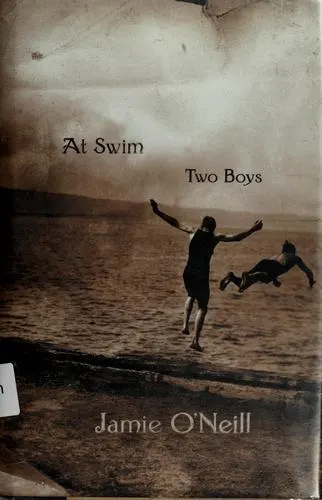
In 1915 Dublin, schoolboys Jim Mack and Doyler Doyle renew a friendship that grows charged with tenderness, rivalry, politics, and longing. O’Neill shares Renault’s fascination with young men trying to distinguish real courage from masculine performance. He also gives classical ideals, patriotic rhetoric, bodily desire, and private loyalty room to collide without reducing any of them to a slogan.
Where Renault is controlled, O’Neill is exuberant: his Hiberno-English prose sings, jokes, and surges through the characters’ thoughts. Yet beneath that abundance is the same seriousness about promises and the forms of love by which people become themselves. At Swim, Two Boys has earned lasting devotion because it feels at once intimate and epic—a queer love story capacious enough to challenge a nation’s myths.