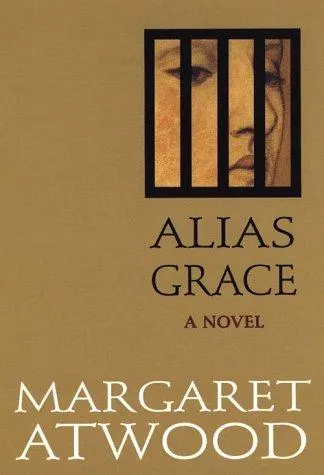
Books like Alias Grace
A testimony lies under glass while judges, doctors and readers bend over it, each certain they can identify the truth—and each leaving fingerprints behind.
If you liked Alias Grace, you’ll love these
Not lookalikes — kindred books. Each one shares something essential with Alias Grace, and we tell you exactly what.
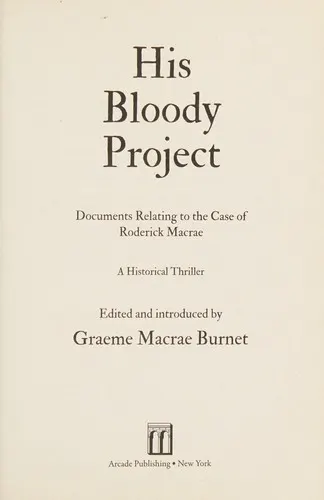
Like Alias Grace, this Booker-shortlisted novel makes historical evidence feel both solid and treacherous. A young Scottish crofter admits to a brutal crime; around his account accumulate witness statements, medical opinions and legal arguments. Every document claims authority, yet every one is shaped by class, prejudice or self-interest.
Burnet’s great feat is to turn the reader into another examiner of the accused. His austere, convincing voices expose how institutions manufacture a plausible person from incomplete facts. If you loved Atwood’s refusal to solve Grace into innocence, guilt or diagnosis, this equally gripping novel offers another case in which uncertainty is not a tease but the deepest truth available.
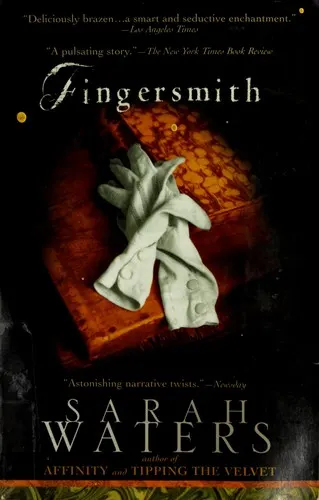
Read this for the exhilarating cunning of its storytelling. Waters begins with Sue Trinder, an orphan raised among thieves, who joins a scheme involving a secluded heiress. From there, the novel makes intimacy itself suspenseful: Who is performing? Who is watching? How much can one woman know about another when money and male power determine the available roles?
Its kinship with Alias Grace lies in the way female identities are imposed, exchanged and secretly remade—and in how domestic spaces and institutions become engines of control. But Fingersmith is more sensuous and headlong, a great feat of narrative misdirection whose revelations deepen rather than cheapen its characters. Its Booker and Orange shortlisting only partly explains the devotion it inspires: readers finish it wanting immediately to watch someone else fall under its spell.
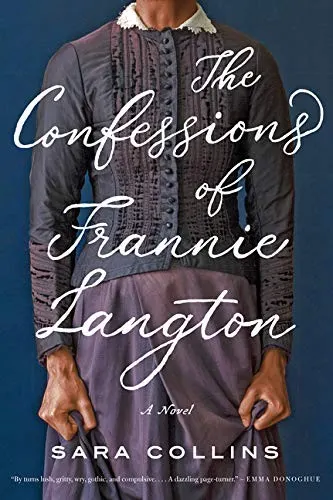
Frannie Langton stands accused of murdering the wealthy London couple she served, and she writes her account from prison. Yet Collins refuses the neat satisfactions of a conventional confession. Frannie has been enslaved, educated, displayed and interpreted by others; telling her story means wrestling language away from people who regard her as evidence rather than as a mind.
Where Atwood probes gender, class and Victorian theories of criminality, Collins adds the violent manufacture of racial knowledge. Frannie’s voice is intelligent, caustic, desirous and compromised—never reduced to exemplary victimhood. Winner of the Costa First Novel Award, the book earns its Gothic intensity through moral seriousness. Anyone haunted by the unknowable space between Grace Marks and the stories told about her should not miss Frannie’s fierce claim to that same space.