Author
Books like Philip K. Dick
9 books we recommend to Philip K. Dick readers, drawn from Do Androids Dream of Electric Sheep?, The Man in the High Castle and Ubik — each with the reason why.
If you loved Do Androids Dream of Electric Sheep?
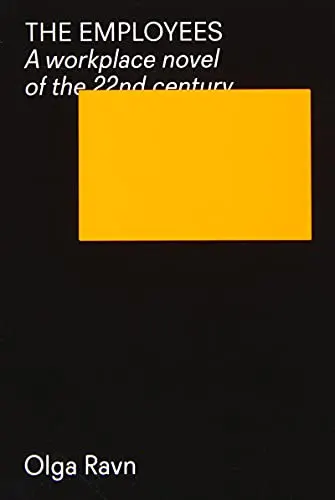
On a spacecraft staffed by humans and humanoids, workers give brief, anonymous statements about their duties—and about strange objects brought aboard. Those clinical testimonies gradually become lyrical, frightened, funny, and impossible to classify.
Shortlisted for the International Booker Prize, Ravn’s compact novel shares Dick’s fascination with people treated as products and products invested with spiritual significance. Its corporate bureaucracy keeps trying to distinguish authentic feeling from programmed response, even as the employees’ voices make that distinction collapse. Few novels so short leave such a haunting afterimage.
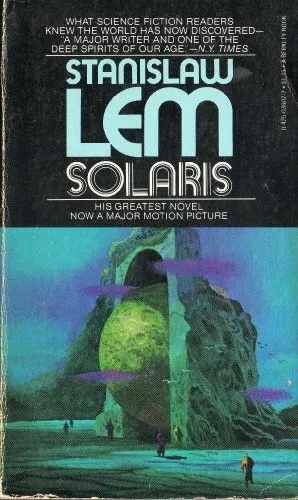
Psychologist Kris Kelvin arrives at a research station suspended above Solaris, an oceanic planet scientists have studied for decades without truly understanding. The station is in disarray, and its surviving researchers are hiding something.
Lem turns contact with alien life into a ruthless examination of human self-importance: do we want to encounter the truly other, or only a mirror capable of absolving us? Like Dick, he makes perception morally consequential and forces guilt, memory, and love into conflict with scientific categories. A landmark of philosophical science fiction, Solaris is the rare classic whose mystery becomes more disturbing as its ideas deepen.
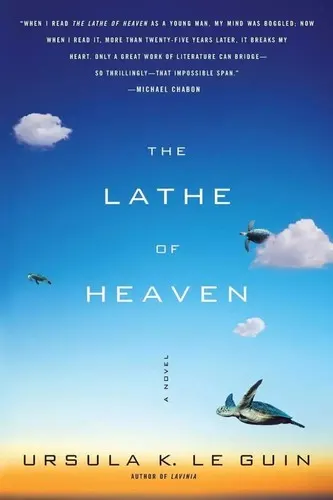
George Orr discovers that some of his dreams alter reality retroactively. When a well-meaning psychiatrist tries to harness that power for humanity’s benefit, every attempted improvement acquires consequences neither man can fully grasp.
Le Guin’s spare, lucid novel has Dick’s peculiar combination of metaphysical terror, deadpan absurdity, and suspicion of anyone claiming a firm grip on reality. More importantly, it shares his moral urgency: good intentions mean little when other lives become raw material for an abstract ideal. Le Guin gives the premise relentless momentum while asking whether humility may be the most necessary human virtue.
If you loved The Man in the High Castle
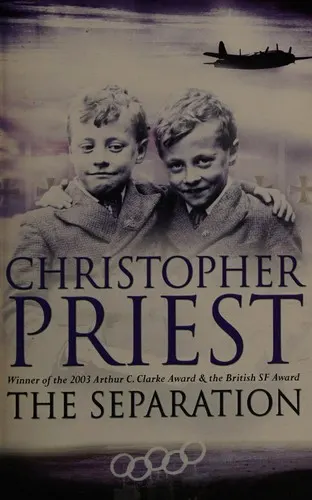
Priest turns history into a set of mutually incompatible testimonies. Twin brothers become entangled in the Second World War, while documents, memories, and identities refuse to settle into one authoritative account.
Like Dick, Priest makes the reader participate in uncertainty rather than merely observe it. The result is cool, melancholy, and quietly destabilizing: even apparently solid facts acquire the texture of forged antiques. Winner of both the BSFA and Sidewise awards, The Separation is one of alternate history’s most sophisticated novels—and perhaps the closest successor to Dick’s peculiar blend of political counterfactual and metaphysical vertigo.

On an unnamed island, objects periodically disappear—and most inhabitants lose not only the things but their memories of them. A novelist, among the few who can still remember, hides her editor from the authorities charged with enforcing oblivion.
Ogawa shares Dick’s fascination with the secret life of objects: what makes a thing authentic, what meaning people invest in it, and what happens when power dictates reality. Yet her prose is hushed and exact, making repression feel intimate rather than spectacular. Shortlisted for the International Booker Prize, The Memory Police has become a modern classic of quiet dystopian fiction. Its accumulating absences are almost unbearably haunting.
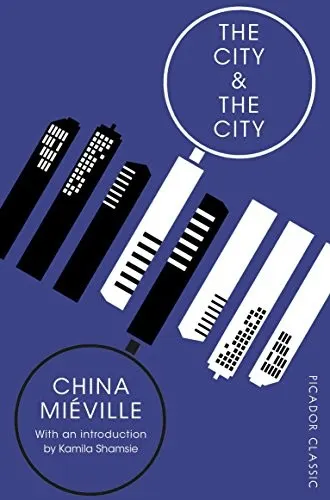
Inspector Tyador Borlú investigates a murder in two cities that occupy the same physical space. Their citizens have been trained to ignore—or “unsee”—one another, turning an absurd political arrangement into everyday reality.
That premise becomes more convincing, and more disturbing, with every page. Miéville understands, as Dick did, that oppressive worlds survive through ordinary habits of perception: people police their own minds before any authority needs to intervene. The detective story is taut, but the deeper pleasure lies in watching its impossible setting become psychologically inevitable. Winner of the Arthur C. Clarke and World Fantasy awards, The City & the City is an ingenious novel whose central idea permanently alters how many readers see borders, cities, and one another.
If you loved Ubik
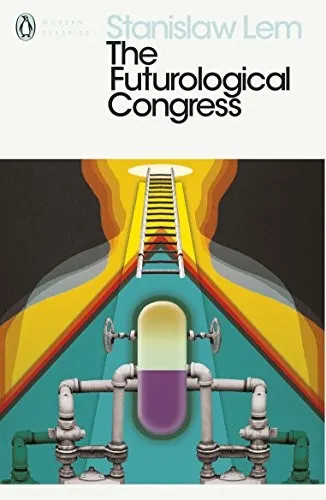
Ijon Tichy arrives at a lavish international conference while riots spread outside; then hallucination, propaganda, and chemical manipulation make every apparent awakening suspect. Lem keeps escalating the joke until perception itself feels like a product being aggressively marketed.
Like Ubik, this is both a reality puzzle and a savage comedy about people trying to conduct business as usual after “usual” has lost all meaning. Lem’s intellectual audacity never suppresses his slapstick energy: each revelation is hilarious, ingenious, and more alarming than the last. One of his most admired short novels, it offers the rare pleasure of being dazzled and existentially mugged at the same time.
Peter Sinclair, emotionally stranded after losing his job and his relationship, retreats to a friend’s cottage and begins writing an autobiography. But the life he records does not remain securely subordinate to the life he appears to be living.
Priest recreates Ubik’s peculiar intimacy: cosmic uncertainty arrives not through grand spectacle but through paperwork, memory, small contradictions, and a protagonist’s desperate wish to impose order. The prose is cool and exact, which makes every impossible transition more convincing. A defining work from one of Britain’s great specialists in unreliable realities, The Affirmation inspires the kind of devoted rereading Ubik does—because the second reading does not solve the first so much as beautifully destabilize it again.
A fugitive hiding on an apparently deserted island begins seeing elegantly dressed visitors who neither notice him nor behave quite like ordinary people. His fascination with one woman among them draws him toward the secret behind their uncanny repetitions.
This compact Argentine masterpiece shares Ubik’s obsession with machines, mortality, and the terrifying possibility that an artificial reality may be more durable than a human being. Yet its emotional register is entirely its own: lucid, romantic, and haunting rather than antic. Borges famously praised its plot as perfect, and its influence can be felt across speculative fiction and cinema. Barely longer than a novella, it leaves behind an idea so clean and potent that not reading it means missing one of the hidden foundations beneath modern reality-bending fiction.