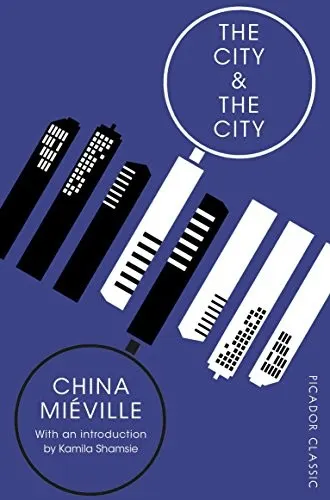
Books like The City & the City
A 1929 Harlem novel may offer the purest route back to Miéville’s central obsession: the way a society trains people to see one reality and suppress another. These three books turn perception into law, architecture, and danger.
If you liked The City & the City, you’ll love these
Not lookalikes — kindred books. Each one shares something essential with The City & the City, and we tell you exactly what.
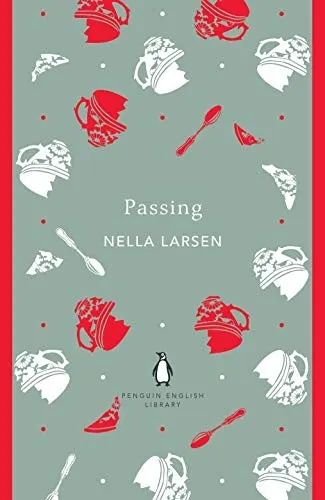
Larsen’s taut masterpiece follows Irene Redfield, a Black woman who encounters a childhood friend living as white. Like Miéville, Larsen makes “unseeing” an active social discipline: every glance is an interpretation, every public space has invisible borders, and identity depends upon what others consent—or refuse—to notice.
Its suspense comes less from incident than from the terrifying instability of perception. Larsen’s cool, compressed prose leaves motives and meanings productively unsettled, producing the same aftereffect as The City & the City: you finish questioning not only what happened, but how much reality is created by collective enforcement. Long neglected and now firmly established as a Harlem Renaissance classic, Passing achieves in fewer than two hundred pages what many novels cannot manage in five hundred.
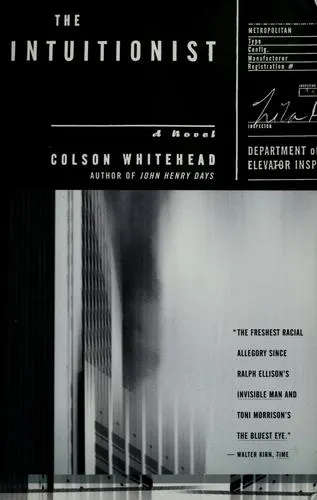
Whitehead’s audacious debut turns elevator inspection into the foundation of a city’s politics, bureaucracy, and metaphysics. Lila Mae Watson, the department’s first Black woman inspector, is drawn into an investigation after an elevator she certified catastrophically fails. What begins like institutional noir opens onto rival theories of knowledge: should an inspector trust empirical instruments, or intuit the elevator’s condition from within?
That premise has Miéville’s gift for making an absurd civic system feel both perfectly logical and politically revealing. Codes, professional factions, municipal machinery, and racial power lock together until infrastructure becomes ideology. Whitehead would later win two Pulitzer Prizes, but this strange, brilliant first novel already contains his unmistakable talent for converting an elaborate conceit into a sharp account of how societies decide whose perceptions count.
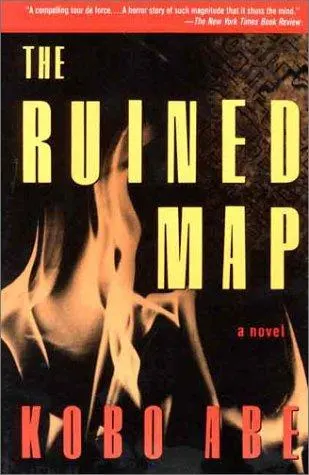
A private detective is hired to find a missing man, armed with a photograph, a matchbook, and a map that proves less helpful the longer he studies it. Abe uses the machinery of a detective story not to restore order but to dissolve it: clues loosen identities, streets become unreadable, and the investigator’s authority steadily gives way to the city’s anonymity.
Readers who loved Miéville’s refusal to separate urban geography from states of mind will recognize the deeper kinship. Abe’s city is not merely a setting but a system that makes people vanish in plain sight. The prose is spare, eerie, and darkly comic, with the existential force that made Abe one of Japan’s great postwar novelists. The Ruined Map is the rare mystery whose failure to provide ordinary reassurance becomes its most haunting success.