
Books like Do Androids Dream of Electric Sheep?
You were drawn not just to Dick’s androids, but to the novel’s unnerving question: can empathy, memory, or even reality itself tell us what a person is? These three books press on that same bruise.
If you liked Do Androids Dream of Electric Sheep?, you’ll love these
Not lookalikes — kindred books. Each one shares something essential with Do Androids Dream of Electric Sheep?, and we tell you exactly what.

On a spacecraft staffed by humans and humanoids, workers give brief, anonymous statements about their duties—and about strange objects brought aboard. Those clinical testimonies gradually become lyrical, frightened, funny, and impossible to classify.
Shortlisted for the International Booker Prize, Ravn’s compact novel shares Dick’s fascination with people treated as products and products invested with spiritual significance. Its corporate bureaucracy keeps trying to distinguish authentic feeling from programmed response, even as the employees’ voices make that distinction collapse. Few novels so short leave such a haunting afterimage.
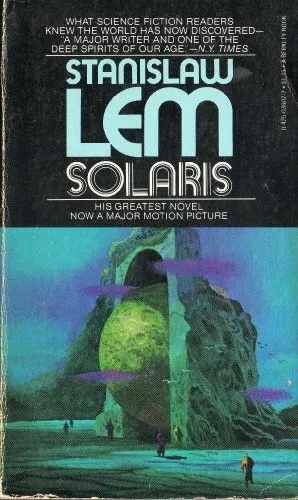
Psychologist Kris Kelvin arrives at a research station suspended above Solaris, an oceanic planet scientists have studied for decades without truly understanding. The station is in disarray, and its surviving researchers are hiding something.
Lem turns contact with alien life into a ruthless examination of human self-importance: do we want to encounter the truly other, or only a mirror capable of absolving us? Like Dick, he makes perception morally consequential and forces guilt, memory, and love into conflict with scientific categories. A landmark of philosophical science fiction, Solaris is the rare classic whose mystery becomes more disturbing as its ideas deepen.
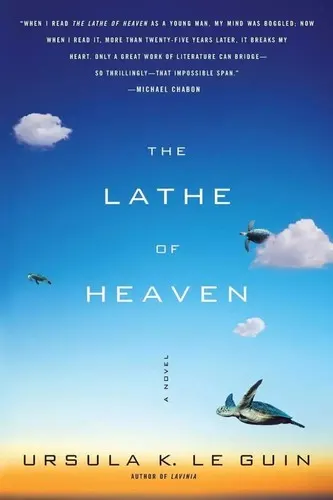
George Orr discovers that some of his dreams alter reality retroactively. When a well-meaning psychiatrist tries to harness that power for humanity’s benefit, every attempted improvement acquires consequences neither man can fully grasp.
Le Guin’s spare, lucid novel has Dick’s peculiar combination of metaphysical terror, deadpan absurdity, and suspicion of anyone claiming a firm grip on reality. More importantly, it shares his moral urgency: good intentions mean little when other lives become raw material for an abstract ideal. Le Guin gives the premise relentless momentum while asking whether humility may be the most necessary human virtue.