Author
Books like Olga Tokarczuk
12 books we recommend to Olga Tokarczuk readers, drawn from Drive Your Plow Over the Bones of the Dead, The Books of Jacob, Flights and Primeval and Other Times — each with the reason why.
If you loved Drive Your Plow Over the Bones of the Dead
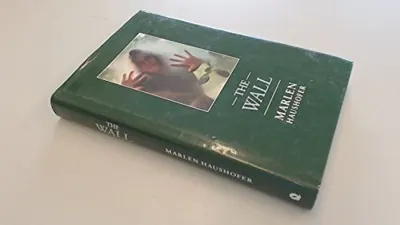
A woman staying at an Alpine hunting lodge wakes to find herself cut off from the world by an invisible barrier. Haushofer turns that impossible premise into a precise account of work, solitude, weather, and companionship with animals.
Like Tokarczuk, she quietly strips humanity of its assumed supremacy. The animals are not symbols or consoling accessories; their needs shape the narrator’s ethics and her understanding of survival. Her calm, practical voice makes every observation carry moral weight. Published in 1963 and gradually reclaimed as a feminist and ecological classic, The Wall has the rare severity of a book that can permanently alter how its readers regard civilization—and what lies beyond it.
Ninety-two-year-old Marian Leatherby acquires a hearing trumpet and discovers that her family intends to place her in an institution. From there, Carrington makes respectable reality look far stranger than anything her supposedly dotty heroine imagines.
This is the choice for readers who loved Janina’s glorious refusal to behave like a credible old woman. Marian is candid, curious, stubborn, and immune to the authority of people who mistake conformity for sanity. Carrington’s cult novel mixes deadpan comedy, occult mystery, female fellowship, and joyous revolt with absolute conviction. Few books are so hospitable to the elderly, the eccentric, and the non-rational—or so gleefully destructive of the world that excludes them.
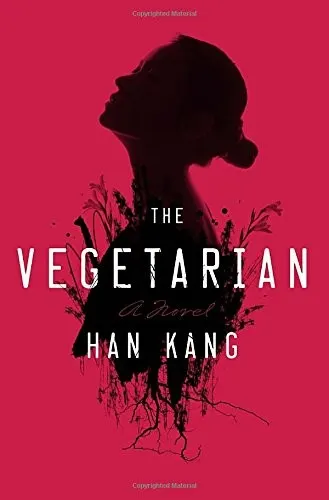
After a disturbing dream, Yeong-hye stops eating meat. Her apparently private decision becomes intolerable to those around her, and their responses reveal how quickly love, family, and social order can become instruments of coercion.
Where Tokarczuk gives us an outspoken accuser, Han centers a woman whose refusal is largely interpreted by others. That formal choice makes the novel devastating: the less Yeong-hye explains herself, the more violently everyone insists on owning her body and defining what counts as human. Winner of the International Booker Prize, The Vegetarian has become a contemporary classic because its beauty is inseparable from its horror. It shares Drive Your Plow’s deepest provocation: perhaps the people called irrational are simply those who can no longer consent to ordinary brutality.
If you loved The Books of Jacob
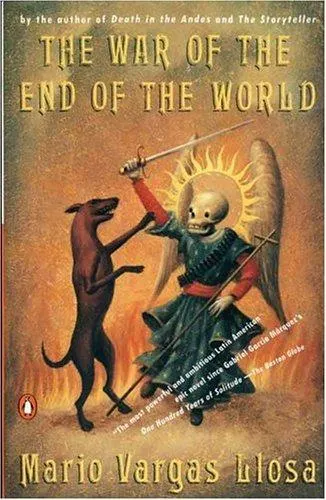
A wandering ascetic called the Counselor gathers followers in the Brazilian backlands, and a settlement begins to form around his apocalyptic teaching. Yet Vargas Llosa refuses to reduce the movement to either holy revelation or collective delusion. As in The Books of Jacob, belief becomes a material force: it feeds people, reorganizes loyalties, attracts opportunists, and terrifies institutions that cannot understand it.
The novel keeps changing vantage point—among zealots, soldiers, politicians, journalists, and outcasts—until certainty itself becomes impossible. Vargas Llosa, later a Nobel laureate, considered this vast, ferocious book one of his most ambitious achievements, and it remains among his masterpieces. Few novels show so powerfully how official history is manufactured from encounters in which everyone misreads everyone else.
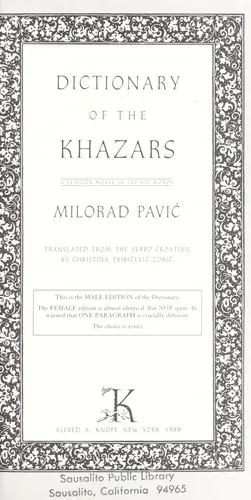
Pavić turns an obscure religious controversy into a beguiling counterfeit reference book. Christian, Islamic, and Jewish sources offer contradictory accounts of the Khazars’ conversion, while scholars, dream hunters, princesses, demons, and poisoned texts migrate between entries. You may read it alphabetically, follow its cross-references, or invent your own route through it.
What will delight a Tokarczuk reader is the way scholarship becomes fiction without losing its intellectual charge. Every document looks authoritative until another document quietly sabotages it; translation preserves knowledge while also mutating it. First published in 1984, the novel became an international cult classic because its formal ingenuity is inseparable from its central seduction: the suspicion that truth survives only as a quarrel among stories. It is shorter than The Books of Jacob, but scarcely less labyrinthine.
Charles Mason and Jeremiah Dixon—astronomer and surveyor—set out into an eighteenth century alive with scientific rivalry, imperial commerce, tavern gossip, mechanical marvels, songs, ghosts, and talking creatures. Their famous line begins as a technical assignment, but Pynchon makes measurement itself morally and metaphysically strange: what happens when human beings impose a clean abstraction upon a world that refuses to stay divided?
Like Tokarczuk, Pynchon combines immense research with irreverence, tenderness, and an appetite for everything history normally discards. Learned arguments sit beside low comedy; invented sources mingle with documented lives; minor figures repeatedly seize the narrative from supposedly important men. Widely regarded by Pynchon’s most devoted readers as one of his finest novels, Mason & Dixon offers the rare pleasure of a maximalist historical book whose abundance is its argument: no border, archive, or official story can contain reality.
If you loved Flights
Ugrešić builds this novel of exile from photographs, inventories, anecdotes, quotations, and apparently stray objects. Its emblem is a museum display cataloguing the miscellaneous contents of a walrus’s stomach: an absurd but moving model for how displaced lives preserve themselves.
Like Tokarczuk, Ugrešić understands that fragments can carry more emotional voltage than continuous narrative. Her wit is sharper and more melancholy, especially when she examines nostalgia, lost countries, and the unreliable stories attached to photographs. This defining work by the Neustadt Prize–winning writer turns formal play into an intimate account of what survives upheaval. Miss it, and you miss one of the great literary museums of memory.
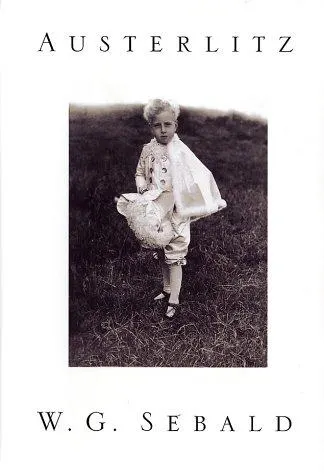
A chance encounter in an Antwerp railway station opens into a hypnotic investigation of architecture, travel, photographs, and buried history. Sebald’s long, tidal sentences move through stations, fortresses, libraries, and waiting rooms as though physical structures might disclose what human memory cannot.
The kinship with Flights lies in that roaming, essayistic intelligence: observation becomes digression, digression becomes revelation. Yet Austerlitz has its own unmistakable atmosphere—hushed, uncanny, and cumulatively devastating. Winner of the National Book Critics Circle Award, it is among the rare novels whose form changed what readers thought fiction could contain. Once entered, its world is difficult to leave.
This novel arrives as twenty-seven unbound sections in a box; only “First” and “Last” are fixed, while the middle can be read in any order. That is no gimmick. A sportswriter’s arrival in an unfamiliar city releases involuntary memories of a friend’s illness, and chance determines how recollection interrupts the present—much as it does in life.
Where Flights makes wandering a philosophy, Johnson makes it a physical reading experience. Streets, assignments, jokes, embarrassment, friendship, and the failing body keep colliding without becoming tidy. Long regarded as a landmark of British experimental fiction, The Unfortunates proves that formal audacity can intensify grief rather than distance it. Every shuffled reading creates a different route through the same loss.
If you loved Primeval and Other Times
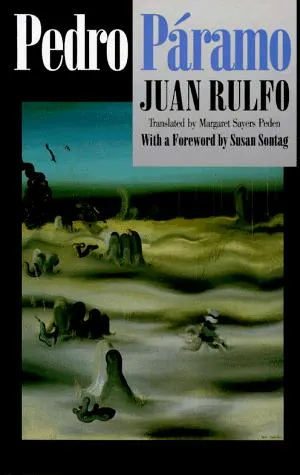
Juan Preciado travels to Comala in search of the father he has never known and finds a town murmuring with other lives and other times. Like Tokarczuk, Rulfo makes place more than setting: Comala seems to remember, speak, and dream through its inhabitants. Time loosens; voices arrive without orderly introductions; the border between living presence and buried history becomes permeable.
This short Mexican masterpiece has influenced generations of Latin American writers, yet its fame can obscure how immediate it feels. Every spare sentence opens an abyss. If Primeval’s shifting perspectives and haunted chronology made you feel that the dead remain part of a community’s present, Pedro Páramo is essential reading.
Andrić builds his novel around a bridge whose endurance makes individual human lives appear brief, vivid, and heartbreaking. Generations gather near it, cross it, gossip around it, and attach legends to it; private hopes unfold while political powers redraw the world. The result has Primeval’s double scale: intimate enough to care about one person’s humiliation or happiness, expansive enough to watch centuries move.
The bridge also performs something like Tokarczuk’s nonhuman perspectives: it is witness, archive, gathering place, and silent protagonist. Often regarded as Andrić’s masterpiece—and central to the reputation of the only Yugoslav writer awarded the Nobel Prize—it is one of the great demonstrations that a single locality can hold an entire civilization’s memory.
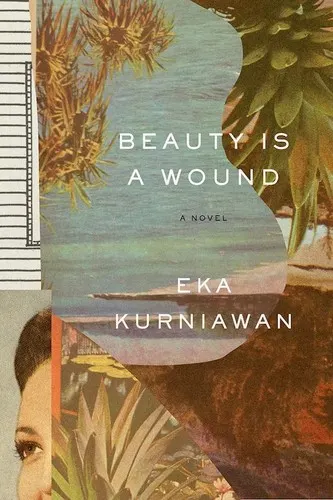
Kurniawan begins with a dead woman rising from her grave and proceeds with such boisterous confidence that resurrection soon feels like only one more fact in a world saturated with appetite, folklore, cruelty, and historical violence. His Indonesian town, like Tokarczuk’s Primeval, becomes a complete moral ecosystem where family stories and national catastrophe cannot be separated.
The kinship lies especially in the novel’s refusal to make myth decorative. Ghosts, curses, grotesque comedy, and impossible events express what official history leaves unsaid. But Kurniawan is louder and more carnivalesque than Tokarczuk, swinging from bawdy farce to devastation with unnerving speed. Internationally acclaimed and longlisted for the International Booker Prize, Beauty Is a Wound offers the rare thrill of a modern saga that feels both unruly and inevitable.