Books like The Unfortunates
A mind circles an absence, jokes to keep from breaking, and discovers that memory will not proceed in a straight line. These novels turn formal experiment into an exact measure of loss.
If you liked The Unfortunates, you’ll love these
Not lookalikes — kindred books. Each one shares something essential with The Unfortunates, and we tell you exactly what.
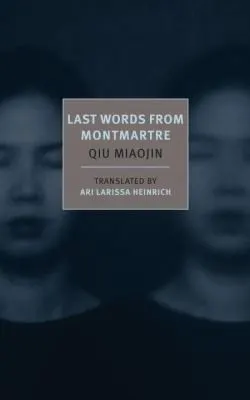
Qiu’s epistolary novel comprises letters sent from Paris, Taipei, and Tokyo—and explicitly permits them to be read in any order. But, as in The Unfortunates, the movable structure is not a stunt. It makes the reader inhabit a consciousness compulsively returning to love, separation, art, and self-destruction, finding altered meanings each time an image or phrase resurfaces.
The voice is startlingly exposed: theatrical one moment, analytically lucid the next, then suddenly defenseless. Published posthumously, the book has become a queer classic and the center of Qiu’s international reputation. Few novels make nonlinear reading feel so emotionally inevitable: rearrange the letters however you like, and grief still finds its way through.
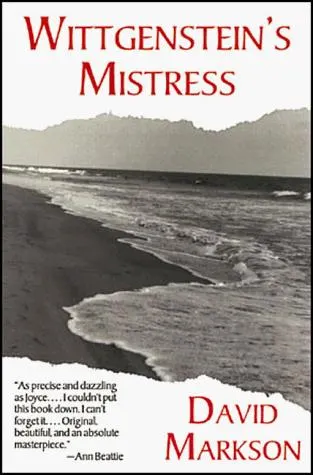
A woman who may be the last person alive types a discontinuous monologue: memories, corrections, quotations, art-historical scraps, jokes, and stubbornly repeated names. Each fragment seems solitary; gradually, their repetitions create an emotional design that is never simply announced. A reader who loved Johnson’s trust in gaps—and his refusal to tidy pain into conventional narrative—will recognize the method immediately.
Markson’s novel is one of American experimental fiction’s genuine cult masterpieces, admired with unusual fervor by writers including David Foster Wallace. Its erudition can be funny and abrasive, but underneath lies devastating loneliness. By the end, punctuation, misremembering, and self-correction have acquired the force that plot carries in other novels.
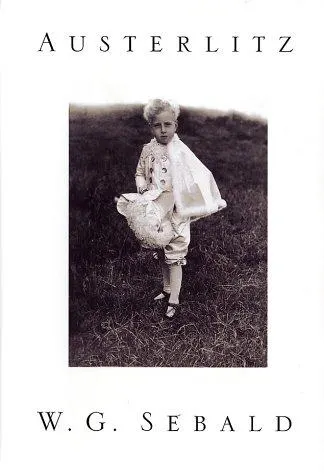
Sebald begins with an encounter in a railway waiting room, then lets conversation open into architecture, photographs, journeys, historical pressure, and the uncertain recovery of a life. His long sentences move as memory actually moves: by association, delay, avoidance, and involuntary return. Like Johnson, he understands that the truest account of loss may be structurally incapable of going straight toward it.
The grainy photographs do not authenticate the story so much as make evidence itself feel haunted. Meanwhile, Sebald’s restraint keeps the novel from soliciting easy emotion; its cumulative power arrives almost imperceptibly. Widely regarded as his masterpiece, Austerlitz offers one of modern fiction’s most profound demonstrations that form can embody remembrance rather than merely describe it.