Books like The Bridge on the Drina
What remains of ordinary lives after empires, wars, and legends have passed repeatedly over the same ground? These three novels share Andrić’s gift for making history tangible without letting it dwarf the people trapped inside it.
If you liked The Bridge on the Drina, you’ll love these
Not lookalikes — kindred books. Each one shares something essential with The Bridge on the Drina, and we tell you exactly what.
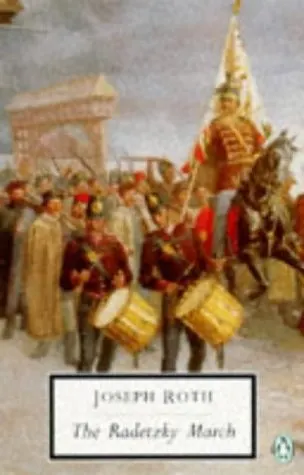
Roth gives the Austro-Hungarian Empire what Andrić gives Višegrad: an elegy spacious enough to contain affection, comedy, cruelty, and clear-eyed judgment. Following three generations of the Trotta family, he shows imperial history entering private life through uniforms, manners, debts, marriages, and small humiliations.
The novel’s power lies in its double vision. Roth sees that the empire is decaying, yet he also understands why its subjects cling to its ceremonies and myths. His poised, ironic narration turns seemingly minor scenes into intimations of collapse. Widely regarded as Roth’s masterpiece, The Radetzky March is indispensable for anyone moved by Andrić’s ability to mourn a vanished world without romanticizing it.
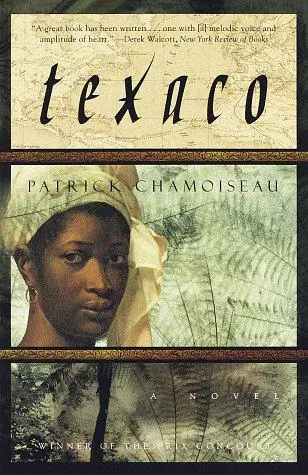
In Texaco, a ramshackle settlement on the edge of Fort-de-France becomes an archive of Martinique’s history. Its people preserve what official records neglect: slavery and emancipation, migration, labor, family lore, gossip, resistance, and the stubborn art of making a home where power says none should exist.
Chamoiseau’s storytelling is more exuberant than Andrić’s—full of Creole rhythms, tall tales, and competing voices—but the kinship is profound. Both novels ask how communal memory hardens into legend and how a place can become the true protagonist of a book. Winner of France’s Prix Goncourt, Texaco is that rare historical epic whose linguistic vitality feels inseparable from its moral purpose: to save lives from being edited out of history.
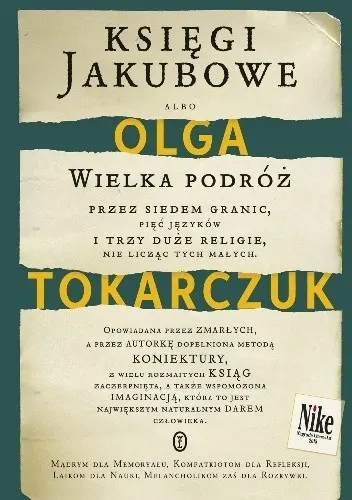
Tokarczuk’s immense novel begins in the borderlands of eighteenth-century Europe and refuses to view them from a single center. Nobles, peasants, priests, merchants, mystics, women, and wanderers all contribute fragments to a history no one person can comprehend. Like Andrić, she is fascinated by territories where languages and faiths overlap—and where coexistence can shade abruptly into persecution.
Yet The Books of Jacob is not merely panoramic. Its documents, letters, rumors, and shifting viewpoints reveal history being manufactured while people are still living through it. Tokarczuk, a Nobel laureate, won Poland’s Nike Award for this audacious achievement. The result is a vast, absorbing counter-history that gives the forgotten and marginal the same imaginative weight Andrić gives the generations crossing his bridge.