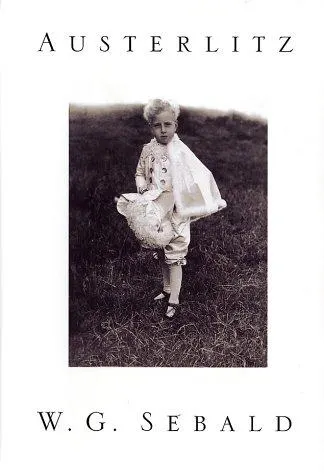
Books like Austerlitz
The devoted Austerlitz reader trusts digression, silence and material evidence: a railway station, photograph or misplaced object can disclose more than a conventional plot. These three novels likewise make history intimate without pretending its wounds can be neatly explained.
If you liked Austerlitz, you’ll love these
Not lookalikes — kindred books. Each one shares something essential with Austerlitz, and we tell you exactly what.
Ugrešić builds her novel from photographs, lists, museum exhibits, dreams and the scattered possessions of exile. Its unnamed narrator, displaced from the disintegrating Yugoslavia to Berlin, tries to read a vanished life through objects that have survived it—particularly the remnants of her mother’s world.
The kinship with Austerlitz lies in this distrust of smooth remembrance. Memory arrives out of sequence and attached to things; photographs preserve appearances while withholding meaning. Yet Ugrešić is more caustic and playful than Sebald, alert to absurdity even amid dispossession. Widely regarded as one of the essential novels of exile, it turns fragmentation into an extraordinarily moving form: not a broken story, but the only honest shape the story could take.
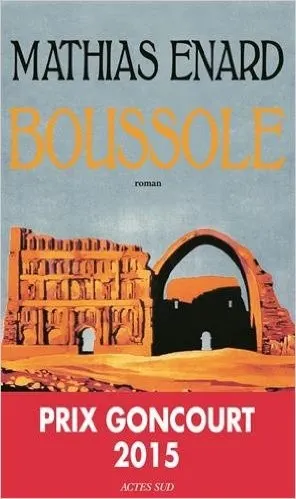
During one sleepless night in Vienna, musicologist Franz Ritter sifts through his attachment to the scholar Sarah and through a lifetime of encounters with the cultures Europe has labeled “Eastern.” His mind moves by association—from music and manuscripts to travel, illness, desire and historical erasure—in long, enveloping currents of prose.
Like Austerlitz, Compass gives intellectual digression emotional urgency: scholarship is not decoration but the route by which a lonely person approaches what he cannot say directly. Énard’s learning is formidable, yet the novel remains sensuous, lovesick and alive with voices. Winner of the Prix Goncourt, it is a rare large-scale novel whose erudition deepens rather than cools its feeling; its final effect is that of waking from another person’s memory with your map of the world subtly altered.
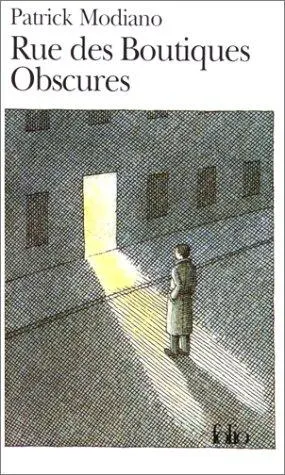
Guy Roland is a private detective with no memory of his own past. When his employer retires, Guy begins investigating himself through old directories, addresses, photographs and people who may—or may not—recognize him.
Where Sebald accumulates immense, mournful sentences, Modiano works by subtraction. Every clue opens another vacancy; Paris becomes a network of vanished rooms and uncertain names. Missing Person understands, as Austerlitz does, that recovering a biography is not the same as recovering a self—and that documents can intensify mystery instead of resolving it. The novel won the Prix Goncourt long before Modiano received the Nobel Prize, and it remains perhaps the purest expression of his haunting art: brief enough to read in an evening, difficult to escape for years.