Author
Books like Muriel Spark
13 books we recommend to Muriel Spark readers, drawn from The Prime of Miss Jean Brodie, Memento Mori, The Driver's Seat, The Girls of Slender Means, Loitering with Intent and The Abbess of Crewe — each with the reason why.
If you loved The Prime of Miss Jean Brodie
Freddie Wentworth runs a shabby London school for child actors through force of personality, selective attention, and an almost mystical refusal to acknowledge practical reality. Anyone fascinated by Jean Brodie’s ability to make an institution revolve around her private mythology will recognize Freddie’s magnetism—but Fitzgerald never merely reproduces Spark’s effects.
The comedy here is warmer and more theatrical, crowded with precocious children, compromised adults, and the backstage absurdities of the acting world. Yet beneath it lies a sharp question: when does devotion to talent become indifference to people? Fitzgerald, one of Britain’s most revered late-twentieth-century novelists, writes with deceptive lightness; a sentence that looks tossed off can disclose an entire life. At Freddie’s is among her most irresistible books, funny enough to race through and exact enough to haunt you afterward.

For the reader who most loved Brodie’s verbal combat and pitiless understanding of power, this is the bracing choice. Duncan Edgeworth presides over his household with the serene certainty that his authority is natural and benevolent. Around him, family conversation becomes warfare conducted in exquisitely grammatical sentences.
Compton-Burnett strips away scenery and explanation until almost everything happens through dialogue: evasions, rebellions, humiliations, and sudden reversals of control. The result is darker and stranger than ordinary domestic realism, and often savagely funny. Her austere style has inspired intense devotion among novelists and critics because no one else makes tyranny sound so civilized—or exposes civilization’s concealed violence so precisely. Once your ear adjusts to its icy music, A House and Its Head becomes difficult to put down and impossible to confuse with any other novel.
If you loved Memento Mori
Pym follows four unmarried office workers approaching retirement, recording their routines, irritations and tentative connections with devastating precision. Like Spark, she can make a small social slight both extremely funny and spiritually consequential.
This is the gentlest recommendation here, but not the softest: loneliness, bodily decline and the fear of becoming socially invisible are confronted without consolation or sentimentality. Shortlisted for the Booker Prize and now widely regarded as Pym’s masterpiece, it turns apparently uneventful lives into an exquisitely controlled comedy of mortality.
If you relished Spark’s refusal to make elderly characters wise, sweet or dignified on demand, meet Amis’s circle of aging Welsh friends: drinkers, adulterers, bores and score-settlers whose old rivalries remain ferociously alive.
The comedy is broader and more bibulous than Spark’s, yet the underlying achievement is similar. Amis catches the indignities of failing bodies while preserving every appetite, vanity and grievance inside them. Winner of the Booker Prize and often judged his late masterpiece, The Old Devils is monstrously funny precisely because it understands that age changes the available opportunities, not necessarily the soul.
Ninety-two-year-old Marian Leatherby acquires a hearing trumpet and discovers that her family plans to send her to an institution. From that plain betrayal, Carrington launches an increasingly strange, occult and anarchic adventure—but Marian’s dry, practical voice keeps even the wildest developments sharply comic.
Where Memento Mori makes death an intrusive caller, this cult classic treats extreme age as an escape route from ordinary reality. Carrington shares Spark’s delight in puncturing respectable institutions and her confidence that metaphysical questions need not be handled reverently. The result is liberating, mischievous and unlike almost anything else: a novel in which an old woman does not fade from the world but helps make it wonderfully unstable.
If you loved The Driver's Seat
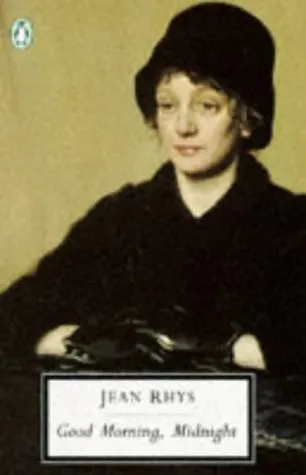
Sasha Jansen drifts through Paris with little money, rehearsed defenses, and an acute awareness of every social humiliation awaiting her. Like Spark, Rhys makes estrangement both agonizing and horribly funny: a dress, a hotel room, or a stranger’s glance can become an entire tribunal.
What binds the novels most closely is their refusal to turn a difficult woman into a case study. Sasha controls what she reveals through repetitions, evasions, and abrupt memories; the fractured structure becomes her last private territory. Once neglected, Good Morning, Midnight is now recognized as a modernist classic, and its emotional precision still feels dangerously immediate. If Lise’s fierce opacity fascinated you, Sasha’s bruised, sardonic voice is indispensable.
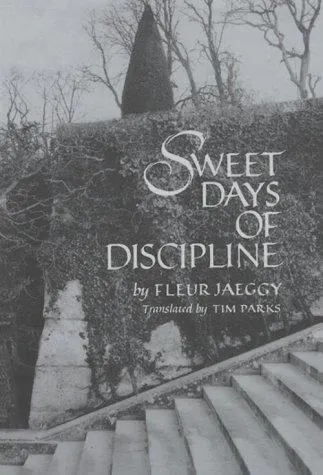
At a Swiss boarding school, an unnamed narrator becomes fixated on the austere, self-possessed Frédérique. Jaeggy renders that attraction in prose so polished and compressed that every sentence seems capable of drawing blood. Affection, rivalry, cruelty, and imitation become nearly indistinguishable.
A winner of Italy’s Premio Bagutta, the novel has earned a devoted readership for its singular severity. It shares Spark’s gift for making emotional violence look almost geometrical: nothing is overexplained, sentiment is distrusted, and the silences exert more pressure than confession could. This is a tiny book with the moral temperature of ice and the afterlife of a nightmare.
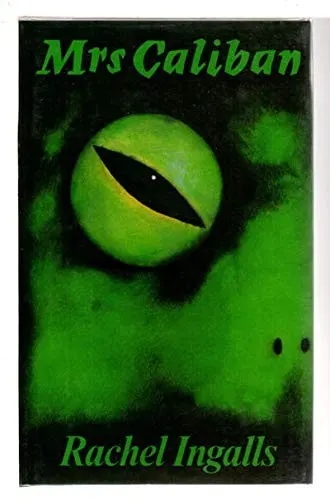
Dorothy lives inside a deadened suburban marriage until an escaped amphibious creature enters her kitchen. Ingalls treats this impossible event with perfect composure, allowing the fantastic to expose how strange ordinary domestic life already is. The deadpan humor is exquisite, but beneath it lie loneliness, erotic rebellion, and the dangerous exhilaration of stepping outside an assigned role.
Its kinship with Spark lies less in incident than in tonal nerve: both writers move between comedy and catastrophe without warning the reader that the floor has shifted. Long cherished as a cult classic and repeatedly rediscovered, Mrs. Caliban accomplishes more in its brief span than many novels manage at five times the length. Its tenderness makes its ruthlessness cut even deeper.
If you loved The Girls of Slender Means

Bainbridge is perhaps Spark’s closest rival in making impending calamity seem horribly funny. Two mismatched women working in a London bottling factory arrange an outing with their colleagues; from this unpromising material she produces a compact masterpiece of vanity, sexual menace and social misunderstanding.
Like Spark, Bainbridge never tells you whom to pity or when to stop laughing. Her characters’ fantasies collide with the world’s indifference, and every comic detail quietly tightens the trap. Winner of the Guardian Fiction Prize, this is one of Bainbridge’s defining novels: brief enough to consume at once, unsettling enough to keep revising itself in your memory.
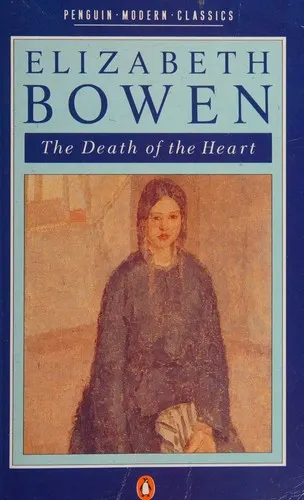
If you loved Spark’s scrutiny of the way women observe, classify and wound one another, read Bowen. Sixteen-year-old Portia comes to live with her sophisticated half-brother and his wife in interwar London, carrying a diary and an earnest hunger for affection into a household governed by taste, evasiveness and self-protection.
Bowen renders rooms, clothes and pauses in conversation with almost forensic force. As in The Girls of Slender Means, elegance is not decoration but moral evidence: people reveal themselves through what they notice, covet and refuse to say. Widely regarded as one of Bowen’s masterpieces, the novel turns social comedy into an exacting study of innocence among people who consider themselves civilized.
If you loved Loitering with Intent
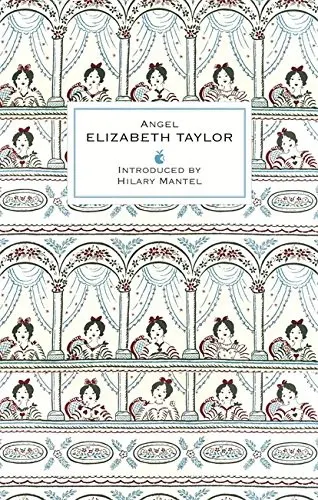
Angel Deverell is a ferociously ambitious young novelist whose confidence bears almost no relation to her experience or taste. Taylor observes her rise with the same exhilarating doubleness Spark brings to Fleur Talbot: writing is both a genuine creative power and a machinery for turning other people into supporting characters.
Taylor, long cherished as a novelist’s novelist, is devastatingly precise about the gap between how a person imagines herself and how the world sees her. Yet Angel is not simply a satire on bad art. Its heroine’s monstrous determination has grandeur, and Taylor’s irony gradually acquires emotional force without becoming sentimental. Anyone who loved Spark’s cool scrutiny of literary ego should not miss this unnervingly complete portrait of a woman who tries to author her own reality.
Pompey Casmilus, a publisher’s secretary, writes directly onto yellow office paper, allowing recollections, stories, jokes, arguments, and sudden anxieties to interrupt one another. The result has Fleur Talbot’s intoxicating freedom: the sense of an intelligent woman discovering that prose need not ask permission, behave respectably, or keep life and invention in separate rooms.
Published in 1936, Smith’s first novel still feels formally audacious. Her voice can turn from flippant to wounded in a sentence, and the apparent disorder conceals a razor-sharp awareness of class, sex, fascism, and the uses of storytelling. Readers who prize Loitering with Intent for its intimate, conspiratorial narration may feel that Pompey has seized them by the sleeve—and wonder why this singular book is not as famous as Smith’s poetry.
If you loved The Abbess of Crewe
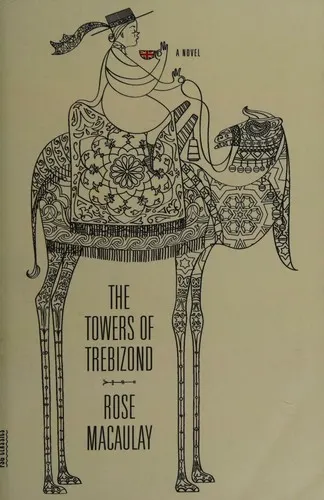
Macaulay begins with one of English fiction’s great comic sentences—“Take my camel, dear”—and proceeds in a voice capable of making missionary schemes, ecclesiastical quarrels and personal evasions equally ridiculous. The comedy is airy but never weightless: beneath it lies a piercing intelligence about belief, self-deception and the stories people construct to excuse themselves.
Winner of the James Tait Black Memorial Prize and enduringly admired by writers, this is the recommendation for readers who loved Spark’s refusal to separate spiritual questions from farce. Its wit keeps opening hidden depths; not reading it means missing one of the strangest and most haunting comic voices of the twentieth century.