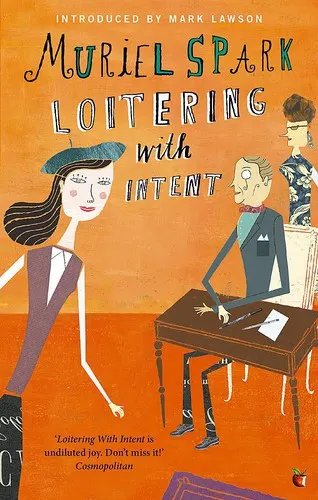
Books like Loitering with Intent
Angel Deverell builds a grandiose identity through fiction; Pompey Casmilus lets fiction, memory, politics, and office life riot across the page. Between Elizabeth Taylor’s immaculate irony and Stevie Smith’s unruly voice lies much of the pleasure of Loitering with Intent: authorship as liberation, vanity, and dangerous interference with reality. Leonora Carrington adds Spark’s other essential ingredient—the suspicion that respectable institutions are merely lunacy with better furniture.
If you liked Loitering with Intent, you’ll love these
Not lookalikes — kindred books. Each one shares something essential with Loitering with Intent, and we tell you exactly what.

Angel Deverell is a ferociously ambitious young novelist whose confidence bears almost no relation to her experience or taste. Taylor observes her rise with the same exhilarating doubleness Spark brings to Fleur Talbot: writing is both a genuine creative power and a machinery for turning other people into supporting characters.
Taylor, long cherished as a novelist’s novelist, is devastatingly precise about the gap between how a person imagines herself and how the world sees her. Yet Angel is not simply a satire on bad art. Its heroine’s monstrous determination has grandeur, and Taylor’s irony gradually acquires emotional force without becoming sentimental. Anyone who loved Spark’s cool scrutiny of literary ego should not miss this unnervingly complete portrait of a woman who tries to author her own reality.
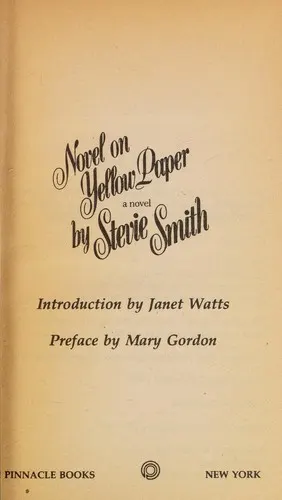
Pompey Casmilus, a publisher’s secretary, writes directly onto yellow office paper, allowing recollections, stories, jokes, arguments, and sudden anxieties to interrupt one another. The result has Fleur Talbot’s intoxicating freedom: the sense of an intelligent woman discovering that prose need not ask permission, behave respectably, or keep life and invention in separate rooms.
Published in 1936, Smith’s first novel still feels formally audacious. Her voice can turn from flippant to wounded in a sentence, and the apparent disorder conceals a razor-sharp awareness of class, sex, fascism, and the uses of storytelling. Readers who prize Loitering with Intent for its intimate, conspiratorial narration may feel that Pompey has seized them by the sleeve—and wonder why this singular book is not as famous as Smith’s poetry.
Ninety-two-year-old Marian Leatherby receives a hearing trumpet and learns that her family intends to place her in an institution. From that plain beginning, Carrington constructs a world in which bureaucratic benevolence, spiritual improvement, and authoritarian control become gloriously indistinguishable.
This cult classic shares Spark’s straight-faced method: every absurdity is reported with impeccable composure, which makes the comedy sharper and the menace stranger. Marian, like Fleur, refuses the identity designed for her by officious people, while the institution around her proves far less rational than the woman it confines. Carrington’s escalating invention is wilder than Spark’s, but the underlying delight is the same—the spectacle of an indomitable female intelligence puncturing solemn male schemes. Few novels make liberation feel so mischievous.