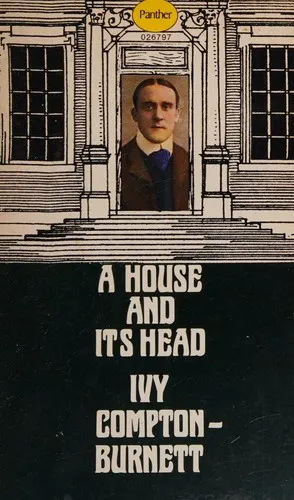
Books like A House and Its Head
Behind closed doors, affection becomes jurisdiction, conversation turns predatory, and the funniest sentence in the room is often also the cruelest. These three novels preserve that exhilarating mixture of domestic intimacy, verbal combat, and moral cold light.
If you liked A House and Its Head, you’ll love these
Not lookalikes — kindred books. Each one shares something essential with A House and Its Head, and we tell you exactly what.
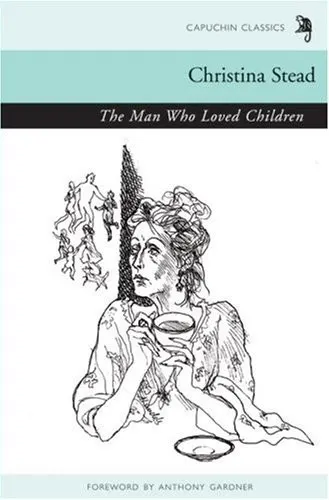
Sam Pollit presents himself as an inexhaustibly loving father, but his exuberance colonizes the household: pet names, stories, jokes, and moral lectures all become instruments of rule. Around him, family life develops its own vocabulary and poisonous weather.
Stead is more expansive and feverish than Compton-Burnett, yet she shares her profound understanding that tyranny flourishes through speech—and that children under pressure become shrewd anthropologists of adults. The novel’s comedy is inseparable from its horror, its characters both grotesque and painfully alive. Neglected after its 1940 publication, it was famously championed by Randall Jarrell and is now revered as one of the great family novels of the twentieth century. Its linguistic abundance and emotional ferocity make it unmissable.
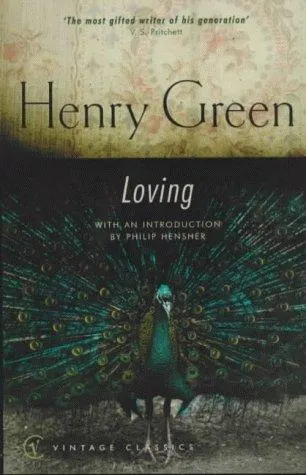
In an Irish country house during the Second World War, the servants continue their intricate life of flirtation, suspicion, theft, gossip, and jockeying for position while their employers remain largely elsewhere. Green gives almost no conventional guidance: character and hierarchy emerge from odd repetitions, evasions, verbal slips, and exquisitely angled dialogue.
That method will feel thrillingly familiar to a Compton-Burnett reader. Every exchange is both conversation and maneuver; what people refuse to say carries as much force as what they announce. Yet Green’s prose has its own shimmering, dreamlike beauty, making the house seem at once solid and enchanted. Long cherished as a writers’ writer, he produced his acknowledged masterpiece in Loving: a novel so technically singular that skipping it means missing one of English fiction’s most brilliant demonstrations of dialogue as action.
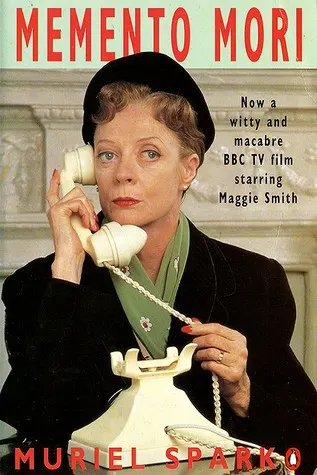
A group of elderly Londoners begin receiving telephone calls from an unknown voice with the same message: “Remember you must die.” Their responses—indignation, curiosity, terror, administrative fussiness—expose old betrayals and present rivalries with ruthless efficiency.
Spark shares Compton-Burnett’s refusal to sentimentalize age, family, or suffering. She observes vanity and cruelty from a serene distance, producing jokes whose neatness only sharpens their moral sting. But Memento Mori is not merely acid: beneath its immaculate comedy lies a grave intelligence about how the knowledge of death may deform or clarify a life. Often counted among Spark’s finest novels, it has the compression of a fable, the social precision of high comedy, and an aftertaste far larger than its size.