Author
Books like Kurt Vonnegut
12 books we recommend to Kurt Vonnegut readers, drawn from Slaughterhouse-Five, Cat's Cradle, Mother Night and Galápagos — each with the reason why.
If you loved Slaughterhouse-Five
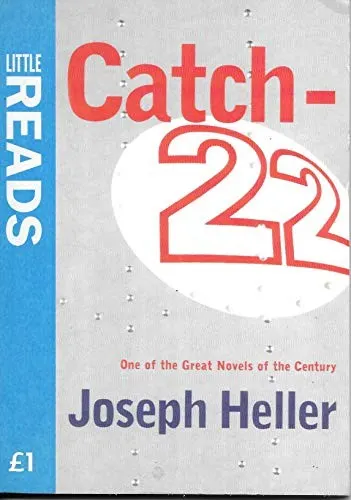
Heller makes war horrifying by letting its bureaucratic logic run perfectly. Yossarian’s predicament—sanity obliges him to escape combat, while wanting to escape proves he is sane enough to keep flying—unfolds through repetitions, contradictions, and scenes revisited with darker implications. Like Vonnegut, Heller turns fractured chronology and vaudevillian comedy into instruments of witness.
Its title became the everyday name for an inescapable logical trap, but the novel itself remains stranger, funnier, and angrier than its fame suggests. If Slaughterhouse-Five made you laugh and then feel guilty for laughing, Catch-22 performs that tonal ambush on an enormous scale.
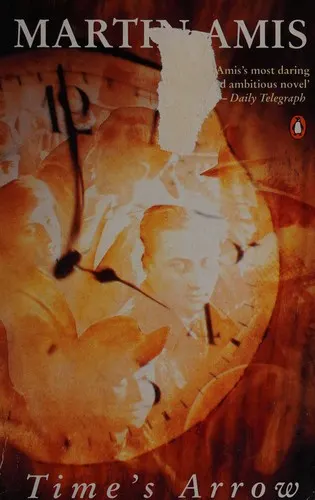
An American doctor’s life runs backward: meals emerge from mouths, injuries close, and destruction appears to create. The conceit initially produces brilliant deadpan comedy, but Amis steadily reveals its terrible moral purpose. Reversed time becomes a warped consciousness trying to make atrocity look like healing.
This Booker-shortlisted novel shares Vonnegut’s conviction that conventional realism can be inadequate to historical horror. It is colder and more abrasive than Slaughterhouse-Five, yet its formal audacity is comparably inseparable from its ethics. Few novels make a narrative trick feel so inevitable—or leave it echoing so ominously after the last page.
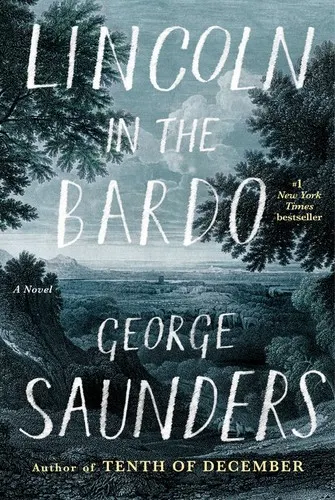
Saunders fills a cemetery with dead people who do not quite understand that they are dead. They gossip, boast, interrupt one another, cling to absurd self-descriptions, and gradually form a chorus around a grieving father and son. The comedy is exuberantly weird; the sorrow underneath it is devastating.
Winner of the Booker Prize, Saunders’s first novel earned its acclaim by making radical form feel intimate rather than showy. Its swarm of voices offers the same rare combination found in Vonnegut: playfulness without frivolity, sentiment without sentimentality, and compassion sharpened by an unblinking awareness of death. It is the kind of book that enlarges what a novel seems able to do.
If you loved Cat's Cradle
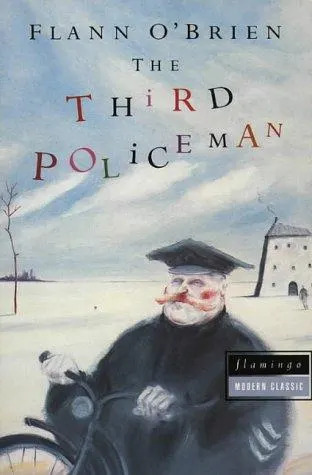
This cult classic shares Vonnegut’s gift for stating lunacy in a perfectly reasonable voice. Its unnamed narrator enters an Irish countryside governed by homicidal policemen, atomic theory, bicycles, and an increasingly elaborate logic that is both nonsensical and horribly consistent.
Like Bokononism, O’Brien’s mock philosophy begins as a comic invention and gradually becomes the machinery of the novel’s universe. Footnotes recount the feuds of a preposterous scholar; metaphysical terror arrives disguised as pedantry. Rejected during O’Brien’s lifetime and later recognized as his masterpiece, The Third Policeman is one of those rare books whose jokes permanently alter the reader’s sense of reality. If Cat’s Cradle made you laugh while the floor disappeared beneath you, this is essential.
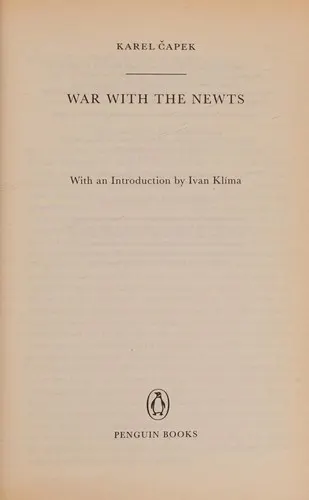
Čapek turns civilization’s march toward disaster into a brisk collage of newspaper reports, scientific papers, business schemes, propaganda, and public debate. The comedy comes from watching every institution interpret danger according to its own convenience: industry sees opportunity, nations see leverage, intellectuals produce theories, and almost nobody accepts responsibility.
Published in 1936, this major work by the Czech writer who helped give the world the word “robot” remains startlingly modern. Its kinship with Cat’s Cradle lies not in catastrophe itself but in the ruthless diagnosis behind it: apocalypse is rarely one grand mistake when it can instead be built from thousands of profitable, respectable little decisions. Čapek’s satire is expansive where Vonnegut’s is compressed, but it has the same exhilarating clarity and the same sting.
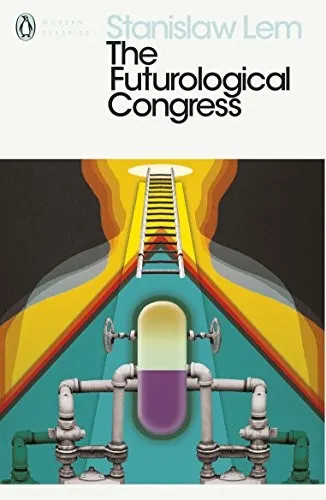
Ijon Tichy attends an international conference devoted to solving humanity’s crises, only to find experts producing jargon, bureaucrats producing chaos, and chemical ingenuity making reality increasingly difficult to verify. Lem packs the book with grotesque neologisms, intellectual slapstick, and ideas that mutate faster than the reader can become comfortable with them.
The deeper match is epistemological: both novels ask what remains of moral judgment when people prefer a consoling fiction to an unbearable fact. Lem—one of science fiction’s most formidable philosophical imaginations—makes that question deliriously funny without softening it. The Futurological Congress is short, feverishly inventive, and almost indecently rich in concepts; admirers of Vonnegut’s rapid chapters and cheerful descent into nightmare may feel it was designed expressly to deprive them of sleep.
If you loved Mother Night
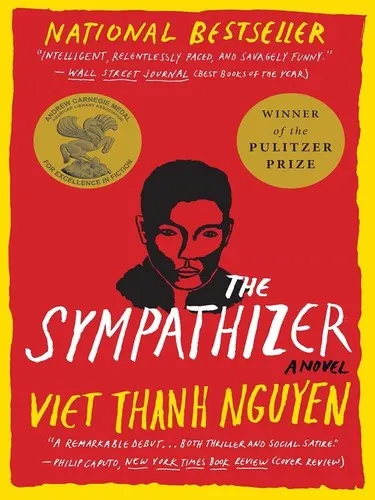
A communist agent embedded in South Vietnam’s secret police begins his story as a confession. Like Howard W. Campbell Jr., he inhabits incompatible loyalties until duplicity becomes less a tactic than a self.
Nguyen matches Vonnegut’s deadpan comedy with sharper ideological argument: propaganda, exile, revolution, and American mythmaking are all subjected to the narrator’s divided gaze. Yet the Pulitzer Prize–winning novel never reduces him to a political diagram; his intelligence and compromises make every judgment rebound upon the reader. Few novels since Mother Night have made the double agent’s predicament feel so morally intimate.
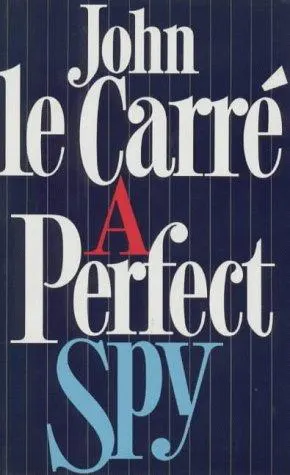
Le Carré’s masterpiece begins with veteran intelligence officer Magnus Pym disappearing and sitting down to write the story of his life. What follows is espionage stripped to its psychological core: a man trained from childhood to charm, imitate, conceal, and become whatever another person requires.
The kinship with Mother Night lies not chiefly in spying but in the terrifying possibility that no authentic self remains beneath the performances. Le Carré writes with more emotional fullness than Vonnegut, tracing betrayal back through family, class, and the hunger to be loved. Philip Roth called it ‘the best English novel since the war’; its reputation endures because Pym is not merely a convincing liar, but an unforgettable anatomy of how one is made.
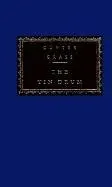
From a mental institution, Oskar Matzerath recounts his childhood in a Europe sliding toward catastrophe. He is theatrical, grotesque, funny, evasive, and determined to control the terms on which history hears him—exactly the sort of narrator a Mother Night reader should distrust and follow eagerly.
Grass turns black comedy into an instrument for examining complicity: private resentments and public barbarism mingle until claims of innocence sound absurd. The novel is wilder and more carnivalesque than Vonnegut’s, but it shares his refusal to treat historical evil with solemn, comforting distance. A defining work of postwar literature by a Nobel laureate, it remains outrageous, inexhaustible, and impossible to confuse with any safer account of the past.
If you loved Galápagos
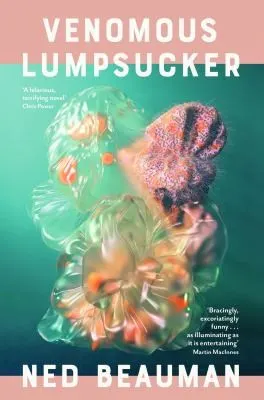
This Arthur C. Clarke Award winner is the sharpest recent heir to Vonnegut’s ecological comedy. In its near future, companies can profitably erase species by buying extinction credits; when an unusually intelligent fish disappears, a passionate animal-intelligence researcher and a compromised corporate fixer go looking for it.
Beauman shares Vonnegut’s gift for turning an absurd invention into a mercilessly logical system. The jokes are fast, the science is fascinating, and every ingenious human solution reveals another layer of human folly. If Galápagos delighted you by treating extinction as both punchline and moral catastrophe, Venomous Lumpsucker is nearly indispensable.
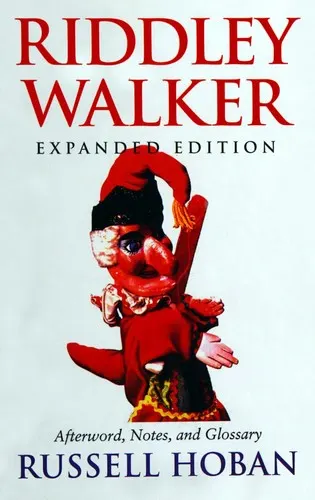
Long after humanity has destroyed its civilization, twelve-year-old Riddley narrates his world in a fractured, reinvented English. Reading the first pages feels difficult; then the language clicks, and Hoban’s ruined future becomes startlingly immediate—funny, brutal, superstitious, and alive.
Like Vonnegut, Hoban looks at our species from enough distance to make intelligence seem less like an evolutionary triumph than a dangerous compulsion. Yet he never condescends to his characters. Now a devoted cult classic, Riddley Walker offers the rare exhilaration of learning how to read a novel all over again.
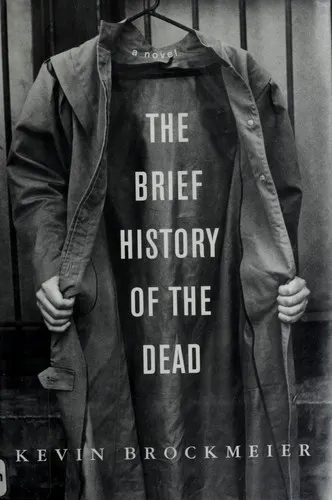
Brockmeier imagines a city inhabited by the dead, who remain there only while someone living still remembers them. Meanwhile, as a pandemic empties the living world, a researcher named Laura Byrd finds herself isolated in Antarctica.
The kinship with Galápagos lies in perspective: individual lives are viewed against extinction-scale time, making ordinary memories suddenly enormous. Brockmeier lacks Vonnegut’s vaudevillian bite, but he reaches the same hidden tenderness—the conviction that ridiculous, doomed human beings matter because they remember and are remembered. Its central conceit is unforgettable, but the quiet emotional force with which Brockmeier fulfills it is what makes the novel linger.