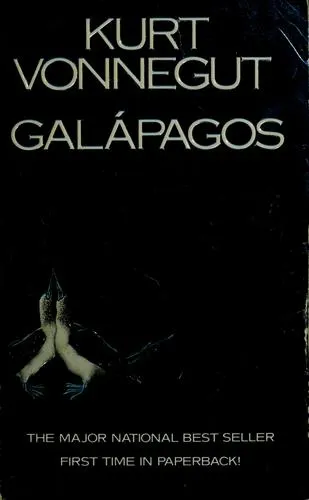
Books like Galápagos
Galápagos makes humanity’s extinction feel simultaneously like a cosmic joke, a biological correction, and a strangely tender elegy for the foolish creatures we are.
If you liked Galápagos, you’ll love these
Not lookalikes — kindred books. Each one shares something essential with Galápagos, and we tell you exactly what.
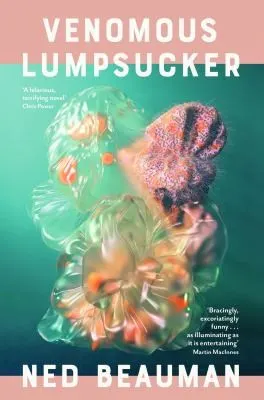
This Arthur C. Clarke Award winner is the sharpest recent heir to Vonnegut’s ecological comedy. In its near future, companies can profitably erase species by buying extinction credits; when an unusually intelligent fish disappears, a passionate animal-intelligence researcher and a compromised corporate fixer go looking for it.
Beauman shares Vonnegut’s gift for turning an absurd invention into a mercilessly logical system. The jokes are fast, the science is fascinating, and every ingenious human solution reveals another layer of human folly. If Galápagos delighted you by treating extinction as both punchline and moral catastrophe, Venomous Lumpsucker is nearly indispensable.
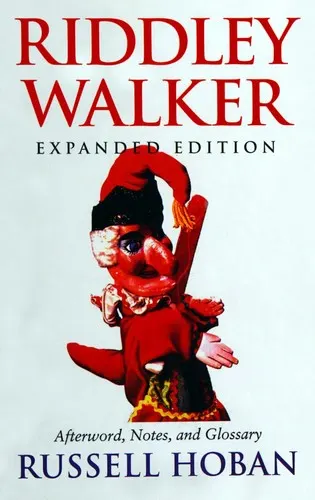
Long after humanity has destroyed its civilization, twelve-year-old Riddley narrates his world in a fractured, reinvented English. Reading the first pages feels difficult; then the language clicks, and Hoban’s ruined future becomes startlingly immediate—funny, brutal, superstitious, and alive.
Like Vonnegut, Hoban looks at our species from enough distance to make intelligence seem less like an evolutionary triumph than a dangerous compulsion. Yet he never condescends to his characters. Now a devoted cult classic, Riddley Walker offers the rare exhilaration of learning how to read a novel all over again.

Brockmeier imagines a city inhabited by the dead, who remain there only while someone living still remembers them. Meanwhile, as a pandemic empties the living world, a researcher named Laura Byrd finds herself isolated in Antarctica.
The kinship with Galápagos lies in perspective: individual lives are viewed against extinction-scale time, making ordinary memories suddenly enormous. Brockmeier lacks Vonnegut’s vaudevillian bite, but he reaches the same hidden tenderness—the conviction that ridiculous, doomed human beings matter because they remember and are remembered. Its central conceit is unforgettable, but the quiet emotional force with which Brockmeier fulfills it is what makes the novel linger.