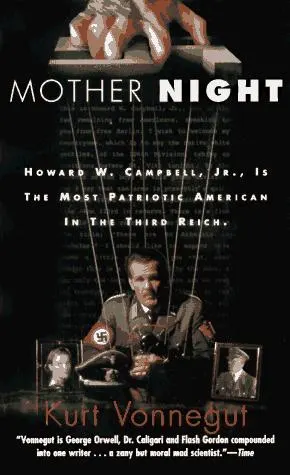
Books like Mother Night
You responded to Vonnegut’s corrosive mixture of confession, performance, political absurdity, and moral unease. These three novels likewise make identity a dangerous role—and refuse to let wit become an alibi.
If you liked Mother Night, you’ll love these
Not lookalikes — kindred books. Each one shares something essential with Mother Night, and we tell you exactly what.
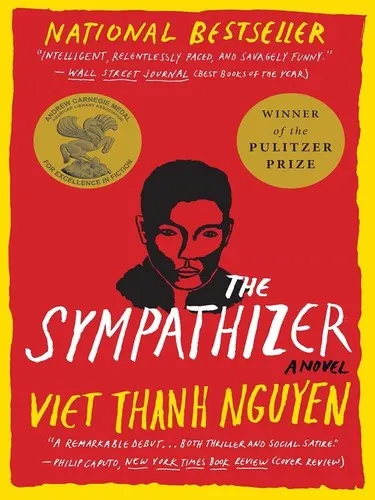
A communist agent embedded in South Vietnam’s secret police begins his story as a confession. Like Howard W. Campbell Jr., he inhabits incompatible loyalties until duplicity becomes less a tactic than a self.
Nguyen matches Vonnegut’s deadpan comedy with sharper ideological argument: propaganda, exile, revolution, and American mythmaking are all subjected to the narrator’s divided gaze. Yet the Pulitzer Prize–winning novel never reduces him to a political diagram; his intelligence and compromises make every judgment rebound upon the reader. Few novels since Mother Night have made the double agent’s predicament feel so morally intimate.
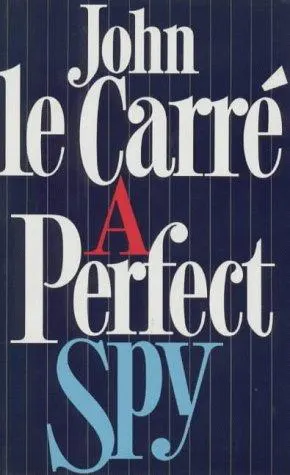
Le Carré’s masterpiece begins with veteran intelligence officer Magnus Pym disappearing and sitting down to write the story of his life. What follows is espionage stripped to its psychological core: a man trained from childhood to charm, imitate, conceal, and become whatever another person requires.
The kinship with Mother Night lies not chiefly in spying but in the terrifying possibility that no authentic self remains beneath the performances. Le Carré writes with more emotional fullness than Vonnegut, tracing betrayal back through family, class, and the hunger to be loved. Philip Roth called it ‘the best English novel since the war’; its reputation endures because Pym is not merely a convincing liar, but an unforgettable anatomy of how one is made.
From a mental institution, Oskar Matzerath recounts his childhood in a Europe sliding toward catastrophe. He is theatrical, grotesque, funny, evasive, and determined to control the terms on which history hears him—exactly the sort of narrator a Mother Night reader should distrust and follow eagerly.
Grass turns black comedy into an instrument for examining complicity: private resentments and public barbarism mingle until claims of innocence sound absurd. The novel is wilder and more carnivalesque than Vonnegut’s, but it shares his refusal to treat historical evil with solemn, comforting distance. A defining work of postwar literature by a Nobel laureate, it remains outrageous, inexhaustible, and impossible to confuse with any safer account of the past.