Author
Books like Kazuo Ishiguro
14 books we recommend to Kazuo Ishiguro readers, drawn from Never Let Me Go, The Remains of the Day, Klara and the Sun, The Buried Giant, A Pale View of Hills, An Artist of the Floating World and The Unconsoled — each with the reason why.
If you loved Never Let Me Go
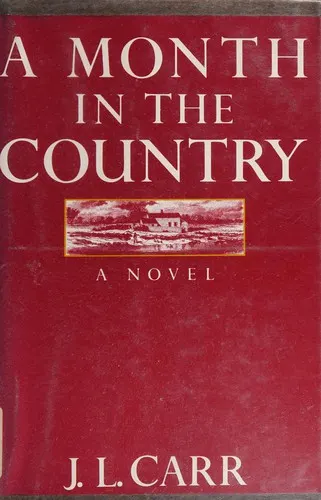
A veteran arrives in a Yorkshire village to uncover a medieval mural, carrying wounds he rarely names. Like Kathy, he narrates from a later vantage point, circling a brief, irrecoverable season whose significance emerges through pauses, small courtesies, and missed possibilities.
Carr’s Booker-shortlisted miniature has the emotional reach of a much longer novel. Its pastoral warmth makes its final ache more piercing: beauty survives, but the chance to inhabit it does not. Readers who loved Ishiguro’s ability to make restraint feel overwhelming should not miss this quiet masterpiece.
Szabó turns memory into confession. A writer recounts her long, fiercely intimate relationship with Emerence, the formidable housekeeper who enters her life on uncompromising terms. From the opening, we know the narrator believes she betrayed the woman she loved; the novel’s power lies in discovering how affection, pride, dependence, and self-deception became inseparable.
Like Never Let Me Go, it asks whether recognizing another person’s vulnerability is enough when one has also accepted the conditions that will destroy them. Widely regarded as Szabó’s masterpiece, The Door delivers an ending whose force has been accumulating in every seemingly ordinary domestic encounter.
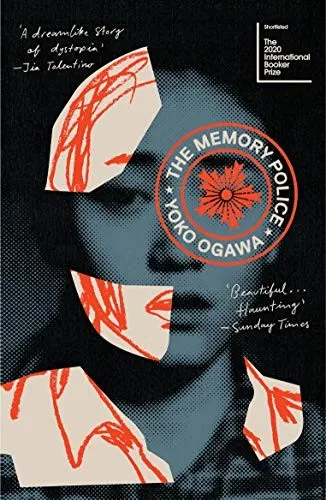
On an unnamed island, objects disappear—and soon most inhabitants cease to remember that they ever existed. Ogawa is less interested in explaining this regime than in showing how people accommodate themselves to it: quietly, practically, even politely. That calm acceptance carries the same chill as Hailsham’s euphemisms and carefully managed truths.
Yet this is also a tender novel about preserving what official reality erases. Its spare, dreamlike prose makes a hidden room, an old object, or an act of attention feel charged with resistance. A National Book Award finalist in Stephen Snyder’s English translation, it has become one of Ogawa’s defining works: haunting not because its world is strange, but because surrender to it feels so human.
If you loved The Remains of the Day
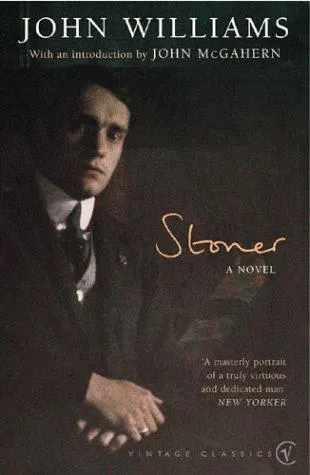
William Stoner enters university intending to study agriculture, discovers literature, and spends his life teaching it in near-obscurity. The premise sounds modest; the emotional effect is anything but. Williams observes compromise, professional duty, thwarted tenderness, and small acts of endurance without pleading for the reader’s sympathy.
A lover of Stevens’s exquisitely controlled narration will recognize the power of a life measured not by public triumph but by what its owner managed to perceive—and failed to claim. First published in 1965 and largely ignored, Stoner became an extraordinary international bestseller decades later, passed between readers as a secret classic. Its revival makes sense: few novels show so convincingly that an outwardly uneventful life can contain an entire tragedy, and perhaps a kind of victory.
If you loved Klara and the Sun
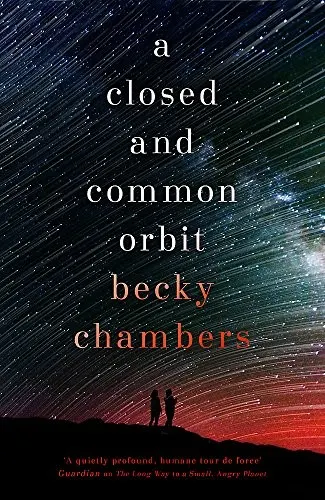
An artificial intelligence designed to inhabit a spaceship wakes in an illegal human-shaped body, where every sensation and social convention must be learned. Chambers makes that adjustment wonderfully concrete: vision has limits, gestures require interpretation, and possessing a face creates obligations no programming anticipated.
A Hugo Award finalist, the novel shares Klara’s deepest concern—not whether an artificial mind can imitate humanity, but whether usefulness is a fair measure of any conscious being. Chambers is warmer and more openly hopeful than Ishiguro, yet never sentimental about dependence, ownership, or the difficulty of choosing a life for oneself. It is technically part of the Wayfarers series but works independently, and its compassionate portrait of personhood has inspired unusually devoted readers.
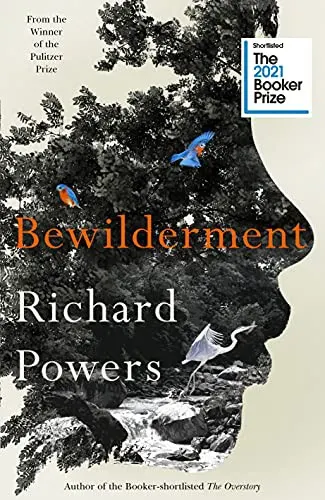
Theo, a widowed astrobiologist, is raising Robin, a fiercely sensitive nine-year-old overwhelmed by cruelty, environmental destruction, and the demands of behaving ‘normally.’ When an experimental form of neurofeedback offers help, the novel begins pressing on the same bruise as Klara and the Sun: how easily parental love can become a project of adjustment, optimization, and rescue.
Powers gives Robin’s intensity both cosmic scale and heartbreaking immediacy. The forests and imagined planets he loves are not decorative; they become ways of asking what kinds of consciousness society makes room for. Shortlisted for the Booker Prize, Bewilderment is compact, ardent, and emotionally devastating—a novel for anyone haunted by Ishiguro’s vision of children being shaped by adults who insist they only want the best for them.
If you loved The Buried Giant
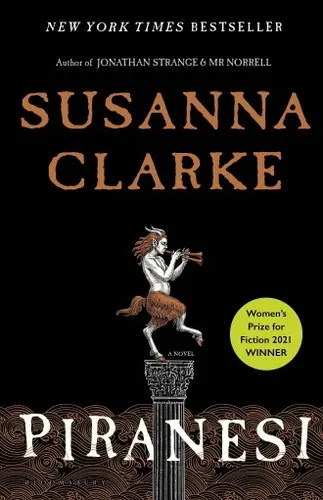
Piranesi lives in an immense House of halls, statues and ocean tides, recording its wonders with meticulous devotion. His world is beautiful, coherent—and shadowed by gaps he does not know how to question.
The kinship with The Buried Giant lies in the narrator’s gentleness. Clarke builds suspense around missing knowledge, but the book is never merely a puzzle: what matters is the dignity of a person whose innocence survives manipulation. Her prose combines mythic grandeur with charming exactness, making the impossible House feel habitable and beloved. Winner of the Women’s Prize, Piranesi inspires unusual devotion because its strangeness gives way to something piercingly humane.
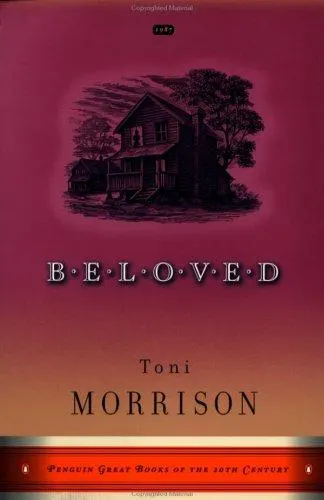
Morrison begins with a house haunted by a furious baby ghost and a mother, Sethe, whose escape from slavery has not freed her from its past. Here memory is neither simply healing nor simply destructive: it is an obligation, a wound and a force that can possess the living.
Where Ishiguro uses mist and legend to ask what a country chooses not to remember, Morrison makes suppressed history enter the room and demand recognition. Her language is more lyrical and incantatory, but she shares his refusal of easy moral judgment; love itself can become terrifying under unbearable conditions. The Pulitzer Prize only hints at Beloved’s stature. It is one of the essential novels about historical violence because it never lets history become abstract—it remains lodged in bodies, homes and acts of love.
If you loved A Pale View of Hills
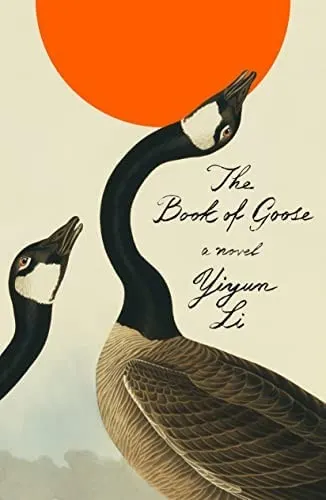
The novel begins with Agnès learning of the death of Fabienne, the magnetic friend who dominated her childhood, and attempting to set their shared past down. From there, Yiyun Li explores how two girls can invent a private world so powerful that authorship, identity, and memory begin to blur.
Agnès’s plainspoken narration has Ishiguro’s dangerous lucidity: the sentences seem transparent even as the truth keeps changing shape beneath them. Li is especially brilliant about doubling—one person imagining, another person speaking; one life lived, another life narrated—and about the strange mixture of intimacy and erasure inside devotion. Winner of the PEN/Faulkner Award, The Book of Goose is both compulsively readable and inexhaustibly ambiguous, a novel whose final emotional shape continues forming after you close it.
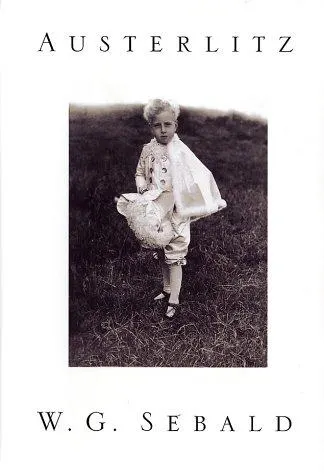
Sebald’s final novel opens with encounters in European railway stations, where the enigmatic Jacques Austerlitz speaks about buildings, fortifications, and the hidden intentions of architecture. His history remains initially out of sight, yet the digressive conversation already suggests that places remember what people have trained themselves not to know.
Austerlitz shares Ishiguro’s faith in indirection. Photographs, waiting rooms, scraps of description, and immense winding sentences circle buried experience rather than seizing it outright. The result is not obscurity but a peculiar intimacy: you become alert to every omission and verbal hesitation. Widely regarded as Sebald’s masterpiece and honored with the National Book Critics Circle Award, it expands the haunted uncertainty of A Pale View of Hills into one of modern fiction’s great meditations on memory, displacement, and the past’s patient return.
If you loved An Artist of the Floating World
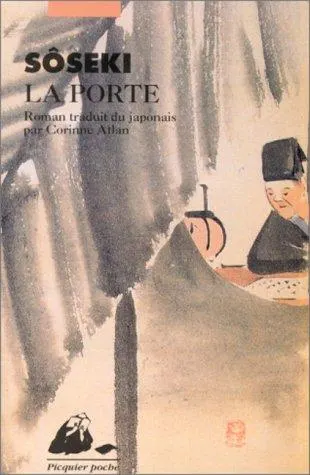
Sōseki’s late masterpiece follows Sōsuke and Oyone, a married couple living in modest, secluded contentment while an obscure burden from the past narrows their world. The novel’s quiet domestic scenes—Sunday idleness, money worries, small encounters with neighbors—gradually acquire immense moral weight. Like Ishiguro, Sōseki understands that shame rarely announces itself; it settles into habits, silences, and diminished expectations.
Sōseki is one of the foundational figures of modern Japanese fiction, yet The Gate feels startlingly intimate rather than monumental. Its lucid stillness conceals a profound study of people who have built a tolerable life around something they cannot resolve. Readers who loved the melancholy spaces between Ono’s words will recognize this novel’s rare, patient power.
If you loved The Unconsoled
Marian Leatherby receives a hearing trumpet and discovers that her family intends to send her to a home for elderly women. From that simple betrayal, Carrington builds an institution as bizarrely rule-bound as Ishiguro’s city: everyone treats the preposterous as administratively normal, while menace and comedy remain impossible to separate.
Carrington, a major Surrealist artist, writes with startling clarity rather than decorative weirdness. Like The Unconsoled, the novel keeps expanding its reality without pausing to explain the new dimensions. Its cult following is deserved: few books are this funny, free, and genuinely unpredictable. Read it for the rare exhilaration of watching social captivity become imaginative liberation.
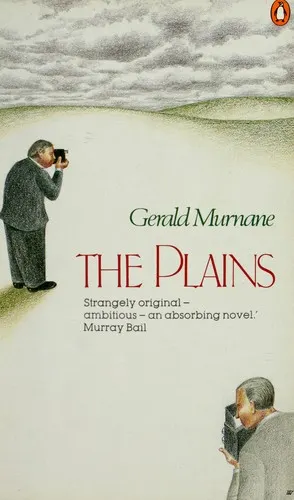
An unnamed filmmaker travels inland to seek a wealthy patron for an ambitious project about the plains. His meetings, theories, and preparations become more consuming than any film he might actually make. Murnane turns artistic purpose into a labyrinth of sponsorship, interpretation, delay, and self-deception—the very territory Ryder wanders in The Unconsoled.
The kinship is especially strong in the atmosphere: formal conversations feel charged with invisible consequences, geography becomes psychological, and grand cultural claims hover between profundity and deadpan joke. Murnane is revered by writers worldwide, and this short, hypnotic novel is the clearest entrance into his singular body of work. It feels like a landscape painting that quietly begins thinking about its observer.
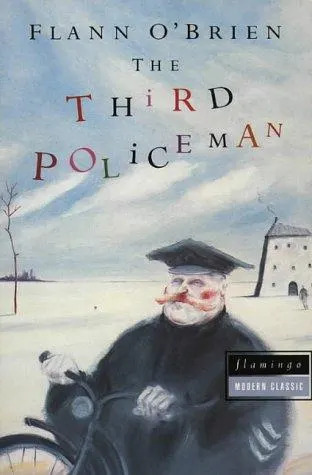
O’Brien’s narrator is a scholar obsessed with an eccentric philosopher and implicated, almost casually, in a terrible crime. When he enters the orbit of two policemen, ordinary logic gives way to an impeccably reasoned nightmare. Questions receive answers that make everything less comprehensible; conversations become traps; physical space obeys the emotional logic of panic.
Anyone who loved Ryder’s endlessly displaced appointments will recognize the sensation of being hurried through a world whose rules everyone else apparently understands. But O’Brien is sharper, faster, and more openly hilarious, with metaphysical speculation delivered in the tone of bureaucratic fact. Neglected when written and now firmly established as a comic masterpiece, The Third Policeman is one of the few novels whose strangeness remains undiminished after generations of devoted readers have tried to describe it.