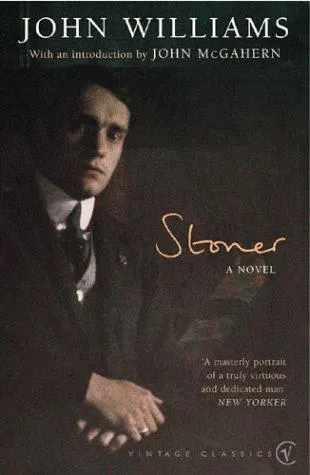
Books like Stoner
A faint light falls across three quiet rooms: someone absorbed in careful work, someone looking back at an old wound, someone discovering too late what another life required of them. In each, restraint makes feeling burn more fiercely.
If you liked Stoner, you’ll love these
Not lookalikes — kindred books. Each one shares something essential with Stoner, and we tell you exactly what.
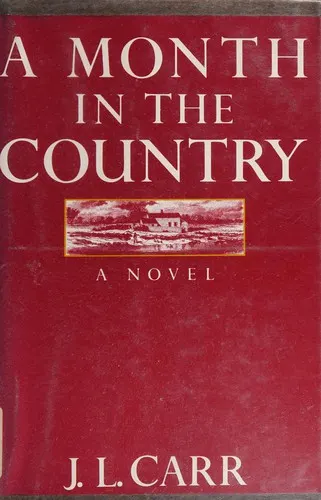
A damaged veteran arrives in a Yorkshire village to uncover a medieval wall painting. Carr makes the patient labor of restoration—inch by inch, color by color—feel like a way of returning to life. A lover of Stoner will recognize the dignity of vocation, the solace of doing one thing well, and the ache created by happiness understood only after it has passed.
This Booker-shortlisted miniature has become a cherished classic because it achieves in barely a hundred pages what larger novels often cannot: an entire season, a wounded consciousness, and the irreversible movement of time. Its final note is as quiet and devastating as anything in Williams.
Maxwell begins with a murder from his Illinois childhood, but the novel’s true subject is the lifelong burden of having failed another person. Memory circles the event, patiently imagining the private griefs hidden behind familiar faces. Like Williams, Maxwell refuses melodrama; his plain, exact sentences let remorse gather almost invisibly until it becomes overwhelming.
A Pulitzer finalist and winner of the William Dean Howells Medal, this short novel is revered by writers for its moral delicacy. It understands that an outwardly uneventful life can contain an inexhaustible tragedy—and that attention itself may be a belated form of love.

A writer hires the formidable Emerence as her housekeeper and gradually finds herself drawn into a relationship governed by labor, pride, secrecy, and fiercely conditional love. Emerence is one of modern fiction’s great creations: abrasive, commanding, endlessly capable, and impossible to reduce to either servant or saint.
Where Stoner is hushed, The Door is confrontational, yet both novels ask what work reveals about character and how easily love can be betrayed by vanity, blindness, or good intentions. Szabó’s masterpiece has the force of a confession: by announcing catastrophe at the outset, it turns every ordinary exchange into a moral reckoning. Few novels leave such a vivid sense that truly knowing another person may be both our greatest obligation and our most impossible task.