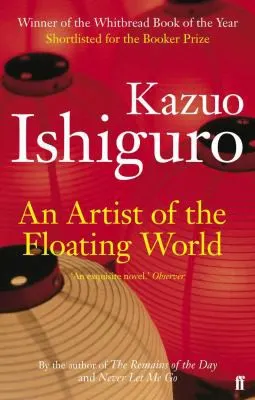
Books like An Artist of the Floating World
After Ono’s courteous evasions, one longs for more novels in which memory quietly indicts the person doing the remembering—books where private shame, historical change, and everything left unsaid carry the real drama.
If you liked An Artist of the Floating World, you’ll love these
Not lookalikes — kindred books. Each one shares something essential with An Artist of the Floating World, and we tell you exactly what.
Ishiguro’s Booker Prize–winning masterpiece perfects the method he developed in An Artist of the Floating World. Stevens, an English butler looking back on a life devoted to service, speaks with such immaculate dignity that every omission becomes conspicuous. As with Ono, the fascination lies not in catching him in simple lies, but in watching loyalty, pride, and professional ideals reshape what he can admit to himself.
Few novels make restraint feel so devastating. Its political and emotional reckonings arrive through hesitations and misplaced emphasis, and its final pages are among Ishiguro’s finest. If Ono’s self-portrait held you spellbound, Stevens’s will be impossible to forget.

The Door begins as the story of a writer and the formidable older woman she hires as a housekeeper, but its narrator is speaking under the pressure of guilt. She wants to honor Emerence, explain herself, and establish the truth; those aims do not always agree. The result is a harsher, more intimate version of the moral uncertainty that animates Ishiguro’s novel.
Szabó gives the relationship extraordinary force: affection becomes entangled with vanity, gratitude with domination, and good intentions with betrayal. Long revered in Hungary and brilliantly translated into English by Len Rix, The Door has acquired an intensely devoted international readership. Its emotional directness may initially seem unlike Ishiguro’s reserve, but it leaves the same haunting question: how honestly can we narrate the harm we have done?
Sōseki’s late masterpiece follows Sōsuke and Oyone, a married couple living in modest, secluded contentment while an obscure burden from the past narrows their world. The novel’s quiet domestic scenes—Sunday idleness, money worries, small encounters with neighbors—gradually acquire immense moral weight. Like Ishiguro, Sōseki understands that shame rarely announces itself; it settles into habits, silences, and diminished expectations.
Sōseki is one of the foundational figures of modern Japanese fiction, yet The Gate feels startlingly intimate rather than monumental. Its lucid stillness conceals a profound study of people who have built a tolerable life around something they cannot resolve. Readers who loved the melancholy spaces between Ono’s words will recognize this novel’s rare, patient power.