Author
Books like Iain Banks
17 books we recommend to Iain Banks readers, drawn from The Wasp Factory, The Player of Games, Use of Weapons, The Crow Road, Feersum Endjinn and Espedair Street — each with the reason why.
If you loved The Wasp Factory
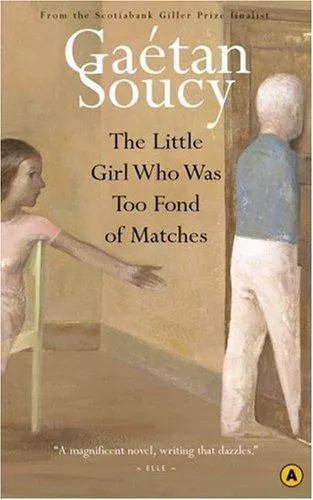
Two siblings have grown up in near-total isolation under their father’s bizarre rule. When that rule abruptly ends, one ventures beyond the estate and discovers that the family’s private account of reality may not survive contact with the outside world.
Soucy’s short Quebec Gothic is the closest match here to Banks’s uncanny achievement: an invented worldview conveyed in a voice that is lucid, funny, and profoundly unreliable. Its strange diction initially feels like another of the household’s imprisoning rituals; gradually, it becomes the key to understanding them. The novel has acquired a devoted international readership because its shocks are not gimmicks—they transform the meaning of the narrator’s language, body, and identity. If you loved the moment-by-moment unease of realizing that Frank’s certainty cannot be trusted, this is indispensable.
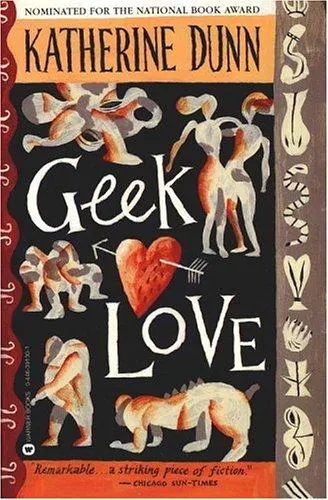
The Binewskis run a failing carnival, and their solution is to breed their own family of human attractions. Their daughter Olympia narrates the resulting history: sibling rivalries, worship, exploitation, and the dangerous charisma of a brother who turns bodily difference into a creed.
A National Book Award finalist that became a fiercely beloved cult novel, Geek Love matches Banks not through setting but through its refusal of normal moral coordinates. Dunn makes the grotesque intimate and the intimate grotesque; she understands that a family can manufacture its own religion, vocabulary, and definition of love. Yet where The Wasp Factory is cold, coastal, and solitary, this book is gaudy, crowded, and operatic. Its audacity is matched by emotional force: you may recoil from the Binewskis, but you will not be able to dismiss them.
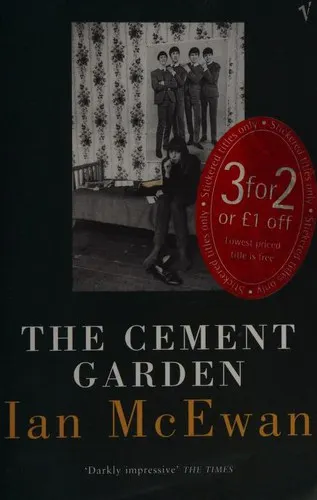
After four siblings find themselves alone in their suburban house, ordinary domestic rules begin to decay. The narrator, teenage Jack, observes this deterioration with a blankness that makes every detail more disturbing: he is neither confessing nor asking to be forgiven.
This compact early McEwan novel shares Banks’s gift for making adolescent logic feel self-contained and horrifyingly reasonable. The menace comes less from events than from atmosphere—the sealed house, the stale summer, the children’s improvised hierarchy—and from prose so controlled it denies the reader any comforting moral commentary. Published before McEwan became one of Britain’s defining literary novelists, it remains among his most notorious works. Read it for the same queasy pleasure as The Wasp Factory: the sense of entering a private kingdom whose laws are appalling, coherent, and already too late to change.
If you loved The Player of Games

Thomas Cromwell reads a room as Gurgeh reads a board: he notices leverage, concealed loyalties, and the move someone will regret three turns later. Mantel makes court politics thrilling not through constant spectacle but by placing you inside a mind that converts stray details into strategy.
The kinship goes deeper than clever maneuvering. Cromwell’s gifts give him unusual freedom while binding him ever more tightly to power—the same troubling relationship between mastery and complicity that animates Banks’s novel. Winner of the Booker Prize, Wolf Hall earned its stature by making historical fiction feel startlingly immediate. Its Tudor court becomes a vast, evolving game, and few novels offer greater pleasure in watching someone learn how to play it.
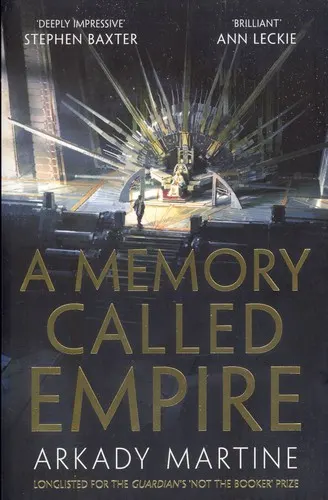
Mahit Dzmare arrives as ambassador to the immense Teixcalaanli Empire already half in love with its poetry, manners, and history. She must survive its politics without surrendering the small independent culture she represents. Like Gurgeh, she encounters a civilization whose beauty and brutality are inseparable—and whose values are embedded in every ritual and competition.
Martine is especially good at cultural seduction: empire is not merely an enemy but a language people long to speak perfectly. The political intrigue is sharp, yet the Hugo-winning novel’s real force lies in its questions about prestige, assimilation, and whether admiration can itself become conquest. Anyone captivated by Banks’s ability to make ideas feel like adventure will find this difficult to put down.
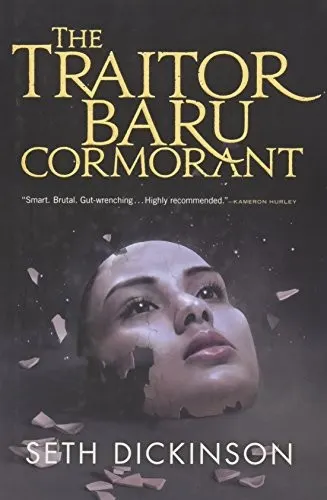
Baru Cormorant’s homeland is absorbed by the Masquerade, an empire that conquers through schools, trade, accounting, and carefully imposed ideas of normality. Baru responds by mastering the empire’s own instruments. Her battlefield is fiscal policy; her weapons are competence, prediction, and an unnerving willingness to calculate costs.
This is the fiercest match for the way The Player of Games turns abstract systems into moral action. Dickinson makes economics as tense as combat because every elegant solution acts upon actual lives. Baru’s brilliance is exhilarating, but the novel continually asks what such brilliance becomes when exercised through a corrupt machine. It has inspired unusually devoted, argumentative readers because its dilemmas cannot be tidied away—and because Baru is one of modern speculative fiction’s most formidable strategic minds.
If you loved Use of Weapons
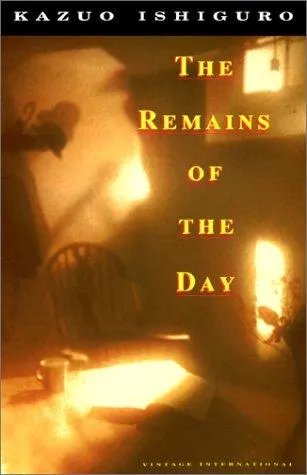
Stevens narrates a motoring holiday with the grave precision of a man filing a report. His dignity, professionalism, and exquisite command of language gradually reveal themselves as defenses against moral scrutiny.
Like Use of Weapons, Ishiguro’s Booker Prize winner makes structure inseparable from conscience: omissions matter, chronology becomes an instrument of self-justification, and apparently innocuous recollections accumulate terrible pressure. Banks is louder, funnier, and bloodier; Ishiguro achieves a comparable devastation through restraint. Few novels make the reader feel so sharply how a person can build an identity around being useful—and discover that usefulness does not absolve them.
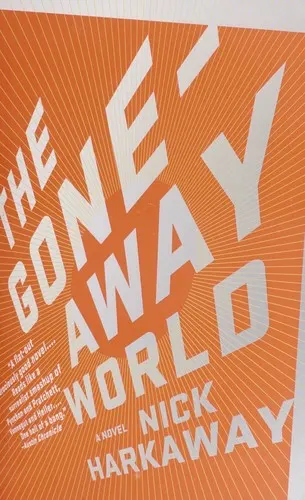
A mercenary rescue crew is hired to extinguish an impossible fire, prompting the unnamed narrator to recount his long friendship with the heroic, exasperating Gonzo Lubitsch. From there, Harkaway unleashes martial arts, corporate absurdity, war, friendship, bureaucracy, and reality itself coming apart.
This Clarke-shortlisted debut has Banks’s rare tonal range: exuberant comedy can become horror without warning, while flamboyant invention never displaces the human cost of violence. Its apparently unruly digressions are structural engineering in disguise, eventually clicking together with the force of a trap. Readers who loved Banks’s ability to hide tragedy inside swaggering adventure should not miss it.
If you loved The Crow Road
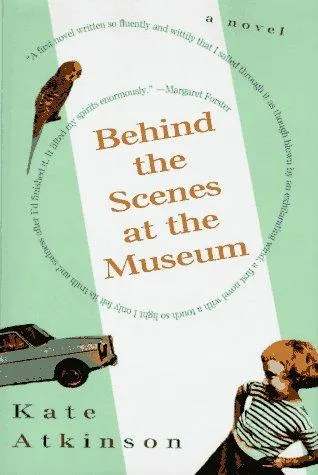
Ruby Lennox narrates her life from the instant of conception, while brilliantly placed excursions into earlier generations uncover the losses, evasions and accidents concealed inside family anecdotes. Like Banks, Atkinson treats chronology as a mystery: apparently incidental details return charged with new meaning, and the reader gradually understands what the family itself cannot say.
This Whitbread Book of the Year winner made Atkinson’s reputation at once. Its mordant jokes never trivialize its grief; they make the grief survivable. Anyone who loved The Crow Road’s combination of youthful voice, structural ingenuity and buried family history should consider this essential.
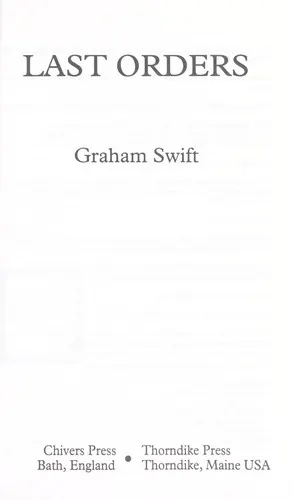
Four men set out to carry their dead friend Jack Dodds’s ashes to Margate. As the journey proceeds, their alternating voices disclose old loyalties, resentments, compromises and acts of love—an entire shared past assembled from partial, self-protective accounts.
The Booker-winning novel has The Crow Road’s fascination with what the dead leave unfinished, but Swift compresses a family saga into one modest trip. Plainspoken, funny and quietly devastating, it makes revelation depend not on a dramatic confession but on the accumulating weight of ordinary lives. Its final emotional force is enormous.
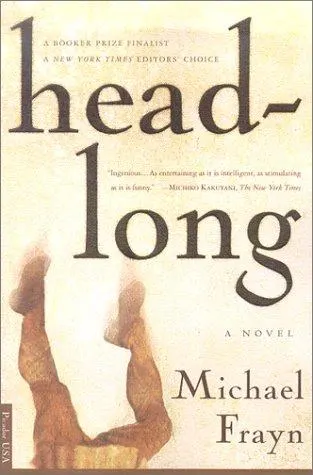
When an aspiring art historian spots what he believes may be a lost Bruegel in a neighbour’s neglected collection, intellectual curiosity turns into feverish obsession. Frayn makes the pursuit simultaneously a detective story, an art-historical argument and a superb farce, while the hero’s increasingly elaborate schemes begin exerting pressure on his marriage and his grip on reality.
The kinship with Banks lies in the exhilarating movement between ideas and comic disaster: both writers understand that metaphysical questions become most vivid when tangled up with desire, embarrassment and bad decisions. Booker-shortlisted and adored for its virtuoso momentum, Headlong is the book to read if Prentice’s compulsive search for an answer was what kept you turning pages.
If you loved Feersum Endjinn
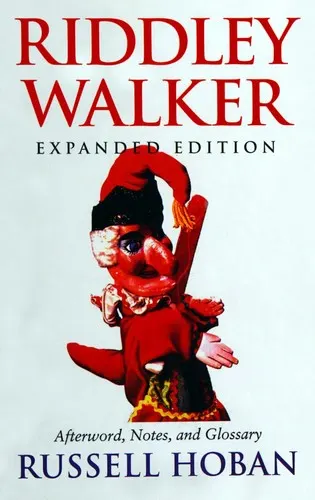
If Bascule’s phonetic narration was the part of Feersum Endjinn that made your brain spark, Riddley Walker is essential. Its young narrator speaks a broken, reinvented English whose misspellings carry history inside them; reading it becomes an act of archaeology, as jokes, rituals, and corrupted memories gradually disclose a lost world.
Hoban’s cult classic is darker and more elemental than Banks, but it shares his faith that linguistic difficulty can create intimacy rather than distance. You do not merely observe Riddley’s mind—you learn to think alongside it. Few novels have made damaged language so expressive, influential, or haunting.
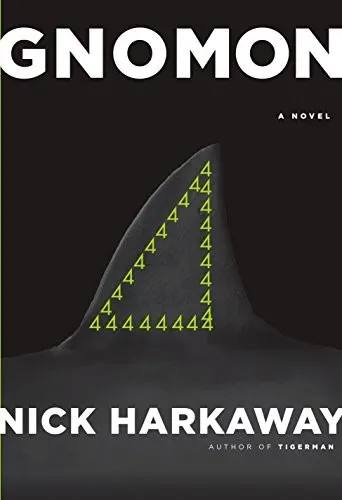
A woman dies while being interrogated by an ostensibly benevolent surveillance state. The investigator assigned to the case enters the recordings of her mind—and finds other lives inside. From that opening, Gnomon expands into a nested construction of personalities, stories, systems, and possible realities.
What connects it to Feersum Endjinn is not simply digital consciousness but architectural audacity: both books make their form embody a civilization whose minds and machines have become inseparable. Harkaway moves between cerebral puzzles, political anger, absurd comedy, and genuine emotional force without shrinking his ambitions. Gnomon has earned a devoted reputation as one of the twenty-first century’s great maximalist speculative novels; surrender to its scale and it becomes gloriously difficult to leave.
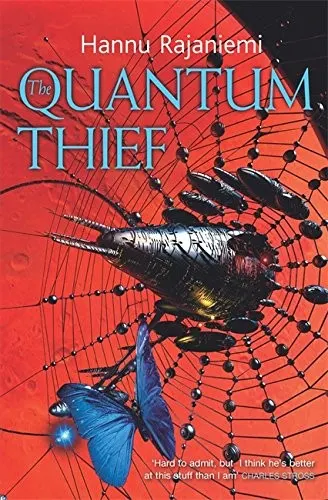
Rajaniemi begins with a master thief trapped in a game-theoretic prison, frees him into a Solar System governed by exotic economies of memory and identity, and explains almost nothing. That refusal to translate the future into comfortable present-day terms produces the same intoxicating disorientation as Banks’s far-future societies: comprehension arrives through momentum, context, and play.
Yet this is no dry exercise in cleverness. It is a sleek caper about privacy, self-invention, loyalty, and the versions of ourselves stored in other people’s minds. Rajaniemi’s celebrated debut helped set a new standard for information-dense posthuman space opera. Its ideas come fast enough to make most novels feel underclocked—and its pleasures deepen once its dazzling vocabulary clicks into place.
If you loved Espedair Street
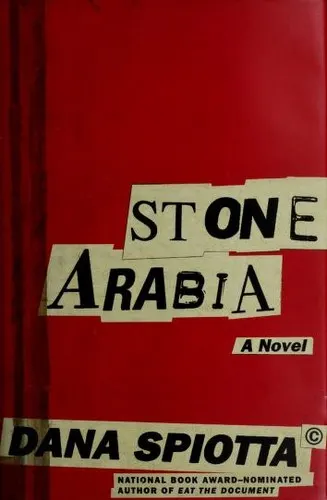
Nik Worth has spent decades recording albums almost nobody hears, meticulously documenting an imaginary career in his private “Chronicles.” His sister Denise watches this magnificent, alarming act of self-invention while confronting her own fears about memory, age and what becomes of an unlived life.
This is Espedair Street’s intimate negative image: obscurity instead of celebrity, but the same urgent questions about whether music saves its maker or merely gives self-destruction a grander soundtrack. Spiotta makes Nik’s nonexistent discography feel tantalisingly real, while the sibling relationship supplies the bruised affection Banks readers will recognise. A National Book Critics Circle Award finalist, Stone Arabia is compact, strange and piercing—the rare music novel that understands the archive of a career can be both a work of art and a hiding place.
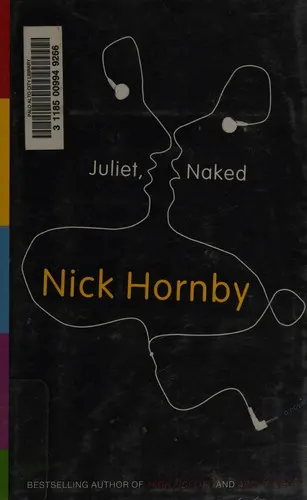
Few writers understand as well as Hornby that loving music can make people perceptive, generous and completely ridiculous. Here, Annie has endured years of her partner Duncan’s obsessive devotion to Tucker Crowe, a long-vanished American singer-songwriter whose silence has allowed fans to turn him into a legend.
Like Banks, Hornby punctures rock mythology without mocking the emotional need behind it. His jokes about collectors, message boards and competing interpretations of records are exact, but beneath them lies a generous novel about wasted time, artistic failure and the terrifying possibility of another chance. The reclusive musician is never merely a mystery to be solved: he is a fallible person forced to live beside his public ghost. Readers who loved Espedair Street’s movement from grotesque fame toward ordinary human connection should find this almost irresistible.
Egan begins with Sasha, a music-industry assistant who steals things, and Bennie, a record executive troubled by age, desire and the fading potency of sound. From there the novel expands into a linked chorus of musicians, producers, friends and casualties, changing voice and form as time rearranges everyone’s understanding of the past.
The kinship with Espedair Street lies in its refusal to separate the glamour of music from private embarrassment, compromise and grief. Egan can be satirical about the machinery of celebrity, then suddenly devastating about an old song or a damaged friendship. Her formal daring never smothers her compassion: every apparent supporting character has a life beyond the anecdote told about them. Winner of both the Pulitzer Prize and the National Book Critics Circle Award, it is one of the essential novels about music, memory and the brutal fact that time keeps playing after the band stops.