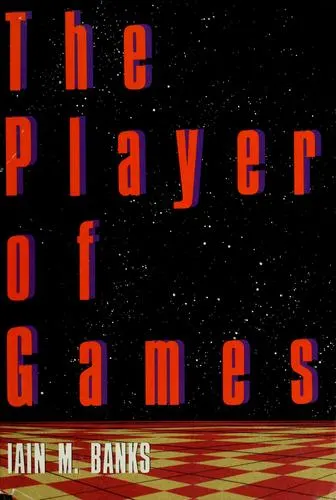
Books like The Player of Games
Tudor England belongs in Gurgeh’s orbit: here too, intelligence means recognizing that etiquette, law, and reputation are games whose rules preserve an entire social order. These three novels share Banks’s deeper fascination with brilliant players confronting systems that are never morally neutral.
If you liked The Player of Games, you’ll love these
Not lookalikes — kindred books. Each one shares something essential with The Player of Games, and we tell you exactly what.

Thomas Cromwell reads a room as Gurgeh reads a board: he notices leverage, concealed loyalties, and the move someone will regret three turns later. Mantel makes court politics thrilling not through constant spectacle but by placing you inside a mind that converts stray details into strategy.
The kinship goes deeper than clever maneuvering. Cromwell’s gifts give him unusual freedom while binding him ever more tightly to power—the same troubling relationship between mastery and complicity that animates Banks’s novel. Winner of the Booker Prize, Wolf Hall earned its stature by making historical fiction feel startlingly immediate. Its Tudor court becomes a vast, evolving game, and few novels offer greater pleasure in watching someone learn how to play it.
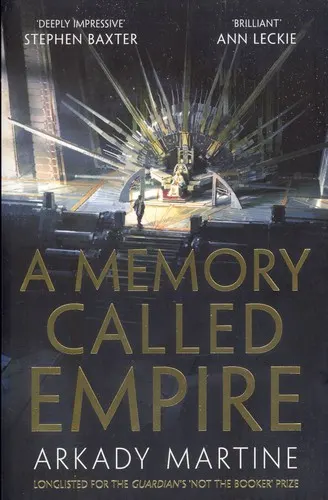
Mahit Dzmare arrives as ambassador to the immense Teixcalaanli Empire already half in love with its poetry, manners, and history. She must survive its politics without surrendering the small independent culture she represents. Like Gurgeh, she encounters a civilization whose beauty and brutality are inseparable—and whose values are embedded in every ritual and competition.
Martine is especially good at cultural seduction: empire is not merely an enemy but a language people long to speak perfectly. The political intrigue is sharp, yet the Hugo-winning novel’s real force lies in its questions about prestige, assimilation, and whether admiration can itself become conquest. Anyone captivated by Banks’s ability to make ideas feel like adventure will find this difficult to put down.
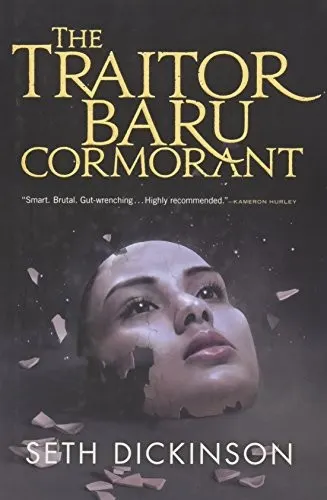
Baru Cormorant’s homeland is absorbed by the Masquerade, an empire that conquers through schools, trade, accounting, and carefully imposed ideas of normality. Baru responds by mastering the empire’s own instruments. Her battlefield is fiscal policy; her weapons are competence, prediction, and an unnerving willingness to calculate costs.
This is the fiercest match for the way The Player of Games turns abstract systems into moral action. Dickinson makes economics as tense as combat because every elegant solution acts upon actual lives. Baru’s brilliance is exhilarating, but the novel continually asks what such brilliance becomes when exercised through a corrupt machine. It has inspired unusually devoted, argumentative readers because its dilemmas cannot be tidied away—and because Baru is one of modern speculative fiction’s most formidable strategic minds.