
Books like Wolf Hall
Begin in a speeding black Cadillac in 1930s Louisiana. Robert Penn Warren’s world seems far from Tudor England, yet it reveals the same truth that animates Wolf Hall: history is made through favors, appetites, paperwork, memory, and the dangerous competence of people who know how to use them. The other two choices approach Mantel’s achievement through the reconstruction of a ruler and through Mantel’s own first great experiment in revolutionary power.
If you liked Wolf Hall, you’ll love these
Not lookalikes — kindred books. Each one shares something essential with Wolf Hall, and we tell you exactly what.
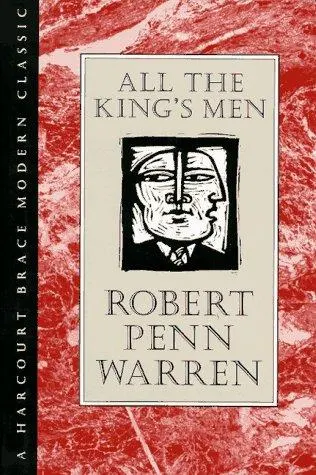
Jack Burden, a journalist turned political operative, serves Willie Stark, a populist governor whose idealism and ruthlessness cannot be neatly separated. Like Cromwell, Jack understands that power works through private weaknesses as much as public institutions: an old letter, a buried grievance, or a family obligation can redirect a state.
Warren’s Pulitzer Prize–winning novel has a more rolling, incantatory style than Mantel’s, but it shares her fascination with intelligence employed in morally contaminated circumstances. Its politicians are neither cynical puppets nor noble abstractions; they are vivid, persuasive people whose motives change under pressure. Few novels make political action feel so intimate—or show so forcefully how the past remains usable ammunition.
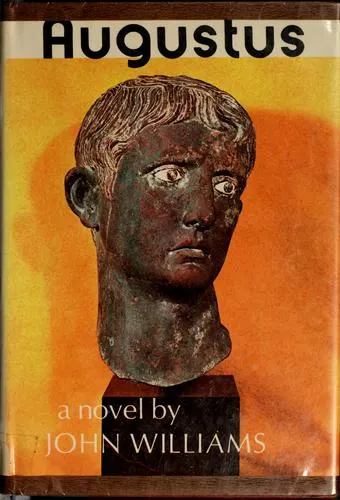
John Williams builds the life of Rome’s first emperor from letters, journals, military dispatches, and hostile recollections. The result is a portrait assembled indirectly: Augustus emerges through the competing judgments of friends, enemies, family, and functionaries, just as Mantel’s Cromwell must be discerned amid rumor, performance, and faction.
What grips is the conversion of administration into drama. Marriage arrangements, appointments, grain supplies, and carefully chosen words become instruments of rule, while every public victory exacts a private cost. Winner of the National Book Award, Augustus is often overshadowed by Williams’s Stoner; it is nonetheless one of the great modern historical novels—formally daring, emotionally restrained, and devastating about the loneliness of remaking a state.
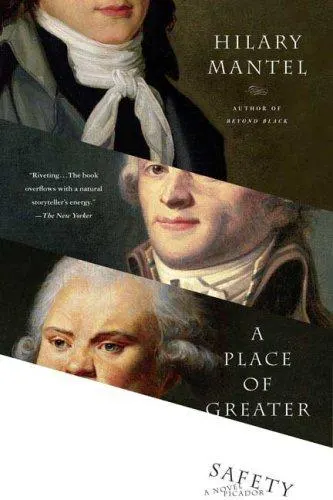
Before Cromwell, Mantel took on Danton, Robespierre, and Desmoulins. She follows them from provincial childhoods toward revolutionary Paris, not as marble historical figures but as ambitious young men with debts, marriages, jokes, jealousies, and incompatible visions of justice.
This is the larger, wilder ancestor of Wolf Hall. Already present are Mantel’s electrifying dialogue, her distrust of received history, and her unmatched ability to show public catastrophe beginning in crowded rooms among people improvising from moment to moment. The novel is more sprawling and feverish than the Cromwell books, appropriately so: it captures a political world accelerating beyond anyone’s control. For a Wolf Hall reader, missing it would mean missing the workshop in which Mantel first forged her extraordinary way of making the dead speak.