Author
Books like W. G. Sebald
8 books we recommend to W. G. Sebald readers, drawn from Austerlitz, The Rings of Saturn, The Emigrants and Vertigo — each with the reason why.
If you loved Austerlitz
Ugrešić builds her novel from photographs, lists, museum exhibits, dreams and the scattered possessions of exile. Its unnamed narrator, displaced from the disintegrating Yugoslavia to Berlin, tries to read a vanished life through objects that have survived it—particularly the remnants of her mother’s world.
The kinship with Austerlitz lies in this distrust of smooth remembrance. Memory arrives out of sequence and attached to things; photographs preserve appearances while withholding meaning. Yet Ugrešić is more caustic and playful than Sebald, alert to absurdity even amid dispossession. Widely regarded as one of the essential novels of exile, it turns fragmentation into an extraordinarily moving form: not a broken story, but the only honest shape the story could take.
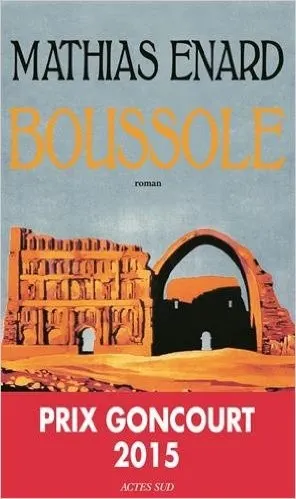
During one sleepless night in Vienna, musicologist Franz Ritter sifts through his attachment to the scholar Sarah and through a lifetime of encounters with the cultures Europe has labeled “Eastern.” His mind moves by association—from music and manuscripts to travel, illness, desire and historical erasure—in long, enveloping currents of prose.
Like Austerlitz, Compass gives intellectual digression emotional urgency: scholarship is not decoration but the route by which a lonely person approaches what he cannot say directly. Énard’s learning is formidable, yet the novel remains sensuous, lovesick and alive with voices. Winner of the Prix Goncourt, it is a rare large-scale novel whose erudition deepens rather than cools its feeling; its final effect is that of waking from another person’s memory with your map of the world subtly altered.
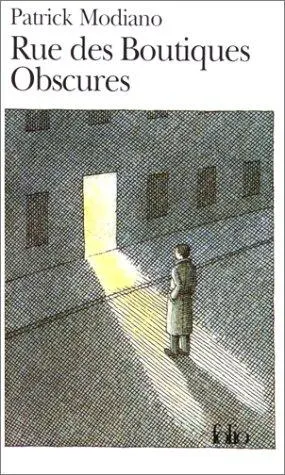
Guy Roland is a private detective with no memory of his own past. When his employer retires, Guy begins investigating himself through old directories, addresses, photographs and people who may—or may not—recognize him.
Where Sebald accumulates immense, mournful sentences, Modiano works by subtraction. Every clue opens another vacancy; Paris becomes a network of vanished rooms and uncertain names. Missing Person understands, as Austerlitz does, that recovering a biography is not the same as recovering a self—and that documents can intensify mystery instead of resolving it. The novel won the Prix Goncourt long before Modiano received the Nobel Prize, and it remains perhaps the purest expression of his haunting art: brief enough to read in an evening, difficult to escape for years.
If you loved The Rings of Saturn
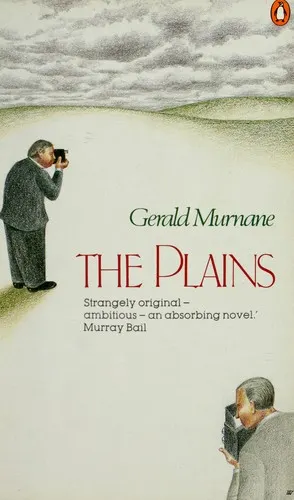
An unnamed filmmaker travels inland, hoping to capture the plains and to secure the patronage of the landowners who have spent generations interpreting them. Almost immediately, geography becomes metaphysics: distances, colors and boundaries suggest elaborate private histories that can never be fully decoded.
Like Sebald, Murnane makes looking feel both obsessive and morally serious. His narrator wanders less across territory than through competing systems of meaning, pursuing the revelation supposedly hidden behind visible things. The prose is austere, hypnotic and quietly uncanny—the inverse of Sebald’s abundance, but capable of producing the same vertigo. Long regarded as a cult masterpiece by one of Australia’s most singular writers, this short novel opens into a world far larger than its page count.
Tokarczuk builds this novel from airports, hotel rooms, anatomical museums, maps, relics and stories interrupted by other stories. Its governing intelligence is restless: a preserved body leads to a meditation on possession; a journey becomes an inquiry into what movement does to identity; an incidental object exposes centuries of longing and violence.
That associative freedom will feel instantly exhilarating to a reader of The Rings of Saturn. Yet Tokarczuk’s book is more kinetic and polyphonic, flashing among voices and eras rather than proceeding at Sebald’s mournful walking pace. Jennifer Croft’s translation won the 2018 Man Booker International Prize, shortly before Tokarczuk received the Nobel, and the acclaim is justified: Flights proves that fragmentation can create not disorder but a hidden, haunting architecture.
If you loved The Emigrants
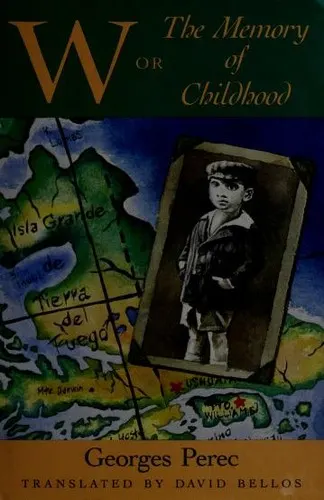
Perec alternates uncertain autobiographical memories with an adventure narrative begun in childhood. One strand is full of qualifications, blanks and corrections; the other follows the seemingly lucid logic of an imagined island devoted to sport. The accumulating tension between them makes absence itself eloquent.
A landmark of experimental autobiographical fiction, W possesses none of the chill that description can make it sound as though it has. Perec’s formal ingenuity is inseparable from bereavement: he tests invention because memory has failed, and tests memory because invention may conceal as much as it reveals. Few books come closer to Sebald’s understanding that historical catastrophe survives most powerfully in gaps, evasions and damaged particulars.
A sportswriter arrives in an English city and finds every street summoning his dead friend Tony. Johnson printed the novel in twenty-seven unbound sections—only the first and last are fixed—so the middle can be read in changing order. The device is not a stunt: it gives memory its actual behavior, abrupt and recursive, with jokes, professional trivia and grief continually interrupting one another.
First published in 1969 and preserved as a cult masterpiece of British experimental fiction, The Unfortunates has inspired fierce devotion because its radical form feels so human. Sebald readers will recognize the wandering mind, the pressure of the dead upon ordinary landscapes and the refusal to manufacture consolation. Reading it feels less like hearing a story than temporarily inheriting another person’s memories.
If you loved Vertigo
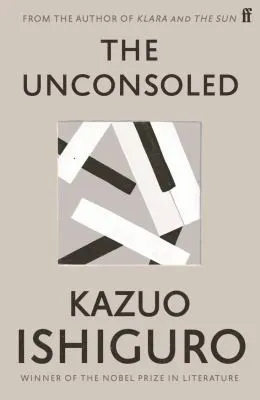
A celebrated pianist arrives in an unnamed European city and discovers that everyone expects something from him. Appointments proliferate, corridors lead impossibly far, and urgent obligations slip from his mind. Ishiguro removes Sebald’s documentary scaffolding but intensifies his disorientation: space, time, and memory obey emotional rather than rational laws.
Initially notorious for baffling some readers, The Unconsoled has become a passionately defended masterpiece—the Nobel laureate’s strangest and most audacious novel. Its enormous dream unfolds with impeccable calm, making every impossible transition feel momentarily reasonable. A reader who loved the uncanny repetitions and perceptual instability of Vertigo will recognize the sensation immediately, while encountering it in a radically different form.