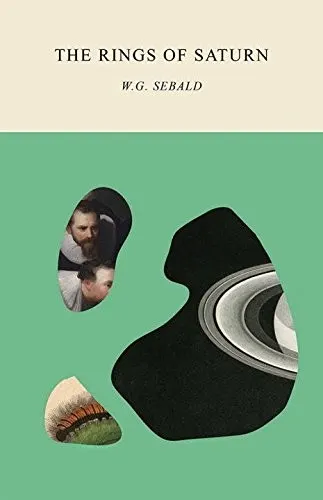
Books like The Rings of Saturn
Gerald Murnane’s empty Australian grasslands may seem far from Sebald’s Suffolk coast, yet they generate the same sensation: landscape turning into memory, speculation and an inexhaustible map of the mind. From there, these choices move toward two more overtly itinerant novels, each transforming travel and scholarship into an art of melancholy connection.
If you liked The Rings of Saturn, you’ll love these
Not lookalikes — kindred books. Each one shares something essential with The Rings of Saturn, and we tell you exactly what.
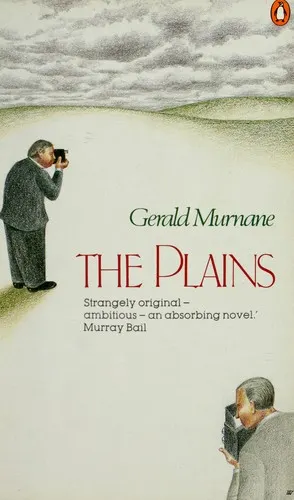
An unnamed filmmaker travels inland, hoping to capture the plains and to secure the patronage of the landowners who have spent generations interpreting them. Almost immediately, geography becomes metaphysics: distances, colors and boundaries suggest elaborate private histories that can never be fully decoded.
Like Sebald, Murnane makes looking feel both obsessive and morally serious. His narrator wanders less across territory than through competing systems of meaning, pursuing the revelation supposedly hidden behind visible things. The prose is austere, hypnotic and quietly uncanny—the inverse of Sebald’s abundance, but capable of producing the same vertigo. Long regarded as a cult masterpiece by one of Australia’s most singular writers, this short novel opens into a world far larger than its page count.
Tokarczuk builds this novel from airports, hotel rooms, anatomical museums, maps, relics and stories interrupted by other stories. Its governing intelligence is restless: a preserved body leads to a meditation on possession; a journey becomes an inquiry into what movement does to identity; an incidental object exposes centuries of longing and violence.
That associative freedom will feel instantly exhilarating to a reader of The Rings of Saturn. Yet Tokarczuk’s book is more kinetic and polyphonic, flashing among voices and eras rather than proceeding at Sebald’s mournful walking pace. Jennifer Croft’s translation won the 2018 Man Booker International Prize, shortly before Tokarczuk received the Nobel, and the acclaim is justified: Flights proves that fragmentation can create not disorder but a hidden, haunting architecture.
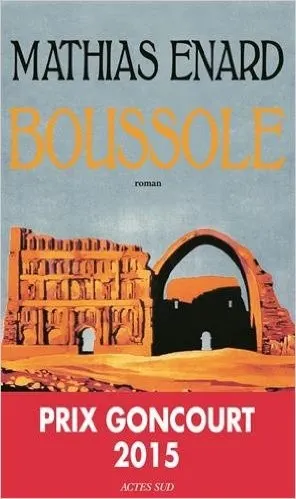
During one sleepless night in Vienna, musicologist Franz Ritter receives news from a scholar he loves and begins ranging through memories of music, books, travel and the long traffic of ideas between Europe and the Middle East. His room becomes a kind of nocturnal archive in which scholarship is inseparable from desire and every cultural artifact carries traces of forgotten encounters.
Énard shares Sebald’s gift for turning erudition into atmosphere rather than display. Names, compositions and historical episodes accumulate with emotional pressure; the past is not background but something still active inside private grief. Winner of the Prix Goncourt, Compass is a lush, demanding act of cultural remembrance—and one of the few novels that can match Sebald’s conviction that digression is not a departure from the true subject, but the only way to reach it.