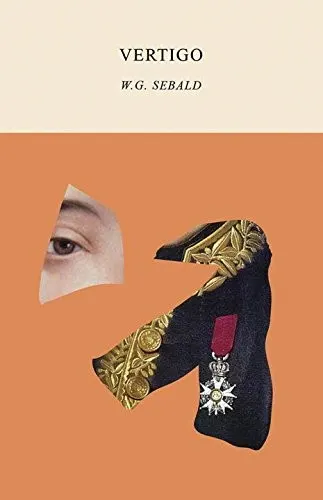
Books like Vertigo
A seventeen-year-old Henri Beyle crosses the Alps with Napoleon’s army, then finds that his most vivid memory may have come from an engraving. These novels likewise make uncertainty—about memory, history, and perception—strangely absorbing.
If you liked Vertigo, you’ll love these
Not lookalikes — kindred books. Each one shares something essential with Vertigo, and we tell you exactly what.
Ugrešić builds this novel of exile from photographs, museum exhibits, family anecdotes, dreams, lists, and apparently stray objects. As in Vertigo, fragments that seem accidental begin to exert a mysterious gravitational pull; history survives not as a coherent account but as luggage, damaged images, and compulsive recollection.
Yet Ugrešić’s voice is sharper and more mischievous than Sebald’s. Her melancholy keeps company with satire, particularly when she observes émigrés and intellectual life in Berlin. Long admired as one of her defining works, the novel has attracted devoted readers because its shattered form does not merely describe displacement—it makes memory’s dislocation palpable. Anyone moved by Sebald’s photographs and associative leaps should not miss this extraordinary cabinet of losses.
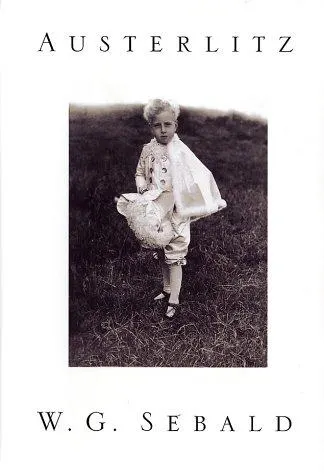
Austerlitz is the fullest realization of the method Vertigo invents. A chance meeting in an Antwerp railway station opens into conversations about architecture, buried histories, and a life whose foundations have been hidden from the person living it. Photographs interrupt the prose; buildings become repositories of repression; a narrator listens while another man circles what he cannot yet say.
Winner of the National Book Critics Circle Award, it is widely regarded as Sebald’s masterpiece, but its power is more intimate than that reputation suggests. The long sentences create an almost physical sensation of thought moving through darkness, illuminating one detail and then another. If Vertigo left you wanting to follow Sebald’s melancholy investigations further, Austerlitz is indispensable.
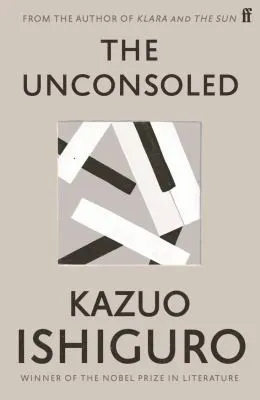
A celebrated pianist arrives in an unnamed European city and discovers that everyone expects something from him. Appointments proliferate, corridors lead impossibly far, and urgent obligations slip from his mind. Ishiguro removes Sebald’s documentary scaffolding but intensifies his disorientation: space, time, and memory obey emotional rather than rational laws.
Initially notorious for baffling some readers, The Unconsoled has become a passionately defended masterpiece—the Nobel laureate’s strangest and most audacious novel. Its enormous dream unfolds with impeccable calm, making every impossible transition feel momentarily reasonable. A reader who loved the uncanny repetitions and perceptual instability of Vertigo will recognize the sensation immediately, while encountering it in a radically different form.