Author
Books like Mary Renault
9 books we recommend to Mary Renault readers, drawn from The King Must Die, The Charioteer, The Bull from the Sea and The Mask of Apollo — each with the reason why.
If you loved The King Must Die
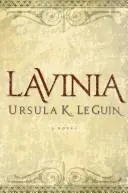
Virgil gives Lavinia scarcely a voice in the Aeneid; Le Guin gives her a consciousness subtle enough to question the poem that created her. Yet this is no modern character wearing antique costume. Lavinia understands herself through household duties, omens, sacred places, family loyalties, and the political consequences of marriage.
Like Renault, Le Guin makes an ancient worldview intelligible without flattening its mystery. Gods may not stride visibly through the landscape, but signs and prophecies exert real force because people organize their lives around them. The result is quieter than Renault’s novel, yet equally lucid about how legend grows from mortal choices. Its Locus Award reflects the rare success of a book that is both a compelling historical imagination and a profound conversation with epic.
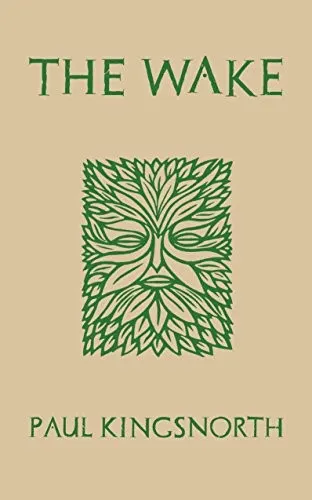
The Wake moves from Bronze Age Greece to Norman-conquered England, but it offers the same rarer pleasure: entering a premodern mind that does not divide landscape, religion, honor, and identity into modern categories. Buccmaster, a dispossessed English landowner, narrates in a fierce invented dialect as the world he understands begins to collapse.
Where Renault’s Theseus is charismatic and increasingly self-aware, Buccmaster is proud, wounded, unreliable, and often frightening. Following him reveals how heroism can be made from courage, grievance, vanity, and desperate storytelling all at once. Kingsnorth’s language initially demands attention, then becomes hypnotic; the novel’s Booker longlisting and Gordon Burn Prize recognized just how boldly it makes the past feel alien rather than picturesque. Few historical novels so completely remove the floor of the present from beneath the reader.
If you loved The Charioteer
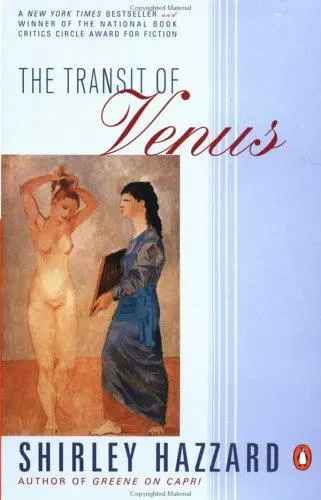
Like Renault, Hazzard writes as though every gesture reveals an ethical position. Following Australian sisters Caro and Grace into postwar England, she builds relationships out of withheld knowledge, unequal devotion, intellectual combat, and choices whose significance emerges gradually. Her lovers do not merely want one another; they interpret, test, and sometimes misjudge one another.
The kinship lies especially in Hazzard’s magnificent restraint. A clipped exchange can carry years of feeling, while the elegant narration notices cowardice and generosity with merciless precision. Winner of the National Book Critics Circle Award, the novel is famous among its devotees for becoming richer—and more devastating—on rereading. If Renault’s fusion of romantic intensity and moral intelligence is what lingers with you, this is indispensable.
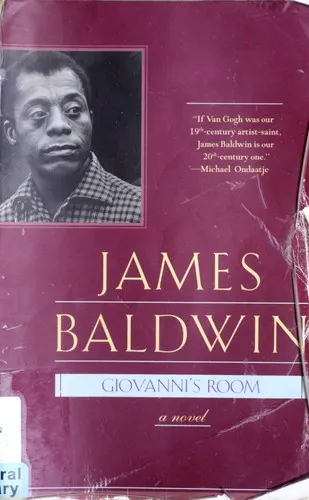
Baldwin takes the conflict Renault gives Laurie—the struggle between honest desire and a socially acceptable idea of manhood—and strips it to its most painful essentials. In Paris, an American named David tries to preserve a conventional future while being drawn toward Giovanni. The central danger is not simply public hostility but David’s own fear of what love requires him to admit.
The prose is lucid, sensuous, and pitiless about self-deception. Baldwin understands, as Renault does, that repression injures everyone caught within its orbit, and that refusing to choose is itself a consequential choice. Giovanni’s Room became one of the foundational queer novels in English because it grants gay love full tragic and moral weight. Its brevity only intensifies its force.
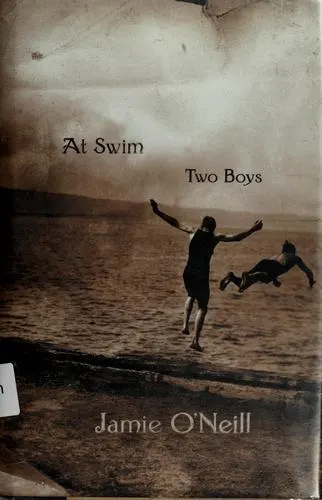
In 1915 Dublin, schoolboys Jim Mack and Doyler Doyle renew a friendship that grows charged with tenderness, rivalry, politics, and longing. O’Neill shares Renault’s fascination with young men trying to distinguish real courage from masculine performance. He also gives classical ideals, patriotic rhetoric, bodily desire, and private loyalty room to collide without reducing any of them to a slogan.
Where Renault is controlled, O’Neill is exuberant: his Hiberno-English prose sings, jokes, and surges through the characters’ thoughts. Yet beneath that abundance is the same seriousness about promises and the forms of love by which people become themselves. At Swim, Two Boys has earned lasting devotion because it feels at once intimate and epic—a queer love story capacious enough to challenge a nation’s myths.
If you loved The Bull from the Sea
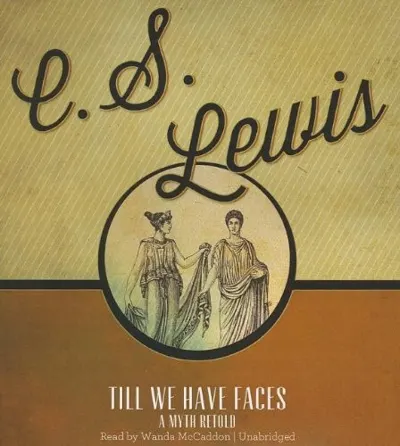
Like Renault, Lewis makes myth feel not quaint but psychologically inevitable. Orual, an aging queen, writes an indictment of the gods, convinced that she has been wronged; gradually, her fierce intelligence exposes motives she cannot yet admit. Her voice has Theseus’s compelling mixture of authority, wounded pride, honesty, and self-deception.
Often regarded as Lewis’s finest novel, this retelling of Cupid and Psyche has little of the comforting simplification associated with his more popular fiction. It is a grave, intimate book about possessive love, kingship, and the terrible difficulty of seeing oneself clearly—the ideal next novel for anyone haunted by Renault’s tragic first-person voice.
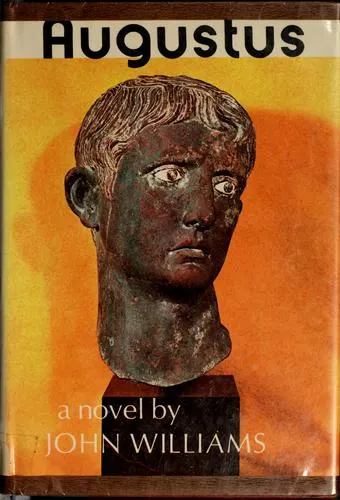
Williams approaches a legendary ruler through letters, journals, and official fragments, letting the public monument emerge from contradictory private voices. The result shares Renault’s fascination with the human cost of becoming the figure history requires: power demands performance, discipline, and sacrifices that no victory can undo.
Winner of the National Book Award, Augustus is admired for the same restrained emotional force that made Williams’s Stoner a modern classic. Its Rome is vividly present, but the deeper attraction is its unsentimental understanding of leadership, loyalty, and loneliness. By the end, historical greatness feels both magnificent and unbearably expensive.
If you loved The Mask of Apollo
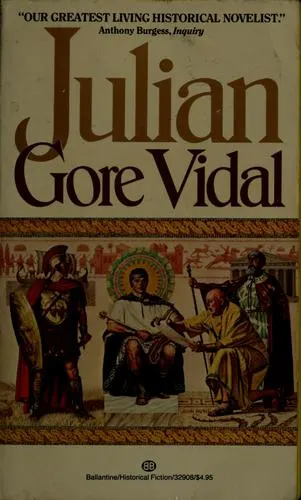
The philosophical dream that draws Plato and Dion toward Syracuse finds a darker echo in Vidal’s Emperor Julian, who attempts to turn an intellectual and religious vision into imperial policy. Vidal understands, as Renault does, that ideas change when they acquire courtiers, budgets, enemies, and an army.
Julian’s memoir is framed and interrupted by two former teachers who dispute his judgments, giving the novel the delicious feeling of a performance annotated from the wings. The result is witty, skeptical, and unexpectedly moving: admiration for a cultivated idealist never prevents scrutiny of his vanity or blindness. Widely regarded as one of Vidal’s finest historical novels, Julian offers the same rare pleasure as Renault—watching a vanished moral world become coherent from within, then collide with political reality.
Prince Fabrizio of Salina, watching Garibaldi’s revolution transform Sicily, possesses something Nikeratos gradually acquires: the painful ability to recognize history’s direction without pretending that recognition grants control over it. His intelligence is sensuous rather than academic—expressed through astronomy, family ritual, landscape, appetite, and exquisitely judged social performances.
Lampedusa’s irony never hardens into cynicism. Like Renault, he can mourn a compromised political cause while seeing every weakness in those who champion it. The prose moves between comedy and grandeur with astonishing ease, and its famous social scenes reveal character as precisely as anything enacted on a stage. Winner of the Strega Prize and now an Italian classic, The Leopard is one of the few historical novels that fully earns the word masterpiece.