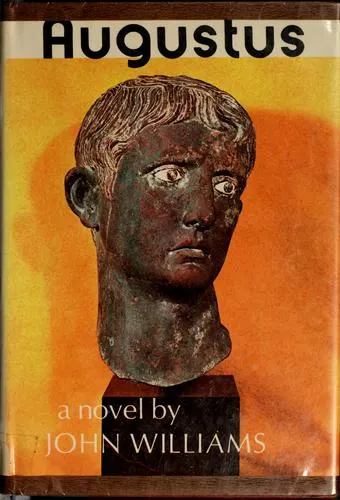
Books like Augustus
You responded to Williams’s rare combination of political intelligence, formal daring, and quiet heartbreak. These three novels make history feel intimate without shrinking its scale.
If you liked Augustus, you’ll love these
Not lookalikes — kindred books. Each one shares something essential with Augustus, and we tell you exactly what.
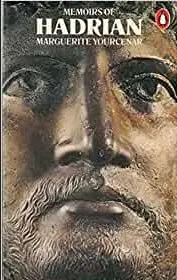
Like Williams, Yourcenar turns a Roman emperor into neither monster nor marble icon, but a cultivated, self-questioning man trying to understand the uses and limits of power. The aging Hadrian addresses a long letter to the young Marcus Aurelius, weighing government, war, beauty, love, and mortality in prose of extraordinary poise.
Where Augustus builds its ruler through a chorus of documents, this modern classic offers one sustained, hypnotically persuasive voice. Yourcenar spent decades imagining it, and that patient authority is palpable: every reflection feels both ancient and urgently alive. Few historical novels so completely erase the distance between reader and vanished mind.
If the deepest pleasure of Augustus was its melancholy—the sense that every triumph carries loss—The Leopard is indispensable. As Garibaldi’s forces transform nineteenth-century Sicily, Prince Fabrizio watches an old political and social order begin to yield to a new one. He is lucid enough to recognize change, proud enough to resist it, and intelligent enough to see the compromises beneath historical slogans.
Lampedusa’s only novel is sensuous, ironic, and devastatingly alert to time: dinners, gardens, estates, and family negotiations acquire the weight of an ending civilization. Rejected during its author’s lifetime, it was published posthumously, won Italy’s Strega Prize, and became one of the country’s most cherished novels. Its final sadness has the inevitability of music.

Mantel shares Williams’s fascination with how power actually works: through access, timing, memory, favors, paperwork, and an exact reading of other people. Her Thomas Cromwell enters as a battered young man and reappears as the formidably capable adviser navigating Henry VIII’s court. The familiar public history matters less than Cromwell’s moment-by-moment calculation within it.
The present-tense narration places you almost unnervingly close to his intelligence, while refusing to simplify him into hero or villain. Mantel’s language is muscular, witty, and densely alive; rooms seem crowded with debts, threats, and half-heard bargains. The Booker Prize confirmed its stature, but its real achievement is rarer: it permanently changed how many readers imagine Cromwell and made bureaucratic statecraft as gripping as battle.