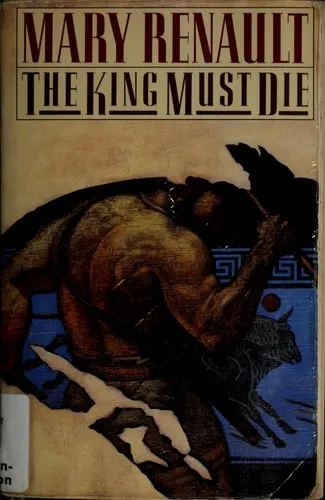
Books like The King Must Die
Mary Renault’s Theseus can explain the god in an earthquake or a dangerous current without explaining away the sacred terror: that tension between clear-eyed history and mythic consciousness is the novel’s peculiar power.
If you liked The King Must Die, you’ll love these
Not lookalikes — kindred books. Each one shares something essential with The King Must Die, and we tell you exactly what.
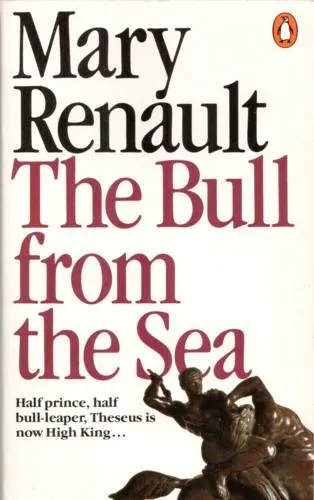
Renault’s direct sequel is indispensable because it tests everything that made the young Theseus compelling. Returned from Crete, he must become a ruler rather than merely a survivor: physical daring gives way to judgment, responsibility, desire, and the dangerous conviction that fate has singled him out.
The voice remains vigorous and intimate, but the emotional register deepens. Ritual kingship and divine signs still shape Theseus’s world, while Renault lets us see the pride and self-deception inside heroic certainty. Read alone, The King Must Die is a magnificent adventure; read with The Bull from the Sea, it becomes the first movement of a tragic life.
Virgil gives Lavinia scarcely a voice in the Aeneid; Le Guin gives her a consciousness subtle enough to question the poem that created her. Yet this is no modern character wearing antique costume. Lavinia understands herself through household duties, omens, sacred places, family loyalties, and the political consequences of marriage.
Like Renault, Le Guin makes an ancient worldview intelligible without flattening its mystery. Gods may not stride visibly through the landscape, but signs and prophecies exert real force because people organize their lives around them. The result is quieter than Renault’s novel, yet equally lucid about how legend grows from mortal choices. Its Locus Award reflects the rare success of a book that is both a compelling historical imagination and a profound conversation with epic.
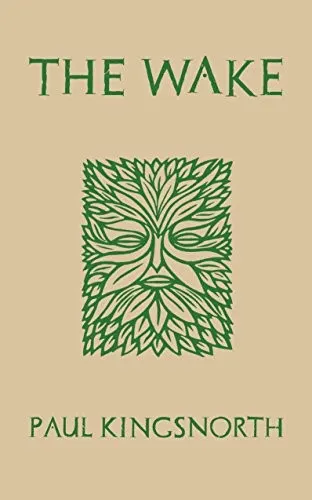
The Wake moves from Bronze Age Greece to Norman-conquered England, but it offers the same rarer pleasure: entering a premodern mind that does not divide landscape, religion, honor, and identity into modern categories. Buccmaster, a dispossessed English landowner, narrates in a fierce invented dialect as the world he understands begins to collapse.
Where Renault’s Theseus is charismatic and increasingly self-aware, Buccmaster is proud, wounded, unreliable, and often frightening. Following him reveals how heroism can be made from courage, grievance, vanity, and desperate storytelling all at once. Kingsnorth’s language initially demands attention, then becomes hypnotic; the novel’s Booker longlisting and Gordon Burn Prize recognized just how boldly it makes the past feel alien rather than picturesque. Few historical novels so completely remove the floor of the present from beneath the reader.