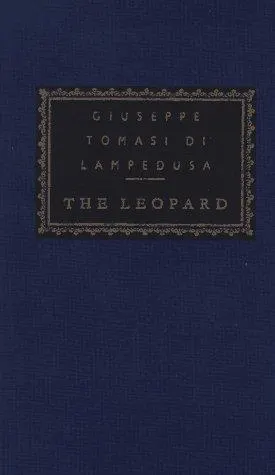
Books like The Leopard
The Salina family’s last Amen fades through rooms watched over by painted gods, while beyond the villa an old order is already coming apart. These three novels share Lampedusa’s rare mixture of historical vision, sensuous life, irony, and intimate knowledge that decline can be both ridiculous and heartbreaking.
If you liked The Leopard, you’ll love these
Not lookalikes — kindred books. Each one shares something essential with The Leopard, and we tell you exactly what.
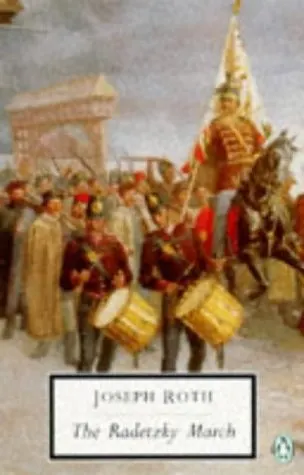
Roth begins with an impulsive act at the Battle of Solferino that ennobles one family, then follows the uneasy bond between that family and the Habsburg Empire. Like Lampedusa, he sees history not as grand spectacle but as pressure exerted on habits, loyalties, uniforms, meals, and fathers’ expectations of their sons.
Roth’s prose is leaner than Lampedusa’s, but it carries the same double vision: affection for a doomed world and merciless clarity about its absurdities. His characters mistake ceremony for permanence even as time quietly empties ceremony of meaning. Often acclaimed as Roth’s masterpiece, The Radetzky March is the indispensable companion to The Leopard: another great elegy in which the death of a political order becomes inseparable from the loneliness of those formed by it.
If you loved the dinner-table intelligence and worldly comedy of The Leopard, read The Maias for its magnificent social scenes. Eça gathers Lisbon’s cultivated elite into drawing rooms, clubs, hotels, and literary evenings, where everyone diagnoses the nation’s decline while remaining exquisitely incapable of changing themselves.
At its center is an old family house and the generations attached to it, rendered with both warmth and devastating irony. Eça notices clothes, food, architecture, flirtation, political rhetoric, and the tiny evasions by which privilege protects its self-image. Yet the novel’s satire gradually acquires a deep undertow of regret: beauty and intelligence are no defense against wasted time. Long regarded as a summit of Portuguese fiction, The Maias offers the amplitude of a nineteenth-century classic without sacrificing Lampedusa’s mordant modern awareness.
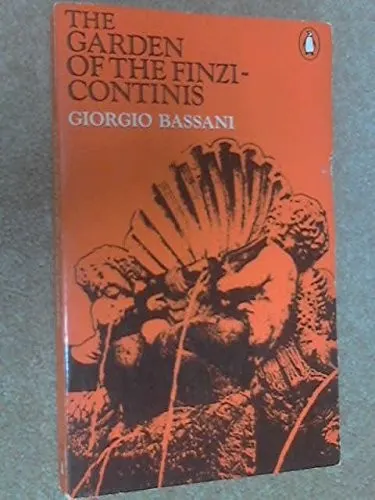
Bassani’s novel opens beneath the shadow of a family tomb and looks back toward the walled garden of Ferrara’s wealthy Finzi-Continis. Inside that enclosure are tennis courts, old trees, courtship, books, and the seductive belief that refinement can hold the brutal public world at bay.
What links it most powerfully to The Leopard is its understanding of belatedness. The narrator’s desire is inseparable from his awareness that the people and places he recalls were already vanishing when he first knew them. Bassani writes with restraint rather than Lampedusa’s baroque richness, but each physical detail glows with the same knowledge of mortality. Winner of Italy’s Viareggio Prize and the defining novel of Bassani’s Ferrara cycle, it turns memory into an act of preservation—and shows, painfully, why preservation is never rescue.