Author
Books like Marilynne Robinson
8 books we recommend to Marilynne Robinson readers, drawn from Gilead, Housekeeping, Home and Lila — each with the reason why.
If you loved Gilead
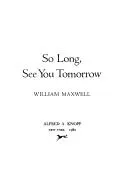
Maxwell’s short, immaculate novel shares Gilead’s deepest conviction: that remembering another person is an act of moral responsibility. An aging narrator revisits his Illinois childhood, a broken friendship, and a murder whose meaning he could not grasp at the time. Like Ames, he speaks gently while testing his own failures of sympathy.
Maxwell, long the revered fiction editor of The New Yorker, compresses an entire vanished world into lucid, unshowy sentences. The novel’s power lies in the moment recollection becomes imaginative mercy—when the narrator tries to see lives other than his own from within. Widely regarded as Maxwell’s masterpiece, it is one of those rare books whose brevity makes its emotional reach seem miraculous.
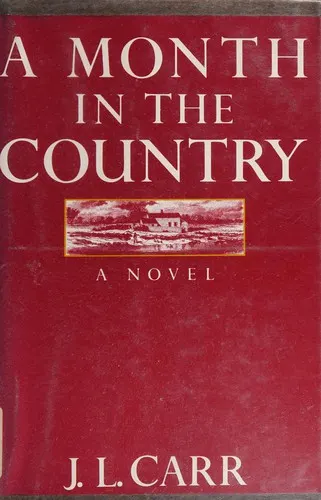
In the summer of 1920, a traumatized veteran arrives in a Yorkshire village to uncover a medieval wall painting in a church. Carr turns that modest task into a radiant novel about damaged people, fleeting happiness, and the saving discipline of paying attention.
A Gilead reader will recognize the tenderness toward small rituals, weather, work, and imperfect fellowship—but Carr’s reticence is peculiarly English, with sorrow flickering beneath dry comedy. Shortlisted for the Booker Prize and cherished far beyond its initial modest reception, this slender novel leaves readers mourning a single summer as though it were their own lost paradise.
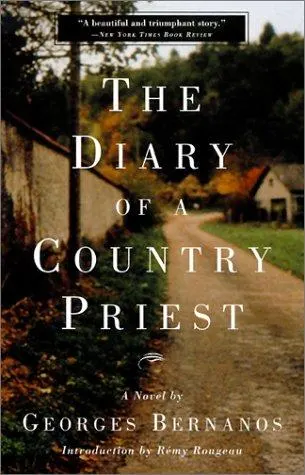
Bernanos offers the most searching companion to Robinson’s theology of grace. His young, ailing priest records his ministry in a French village: awkward visits, hostile parishioners, self-doubt, bodily weakness, and the frightening possibility that good intentions may accomplish nothing. The diary form creates the same intimacy as Ames’s letter, but its voice is rawer and more embattled.
This is no pious success story. Bernanos makes spiritual life feel dramatic because pride, despair, love, and grace can occupy the same sentence. A landmark of twentieth-century Catholic fiction—later adapted into Robert Bresson’s equally revered film—it culminates in one of literature’s most enduring expressions of grace. Anyone moved by Ames’s humility should encounter this fiercer, unforgettable counterpart.
If you loved Housekeeping
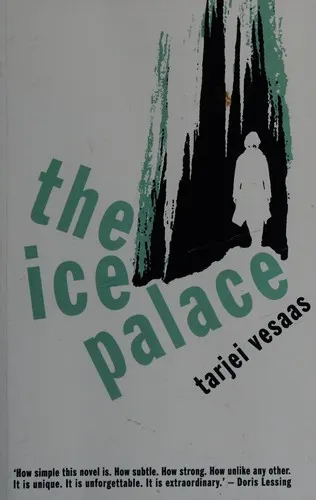
Two eleven-year-old girls, Siss and the solitary Unn, form an immediate, almost wordless bond; nearby, a frozen waterfall has become a glittering labyrinth. Vesaas makes landscape carry consciousness just as Robinson does: ice, darkness, and thaw are physical realities and states of being at once.
Winner of the Nordic Council Literature Prize and now regarded as a Norwegian classic, this short novel has Housekeeping’s austere beauty, its reverence for silence, and its understanding that loneliness can feel both perilous and exalted. Every sentence seems cold-forged and luminous.
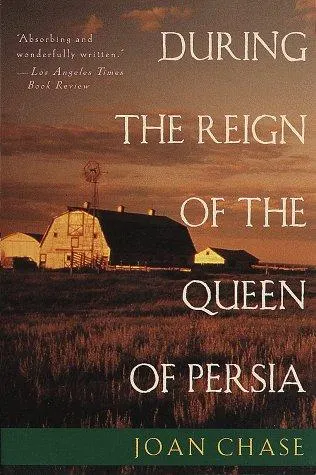
Joan Chase’s only novel follows four granddaughters growing up among mothers, aunts, and a formidable grandmother on an Ohio farm. Its collective “we” lets individual lives emerge from a dense female inheritance of work, illness, desire, rivalry, and care.
A PEN/Hemingway Award winner that has inspired fierce devotion despite decades of neglect, it shares Robinson’s gift for turning domestic life into something immense and metaphysical. Chase writes bodies and fields without sentimentality; beauty never cancels pain. To miss it is to miss one of American fiction’s great, underread accounts of how a household possesses its children long after childhood ends.
Pearl, a young mother unsteady in marriage and in herself, enters an island household crowded with children and charged with an increasingly feral mystery. Joy Williams refuses to explain away its strangeness. Her comedy is dry, her dread is tidal, and ordinary family life seems only a thin arrangement laid over something older and wilder.
This cult novel, rescued after years out of print, will speak to anyone who loved Sylvie’s resistance to respectable domestic order. But Williams is more savage than Robinson: she tests whether motherhood, civilization, and even human identity can hold. The result is hypnotic, funny, and genuinely uncanny—the rare novel whose wilderness seems to be watching you back.
If you loved Home
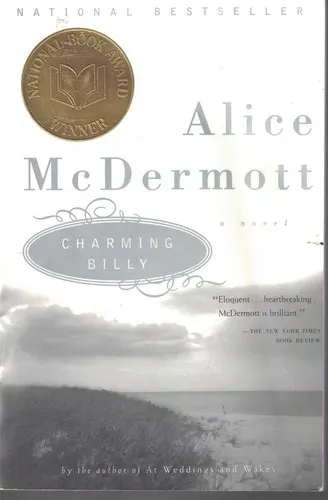
Charming Billy opens after Billy Lynch’s funeral, as relatives and friends gather over food and begin telling stories about him. Their affectionate accounts gradually expose the central difficulty: how do you speak truthfully about a man whose charm, suffering, and self-destruction were inseparable?
A National Book Award winner, the novel has McDermott’s superb ear for family talk—the jokes that conceal grievances, the repeated anecdotes polished into legend, the merciful lie that may also be an evasion. Readers who loved Home’s refusal either to condemn Jack or to romanticize him will recognize the same moral courage here. McDermott makes an entire theology of love emerge from what people say around a table.
If you loved Lila
A writer hires Emerence, an elderly housekeeper whose ferocious competence and guarded private life make ordinary intimacy feel like a trespass. Like Lila, Emerence has been shaped by hard labor and deprivation; she distrusts fine words, charity, and anyone who assumes love confers a right to know her.
Szabó turns the relationship between these two women into a morally exacting study of pride, dependence, secrecy, and betrayal. The prose is direct, but the emotions beneath it are volcanic. Long revered in Hungary, The Door gained an especially devoted English-language readership through Len Rix’s translation. Anyone moved by Robinson’s refusal to sentimentalize suffering should not miss this formidable, unforgettable woman.