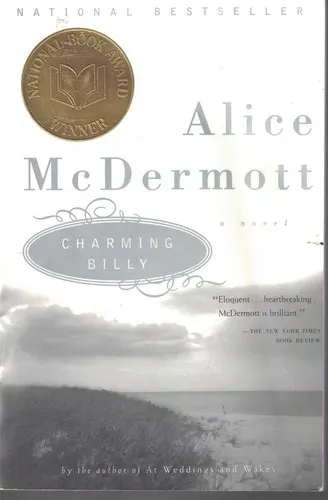
Books like Charming Billy
Charming Billy and Edwin O’Connor’s The Edge of Sadness share a rare gift: they find grace in damaged people without disguising the damage.
If you liked Charming Billy, you’ll love these
Not lookalikes — kindred books. Each one shares something essential with Charming Billy, and we tell you exactly what.
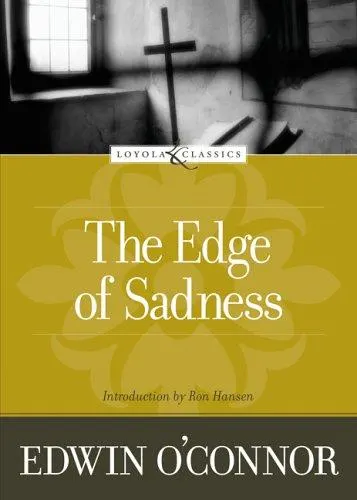
Father Hugh Kennedy, a middle-aged priest recovering from alcoholism, narrates this quietly piercing portrait of an Irish-American Catholic community. Like McDermott, O’Connor understands drinking not as a convenient tragedy but as something entangled with charm, shame, loyalty, self-deception, and the longing to be forgiven.
The novel’s great strength is its moral tact. Hugh sees vanity and manipulation clearly, yet his judgments keep yielding to compassion; O’Connor’s humor likewise makes the characters more human rather than less serious. Winner of the Pulitzer Prize in 1962, The Edge of Sadness has the emotional authority of a classic and the intimacy of a confidence entrusted to one reader. Anyone moved by McDermott’s refusal to choose between truth and mercy should not miss it.
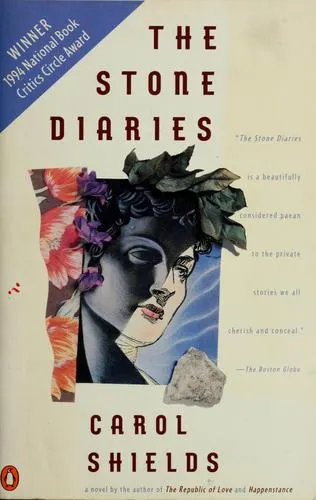
Charming Billy asks how a life becomes a story—and how much of that story belongs to the person who lived it. Carol Shields pushes that question into dazzling formal territory, reconstructing Daisy Goodwill’s apparently ordinary life through shifting perspectives, photographs, documents, omissions, and contradictory testimony.
The result is both playful and devastating: a biography whose accumulating detail reveals how elusive its subject remains. Shields gives domestic routines, social expectations, and minor disappointments the weight usually reserved for epic events. The Stone Diaries won both the Pulitzer Prize and Canada’s Governor General’s Award, but its deeper distinction is the devotion it inspires in readers who recognize that no life is truly ordinary. Its final pages leave the same ache as Charming Billy: the sense that knowing someone fully is impossible, and loving them may require trying anyway.
Anne Enright’s novel follows Rosaleen Madigan and her four grown children through separate lives before drawing them back toward the family home. What matters is not the reunion itself but the competing versions of family that arrive with them: old injuries polished into anecdotes, affection expressed as irritation, and memories that change according to who is speaking.
Where McDermott is tender and elegiac, Enright is sharper, funnier, and more volatile. Her sentences catch the bodily awkwardness of grief and the absurdity hidden inside solemn occasions; she can expose a character’s selfishness and vulnerability in the same stroke. Booker-longlisted and named Irish Novel of the Year, The Green Road is among the finest modern novels about the frightening elasticity of family love. It offers no comforting family myth—only something richer, harsher, and more recognizably true.