Author
Books like Louise Erdrich
13 books we recommend to Louise Erdrich readers, drawn from The Round House, Love Medicine, The Birchbark House, The Plague of Doves, Tracks, LaRose, The Last Report on the Miracles at Little No Horse and The Game of Silence — each with the reason why.
If you loved The Round House

Like The Round House, this is a coming-of-age story in which sexual violence exposes the distance between official authority and actual justice. Twelve-year-old David Hayden watches accusations against his powerful uncle force his sheriff father to choose between family loyalty and the law. Watson makes that conflict intimate and devastating: every adult decision alters the boy’s understanding of decency.
Winner of the Milkweed National Fiction Prize, this short, beautifully controlled novel has become a modern American classic. Readers who admired Joe’s alert, retrospective voice—and Erdrich’s refusal to offer easy moral innocence—will find the same quiet, irreversible pressure here.
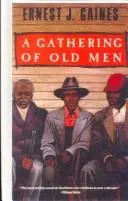
A white man lies dead on a Louisiana plantation, and a group of elderly Black men arrive carrying shotguns, each prepared to claim responsibility. From that superb opening, Gaines turns a murder inquiry into an act of collective resistance.
What connects it to The Round House is not simply a crime but the deeper question of who gets protected by the law, who is presumed guilty, and what people do when institutions have failed them for generations. Its many voices bring humor, pride, fear, grievance, and courage into the same charged space. Gaines gives people long treated as powerless the grandeur of choosing how they will be seen; the result is suspenseful, humane, and exhilarating.
If you loved Love Medicine
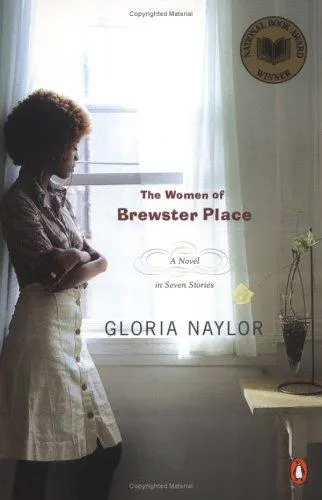
Like Love Medicine, Naylor’s National Book Award–winning debut makes a community from lives that refuse to fit into one tidy narrative. Its seven interlocking sections pass the center of attention among women divided by age, temperament, sexuality, and private hurt; someone glimpsed at the edge of one life steps forward as the complicated center of another.
Naylor’s great gift is tonal range. Gossip can be comic, domestic detail sensuous, and ordinary cruelty devastating, sometimes within a few pages. Brewster Place itself gathers memory until it seems almost sentient, but the women never become symbols of a neighborhood or a social problem. They remain difficult, vivid individuals bound together imperfectly—the same generous vision of community that gives Love Medicine its force.
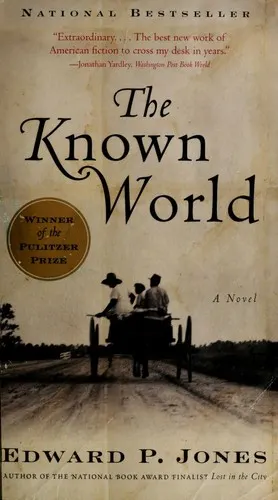
Edward P. Jones shares Erdrich’s astonishing ability to make an entire social world feel intimate. The novel opens with the death of Henry Townsend, a Black slaveholder in antebellum Virginia, then moves freely across households, generations, and future consequences. Jones will pause over an apparently minor person and disclose a whole existence, quietly revising everything you thought was peripheral.
That roaming structure should thrill anyone who loved how Love Medicine lets time fold and characters exchange foreground and background. Jones also refuses easy moral sorting: tenderness, vanity, complicity, and self-deception coexist without authorial verdicts. Winner of the Pulitzer Prize and now widely regarded as a modern American classic, The Known World offers the rare pleasure of a novel whose every side path enlarges its moral universe.
If you loved The Birchbark House
Hanna, a half-Chinese girl traveling with her widowed father in the 1880s, dreams of earning a diploma and becoming a dressmaker. Her sewing gives the novel the tactile pleasure that food preparation, hide work, and gathering bring to The Birchbark House: competence matters, objects carry memory, and ordinary labor becomes a form of artistry.
Newbery Medalist Linda Sue Park wrote Prairie Lotus in deliberate conversation with the Little House tradition, preserving the appeal of close-knit frontier storytelling while confronting the exclusions and racism such stories often conceal. Hanna is observant, practical, and quietly formidable. Her longing to create beautiful things in a town determined to diminish her makes this a deeply satisfying story of dignity rather than a history lesson in disguise.
In 1954, the U.S. government declares Regina Petit’s Umpqua tribe legally nonexistent. Her family leaves their Oregon reservation for Los Angeles, where Regina must work out what it means to remain Indian when officials insist she is not.
Like Erdrich, McManis and Sorell show national policy entering a child’s life through concrete losses, family arguments, new neighbors, and bewildering schoolroom encounters. Yet the novel refuses to reduce Native life to suffering: Regina’s family is funny, imperfect, adaptable, and held together by stories and affection. Winner of the American Indian Youth Literature Award, Indian No More offers the same rare gift as The Birchbark House—history told with such human closeness that its people cannot be turned into abstractions.
If you loved The Plague of Doves
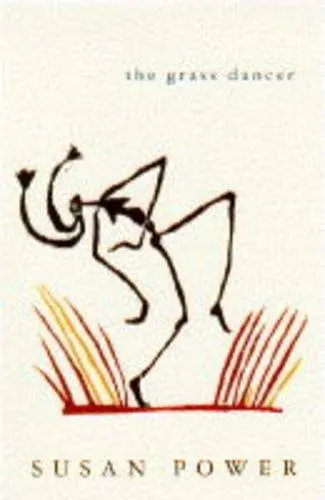
Susan Power’s debut moves among generations of a Dakota community, letting Harley Wind Soldier, Charlene Thunder, and the formidable Thunder women inherit stories whose consequences remain vividly alive. The supernatural is not decorative “magic” but part of how history, desire, and obligation are understood.
A reader who loved Erdrich’s shifting narrators will relish the way Power makes each new voice revise what came before. Yet her music is distinctly her own: sensuous, mischievous, dreamlike, and capable of sudden emotional force. Winner of the PEN/Hemingway Award, The Grass Dancer has earned lasting devotion as one of the richest Native American family novels of its generation.
If you loved Tracks
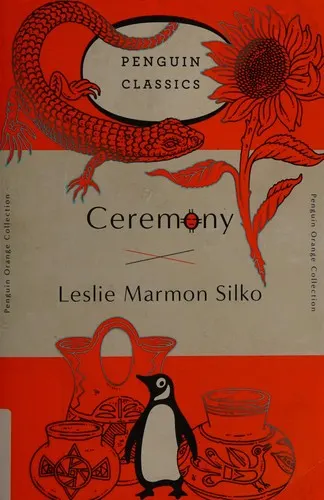
Tayo returns from the Second World War carrying an anguish that ordinary explanations cannot contain. Silko builds his recovery from fractured chronology, remembered stories, poetry, landscape, and ritual, making the novel’s very form part of its argument: storytelling is not an escape from history but a means of surviving it.
A lover of Tracks will recognize the refusal to separate spiritual power from weather, animals, hunger, and colonial violence. But Ceremony has its own spare, hypnotic movement, gradually revealing that damage to a person and damage to the land belong to the same design. Few American novels have been as influential in showing that Indigenous traditions can generate a radically modern novelistic form; leaving it unread means missing one of Tracks’s deepest literary kin.
If you loved LaRose
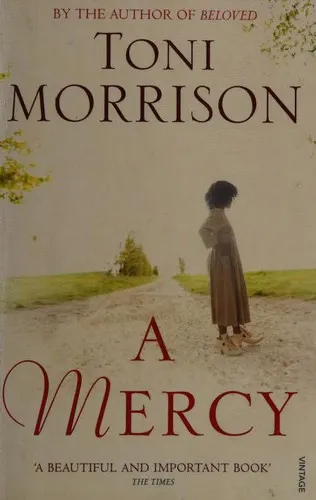
At the novel’s outset, an enslaved mother urges a creditor to take her young daughter Florens—a sacrifice that may be mercy, abandonment, or both. That irresolvable act has the same moral force as the gift at the center of LaRose: love makes a devastating choice, and the child must live inside meanings the adults cannot control.
Morrison lets each member of a fragile seventeenth-century household speak, revealing how private wounds are shaped by the emerging machinery of race and ownership. Brief, polyphonic, and extraordinarily concentrated, A Mercy is one of her great late novels: every rereading changes the moral weight of its opening choice.
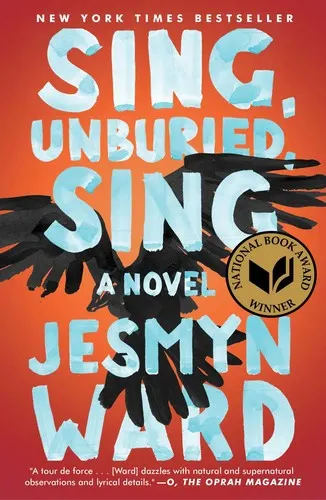
Thirteen-year-old Jojo is already learning to endure the failures of adults when his mother takes him and his little sister across Mississippi to collect their father from prison. Ward gives childhood perception the same gravity Erdrich does: children absorb family damage without fully understanding it, and their tenderness becomes a form of moral intelligence.
The novel’s ghosts are history demanding acknowledgment, not escape from realism. Ward writes bodily hardship, compromised parenthood, and inherited violence with lyrical intensity but without simplifying anyone into victim or villain. Its 2017 National Book Award confirmed what the novel’s many devoted readers felt immediately: this is a haunting family story with the authority of modern myth.
If you loved The Last Report on the Miracles at Little No Horse
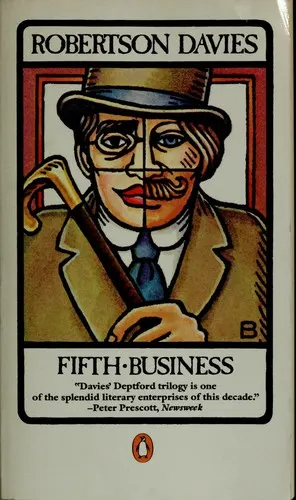
Dunstan Ramsay begins by answering a dismissive account of his retirement, then tells the strange story of a life shaped by one childhood act. His memoir leads toward saints, performers, guilt, imposture, and miracles that may be divine interventions—or simply the meanings human beings cannot live without.
Readers who loved Father Damien’s complicated vocation will recognize Davies’s fascination with lives built around a secret identity and with faith as both genuine longing and elaborate performance. Ramsay, like Damien, is learned, stubborn, comic, and spiritually hungry; his retrospective narration constantly revises the apparent meaning of earlier events. The first volume of Davies’s celebrated Deptford Trilogy, Fifth Business is among the enduring classics of Canadian fiction: witty enough to race through, yet rich enough to leave its theological riddles working on you for years.
If you loved The Game of Silence
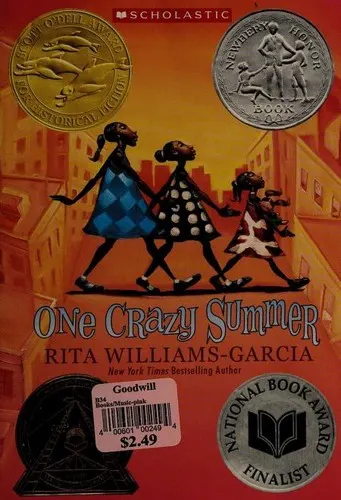
Eleven-year-old Delphine and her two younger sisters arrive in 1968 Oakland expecting something resembling a holiday with the mother they scarcely know. Instead, they encounter Cecile’s fierce independence and a Black Panther summer program.
What will delight an Omakayas reader is the scale of the storytelling. History enters through breakfasts, household rules, sibling quarrels and the partial understanding of children. Delphine is practical, watchful and burdened with responsibility, yet Williams-Garcia gives her comedy, pride and room to be wrong. A Newbery Honor book and modern children’s classic, One Crazy Summer earns its stature by making family affection and political awakening inseparable.
Nathan, a Diné boy spending the summer with his grandmother, discovers a Water Monster in need of help. From there, Brian Young builds an adventure in which tending sheep, gathering medicine, negotiating family pain and encountering Holy Beings all belong to the same living world.
Like Erdrich, Young refuses to divide ordinary life from the sacred or the landscape from its people. Nathan’s courage grows through attention, responsibility and kinship rather than conquest. This American Indian Youth Literature Award winner is funny, tender and wondrous—and its vision of cultural knowledge as something practiced, questioned and lovingly handed on is difficult to leave behind.