Author
Books like H. G. Wells
11 books we recommend to H. G. Wells readers, drawn from The War of the Worlds, The Time Machine, The Island of Doctor Moreau and The History of Mr Polly — each with the reason why.
If you loved The War of the Worlds
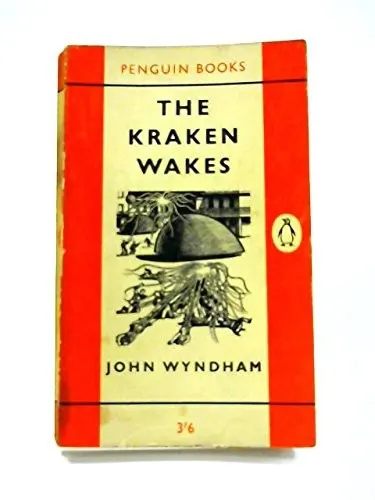
This is perhaps the finest inheritor of Wells’s method. A married pair of journalists watch mysterious objects descend into the oceans, while governments, scientists, and newspapers repeatedly force alarming evidence into reassuring explanations. Wyndham makes catastrophe credible through delayed reports, disputed facts, bureaucratic language, and the ordinary instinct not to panic until panic is overdue.
What begins as professional curiosity acquires the same dreadful momentum as Wells’s invasion. Yet the book’s secret strength is the warmth and dry wit of its central marriage, which gives the mounting disaster a human scale. Often overshadowed by The Day of the Triffids, this beautifully controlled classic may be Wyndham’s most purely Wellsian novel—and his most haunting.
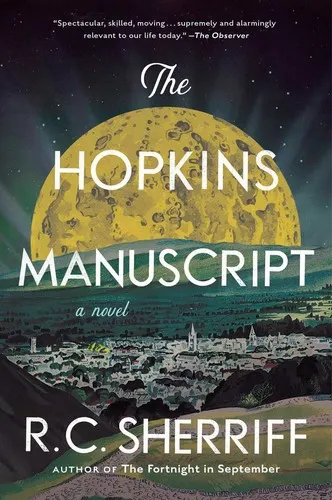
Wells understood that catastrophe exposes not only courage but vanity, class prejudice, opportunism, and farce. Sherriff builds an entire novel around that insight. Its narrator, Edgar Hopkins—a complacent, status-conscious poultry enthusiast—records the approach of a cosmic disaster while remaining exquisitely alert to village slights and his own supposed distinction.
The joke gradually becomes painful: humanity may recognize an existential threat without becoming wiser, kinder, or less ridiculous. Sherriff, best known for the great First World War play Journey’s End, gives this mock historical document both satirical bite and genuine melancholy. Its revival as a neglected classic is deserved; few novels make civilization’s fragility so funny before making it so sad.
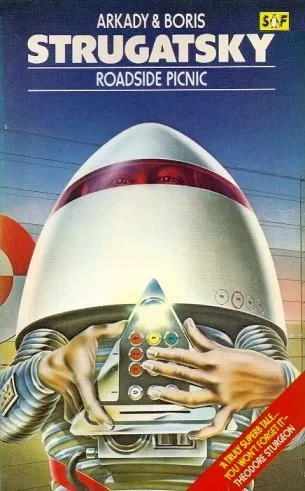
The Martians terrify because they overturn the assumption that humanity occupies the summit of creation. Roadside Picnic pushes that humiliation further. After an unexplained alien visitation, hazardous Zones remain behind, littered with objects whose purposes humans can barely guess. The visitors may not have hated us—or even noticed us.
The Strugatskys turn this cosmic indifference into something tactile and suspenseful. Their protagonist enters the Zone not as a conquering explorer but as a scavenger, navigating invisible dangers and artifacts that defeat ordinary reasoning. The result is intellectually audacious, morally rough, and intensely atmospheric. Its influence runs through Tarkovsky’s Stalker and decades of science fiction, but the novel itself remains stranger and more alive than its descendants: an essential encounter with the truly alien.
If you loved The Time Machine
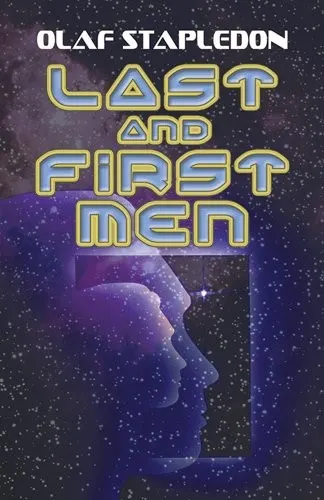
Stapledon takes the vertiginous glimpse of deep time at the end of Wells’s novel and makes an entire book out of it. Presented as a history transmitted from the remote future, it follows humanity through millions of years of transformation, extinction, renewal, and migration.
There is little conventional characterization; civilizations and species become the protagonists. Yet its vastness produces the same melancholy that makes The Time Machine more than an adventure: intelligence is fragile, progress reversible, and no social order permanent. This foundational work of cosmic science fiction influenced writers including Arthur C. Clarke. Few novels so radically enlarge the scale on which a reader can think.
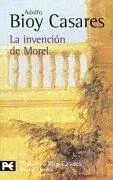
A fugitive reaches an apparently deserted island, only to see elegantly dressed strangers behaving as though he were invisible. His efforts to understand them lead toward a machine as conceptually ingenious as Wells’s—and toward consequences at once logical, eerie, and unexpectedly romantic.
Bioy Casares shares Wells’s gift for compressing a huge philosophical problem into a short, irresistibly readable narrative. The island’s heat, tides, machinery, and repeated scenes acquire the precision of clues, while the central invention unsettles ordinary ideas about presence, identity, and desire. Borges famously praised the novel’s plotting as perfect; its elegance has made it a touchstone of fantastic literature. It is the rare cerebral puzzle whose emotional afterimage is stronger than its solution.
If you loved The Island of Doctor Moreau
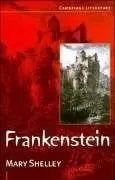
Like Wells, Shelley is less interested in whether forbidden science can succeed than in what success obliges the scientist to do. Her nested testimonies continually shift sympathy between maker and made, denying the reader the comfort of a simple monster. The result is at once a Gothic pursuit story and an argument about abandonment, bodily revulsion, loneliness, and the peril of treating life as an experiment.
Few novels have been more influential, yet the original remains stranger, sadder, and more intellectually exacting than its adaptations. Anyone haunted by Moreau’s cold irresponsibility should encounter Victor Frankenstein—the indispensable ancestor of Wells’s indictment.
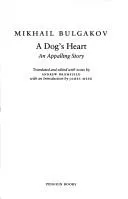
Bulgakov gives the transformation of animal into human a savage comic twist. A celebrated Moscow surgeon takes in a starving street dog and undertakes a radical experiment; what follows tests every smug assumption about civilization, education, class, and the authority of the man in the white coat.
Where Moreau is feverish and nightmarish, this compact novella is brisk, profane, and wickedly funny. Its long suppression in the Soviet Union only sharpened its reputation as a masterpiece of political satire—but its deepest kinship with Wells lies in its suspicion that the supposedly civilized experimenter may be the most grotesque creature in the room.
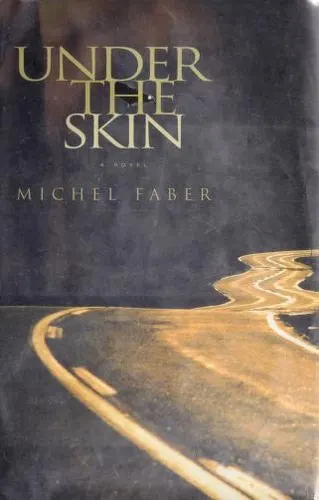
Isserley drives the roads of the Scottish Highlands, studying male hitchhikers with an unnervingly clinical eye. Faber makes ordinary human bodies seem alien—muscle, skin, scars, smell—and quietly turns observation into predation. The unease comes not from spectacle but from realizing how easily a person can be reduced to useful flesh.
This is the recommendation for readers most disturbed by Wells’s collapse of the boundary between human and animal. Faber reverses the gaze, complicates every category, and makes exploitation feel both intimate and industrial. A cult favorite with a fiercely unsettling moral imagination, Under the Skin leaves the familiar world permanently estranged.
If you loved The History of Mr Polly
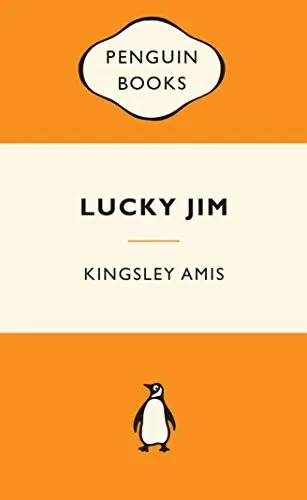
Jim Dixon is another cramped, resentful man whose liveliest self survives chiefly in private jokes, grotesque phrases and fantasies of rebellion. Amis turns his precarious university job into a sustained war between natural appetite and institutional pretence, culminating in some of the finest comic set pieces in postwar fiction.
Winner of the Somerset Maugham Award and hugely influential, Lucky Jim has Mr Polly’s rare combination of anger and release: it knows that mockery can be a form of self-rescue. If Wells’s hero won you over whenever his language became more alive than his circumstances, Dixon’s muttered inventions, imaginary faces and mounting refusal to behave will be irresistible.
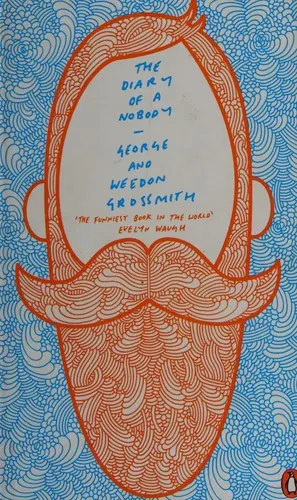
Charles Pooter records minor household events with the solemnity of a statesman, never noticing the widening gap between his dignity and everyone else’s view of him. That gap produces exquisite comedy, but the Grossmith brothers do not despise their clerk. Like Wells, they see the vulnerability beneath lower-middle-class respectability and understand how much hope can be invested in a promotion, a new acquaintance or a neatly furnished room.
This compact Victorian classic became a foundation stone of British embarrassment comedy; generations of readers have recognized themselves, uneasily, in Pooter. Its jokes are wonderfully exact, but its secret is affection. You laugh at his pomposity and gradually realize that his small vanities are also what protect him from small humiliations.
Where Mr Polly hesitates, dreams and suffers, Denry Machin improvises. Beginning as an insignificant clerk in Bennett’s Five Towns, he discovers that nerve, timing and a cheerful disregard for social rank can carry him through doors supposedly closed to him. The pleasure lies less in what Denry achieves than in watching his quick intelligence transform embarrassment into opportunity.
Bennett’s warm, briskly paced comic novel shares Wells’s refusal to treat provincial shopkeeping life as spiritually negligible. Every municipal ceremony, business scheme and social distinction becomes material for an ordinary person’s self-invention. The Card is the sunnier companion to Mr Polly: a wonderfully readable reminder that comedy can puncture class deference and enlarge a life.