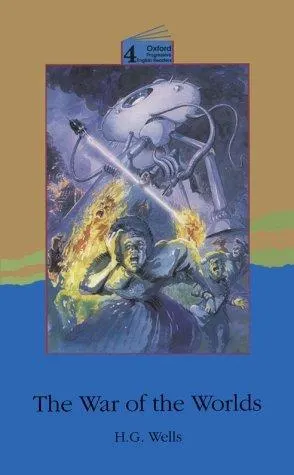
Books like The War of the Worlds
Readers return for Wells’s unnerving demolition of human self-importance: the speed, eyewitness immediacy, social observation, and dawning recognition that intelligence does not guarantee importance or survival. These three novels reproduce that shock in strikingly different ways.
If you liked The War of the Worlds, you’ll love these
Not lookalikes — kindred books. Each one shares something essential with The War of the Worlds, and we tell you exactly what.
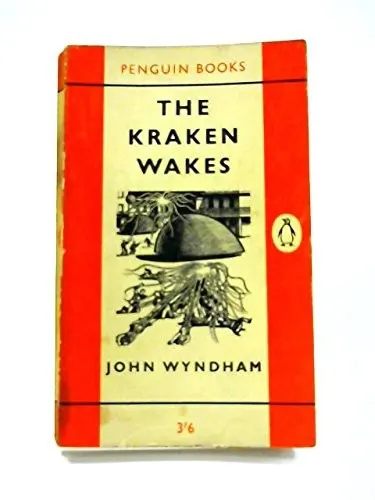
This is perhaps the finest inheritor of Wells’s method. A married pair of journalists watch mysterious objects descend into the oceans, while governments, scientists, and newspapers repeatedly force alarming evidence into reassuring explanations. Wyndham makes catastrophe credible through delayed reports, disputed facts, bureaucratic language, and the ordinary instinct not to panic until panic is overdue.
What begins as professional curiosity acquires the same dreadful momentum as Wells’s invasion. Yet the book’s secret strength is the warmth and dry wit of its central marriage, which gives the mounting disaster a human scale. Often overshadowed by The Day of the Triffids, this beautifully controlled classic may be Wyndham’s most purely Wellsian novel—and his most haunting.
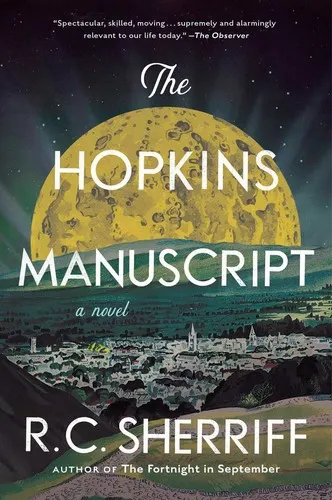
Wells understood that catastrophe exposes not only courage but vanity, class prejudice, opportunism, and farce. Sherriff builds an entire novel around that insight. Its narrator, Edgar Hopkins—a complacent, status-conscious poultry enthusiast—records the approach of a cosmic disaster while remaining exquisitely alert to village slights and his own supposed distinction.
The joke gradually becomes painful: humanity may recognize an existential threat without becoming wiser, kinder, or less ridiculous. Sherriff, best known for the great First World War play Journey’s End, gives this mock historical document both satirical bite and genuine melancholy. Its revival as a neglected classic is deserved; few novels make civilization’s fragility so funny before making it so sad.
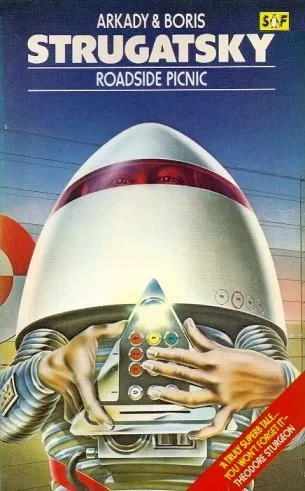
The Martians terrify because they overturn the assumption that humanity occupies the summit of creation. Roadside Picnic pushes that humiliation further. After an unexplained alien visitation, hazardous Zones remain behind, littered with objects whose purposes humans can barely guess. The visitors may not have hated us—or even noticed us.
The Strugatskys turn this cosmic indifference into something tactile and suspenseful. Their protagonist enters the Zone not as a conquering explorer but as a scavenger, navigating invisible dangers and artifacts that defeat ordinary reasoning. The result is intellectually audacious, morally rough, and intensely atmospheric. Its influence runs through Tarkovsky’s Stalker and decades of science fiction, but the novel itself remains stranger and more alive than its descendants: an essential encounter with the truly alien.