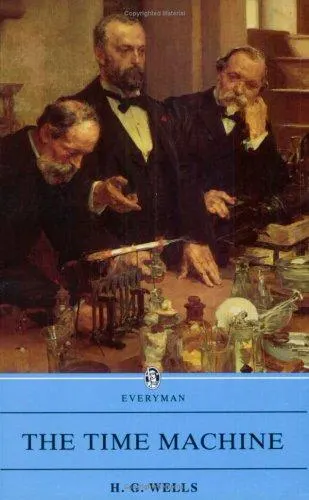
Books like The Time Machine
After Wells’s swift journey from drawing-room confidence into evolutionary horror and cosmic loneliness, the appetite is for fiction that turns one audacious idea into a ruthless new perspective on humanity.
If you liked The Time Machine, you’ll love these
Not lookalikes — kindred books. Each one shares something essential with The Time Machine, and we tell you exactly what.

Stapledon takes the vertiginous glimpse of deep time at the end of Wells’s novel and makes an entire book out of it. Presented as a history transmitted from the remote future, it follows humanity through millions of years of transformation, extinction, renewal, and migration.
There is little conventional characterization; civilizations and species become the protagonists. Yet its vastness produces the same melancholy that makes The Time Machine more than an adventure: intelligence is fragile, progress reversible, and no social order permanent. This foundational work of cosmic science fiction influenced writers including Arthur C. Clarke. Few novels so radically enlarge the scale on which a reader can think.
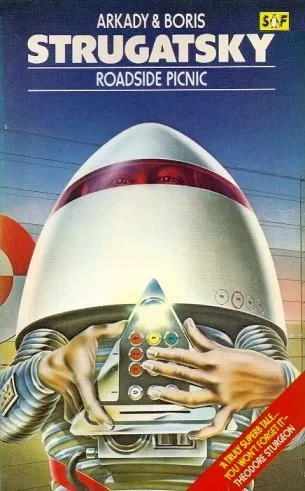
Here is Wells’s combination of dangerous exploration, social criticism, and confrontation with the incomprehensible—made grittier and more morally ambiguous. Aliens have briefly visited Earth and departed, leaving contaminated Zones filled with objects whose purposes humans cannot understand. Redrick Schuhart risks entering one of them to retrieve artifacts for the black market.
The Strugatskys never reduce the unknown to a tidy puzzle. Humanity may be no more important to the visitors than insects beside the litter from a picnic, and that possibility gives the novel its disturbing power. Lean, sardonic, and suspenseful, this landmark of Soviet science fiction inspired Tarkovsky’s Stalker and remains one of the genre’s most convincing encounters with something genuinely beyond us.
A fugitive reaches an apparently deserted island, only to see elegantly dressed strangers behaving as though he were invisible. His efforts to understand them lead toward a machine as conceptually ingenious as Wells’s—and toward consequences at once logical, eerie, and unexpectedly romantic.
Bioy Casares shares Wells’s gift for compressing a huge philosophical problem into a short, irresistibly readable narrative. The island’s heat, tides, machinery, and repeated scenes acquire the precision of clues, while the central invention unsettles ordinary ideas about presence, identity, and desire. Borges famously praised the novel’s plotting as perfect; its elegance has made it a touchstone of fantastic literature. It is the rare cerebral puzzle whose emotional afterimage is stronger than its solution.