Author
Books like Virginia Woolf
11 books we recommend to Virginia Woolf readers, drawn from Mrs Dalloway, To the Lighthouse, Orlando: A Biography, The Waves and The Years — each with the reason why.
If you loved Mrs Dalloway
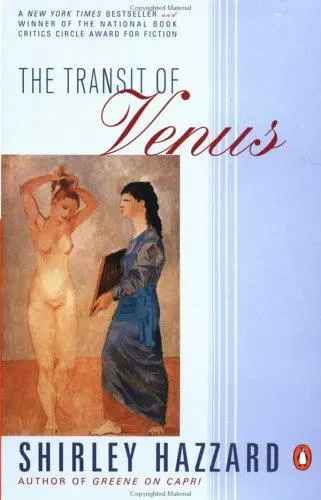
Hazzard shares Woolf’s almost unnerving sensitivity to what passes silently between people. Following sisters Caro and Grace Bell into adult life, the novel turns conversations, flirtations, and small breaches of etiquette into charged encounters where desire and power are constantly being negotiated.
Its exquisite sentences are matched by a profound design: chance meetings acquire the gravity of fate, while time quietly transforms every apparent certainty. Winner of the National Book Critics Circle Award and now widely regarded as Hazzard’s masterpiece, it offers the rare pleasure of a social novel in which every polished surface opens onto an abyss.
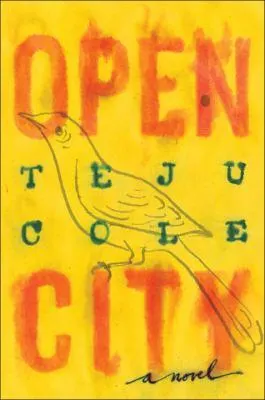
Julius, a young psychiatrist, walks through Manhattan, letting streets, music, architecture, strangers, and half-summoned memories direct his thoughts. As with Clarissa’s London, the city becomes less a backdrop than a living extension of the mind—crowded with histories that intrude upon the present.
Cole’s calm, lucid prose makes reading feel like following thought at walking pace. Yet Julius’s cultivated intelligence gradually becomes something to examine rather than simply admire: other voices disturb the story he tells about himself. This subtle moral tension helped make Cole’s debut a PEN/Hemingway Award winner, and it gives the novel a haunting afterlife in the reader’s mind.
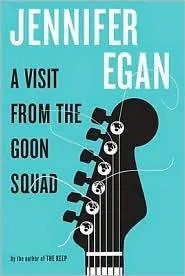
Egan takes one of Mrs Dalloway’s deepest subjects—the violence of time—and builds an exhilaratingly inventive novel around it. Beginning with Sasha, a troubled young woman in a therapist’s office, the book moves among interconnected lives shaped by music, ambition, shame, and vanished possibilities. A peripheral figure in one section may become the emotional center of another; youth seen from one angle becomes regret seen from the future.
The changing forms and voices never feel like display for its own sake. They reveal how differently each person experiences the same world, and how incomplete any single consciousness must be. Its Pulitzer Prize and National Book Critics Circle Award recognized a genuine formal achievement: few contemporary novels make fragmentation feel so human, or make time’s passage so exhilarating and so painful.
If you loved To the Lighthouse
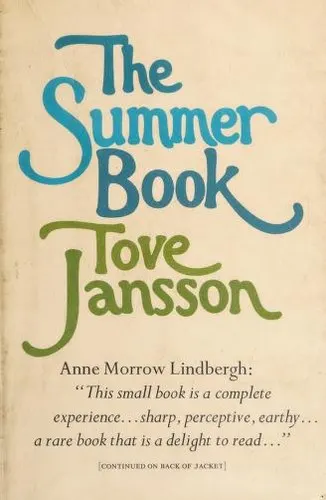
On a small Finnish island, an elderly woman and her young granddaughter argue, explore, invent stories, discuss God, and attend closely to weather, plants, and animals. Jansson’s brief chapters look simple, but their simplicity is exacting: tenderness is never sentimental, grief is rarely named, and love appears through irritation, play, and practical acts of care.
What connects it most deeply to To the Lighthouse is its scale of attention. A crooked tree, a storm, or a conversation about worms can open onto death and human solitude without ceasing to be itself. This quiet adult novel by the creator of the Moomins has earned enduring devotion across generations. It is small enough to read in an afternoon and spacious enough to remain with you for years.
If you loved Orlando: A Biography
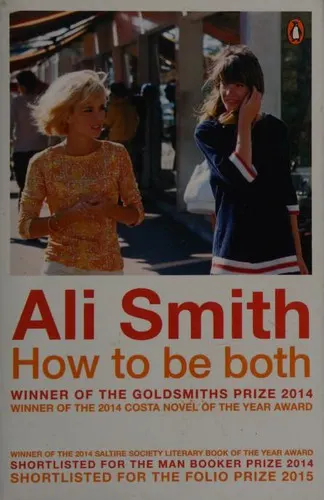
Printed in two possible orders, with either of its interlocking stories first, How to Be Both makes chronology as wonderfully unstable as Orlando makes biography. A contemporary girl mourning her mother and a Renaissance painter whose identity resists easy categories meet through art, language, and the strange persistence of the dead.
Smith’s quicksilver prose can turn a pun into an argument about gender, then turn that argument into grief or delight. The novel won both the Goldsmiths Prize and the Costa Novel Award, yet its distinction is not prizeworthy solemnity: it feels alive, improvisatory, and intimate. If Orlando showed you that identity can remain fluid without becoming insubstantial, Smith’s dazzling construction is indispensable.
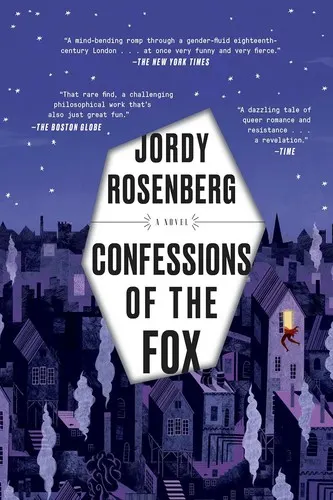
A professor discovers a manuscript purporting to tell the true story of the eighteenth-century thief Jack Sheppard—and begins annotating it. Soon the footnotes become a second novel: personal, argumentative, erotic, and increasingly rebellious against the institutions that claim ownership of bodies and historical truth.
Rosenberg shares Woolf’s suspicion that biography often disguises invention as authority. But where Orlando parodies the confident biographer, Confessions of the Fox lets scholarship itself come apart on the page. Its thieves, lovers, forged documents, and unruly notes create a trans historical novel with the energy of an intellectual heist. Few books make archival theory this funny, urgent, and genuinely adventurous.
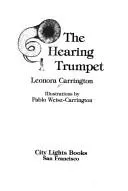
Ninety-two-year-old Marian Leatherby is given a hearing trumpet, overhears her family planning to send her away, and enters an institution whose bizarre architecture and occult rules prove only the beginning. Carrington treats respectable society as the true absurdity; age, femininity, religion, and civilization are all gleefully stripped of their supposed inevitability.
A cult classic by one of surrealism’s great artists, The Hearing Trumpet has Orlando’s serene refusal to obey the boundaries of a proper life—or a proper novel. Its comedy keeps opening into stranger forms: fairy tale, satire, apocalypse, mystical adventure. Marian’s unflappable curiosity makes the book feel less like an escape from reality than liberation from reality’s dullest conventions.
If you loved The Waves
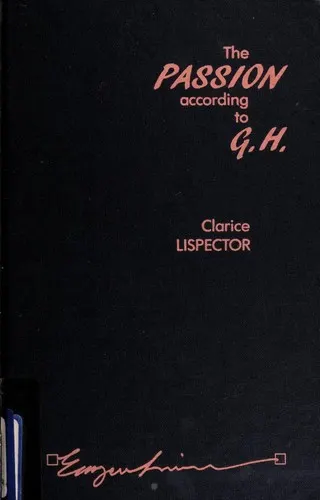
Where The Waves distributes consciousness among six speakers, Lispector takes one mind and subjects it to almost unbearable pressure. G.H., alone in her maid’s room after a disturbing encounter, tries to describe an experience that seems to dismantle every comfortable distinction—self and world, beauty and disgust, language and whatever lies before language.
The sentences advance, recoil, repeat, and correct themselves; reading them feels less like following an argument than witnessing thought being created under your eyes. Lispector’s masterpiece has inspired fierce devotion because it makes philosophy bodily and revelation frightening. If Woolf’s interludes gave you the sensation of consciousness touching something vast and impersonal, this novel goes straight toward that sensation and refuses to look away.
Fosse begins with a painter contemplating two crossing lines, then draws the reader into a vast, nearly unbroken current of memory, prayer, daily routine, and doubling. His long sentences circle through recurrent phrases with tiny variations, creating a tidal rhythm in which past and present coexist rather than follow one another.
Like Woolf, Fosse makes repetition revelatory: each return alters what we hear. His characters seem at once distinct and strangely continuous, as though a life might contain several possible selves. Septology is long, but its hypnotic clarity makes it feel inhabited rather than traversed. Shortlisted for the International Booker Prize, it is a culminating work by the 2023 Nobel laureate—and one of the few contemporary novels that matches The Waves in turning rhythm itself into a vision of existence.
If you loved The Years
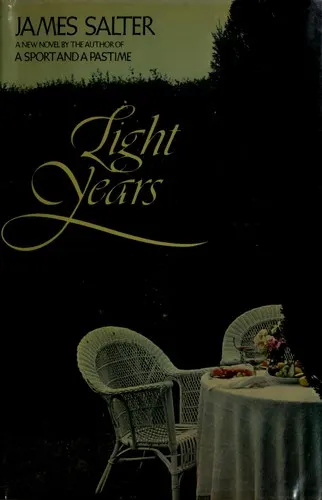
Salter builds a marriage and household from dinners, train journeys, weather, friendships and rooms glimpsed in changing light. Like Woolf, he distrusts the conventional dramatic climax: years disappear between paragraphs, while a gesture or seasonal detail suddenly reveals what time has done.
The result is both sensuous and mournful. Its polished surfaces never conceal permanence; they expose how impossible permanence is. Long cherished for Salter’s exact, luminous sentences, Light Years is the rare family novel that makes passing happiness as gripping as catastrophe.
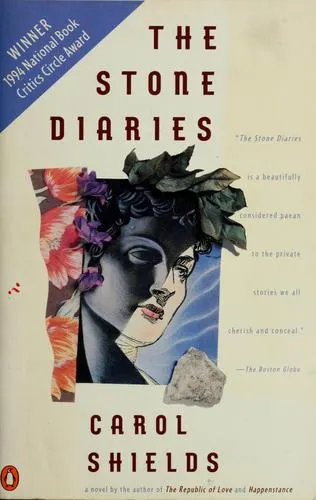
If The Years made you wonder how a whole life can be reconstructed from scattered scenes—and how much of a woman remains invisible even to her family—read The Stone Diaries. Daisy Goodwill’s life reaches the reader through shifting narration, photographs, letters, lists and the competing testimony of others. The gaps are as expressive as the evidence.
Shields treats ordinary existence without condescension: domestic arrangements, work, disappointment and small pleasures acquire the strangeness of history. Winner of both the Pulitzer Prize and Canada’s Governor General’s Award, the novel is formally daring without ever becoming cold. It leaves you feeling that an apparently unremarkable life is inexhaustible.