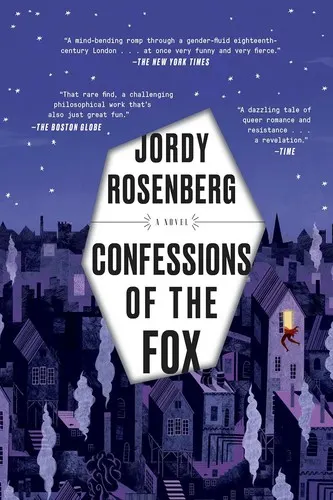
Books like Confessions of the Fox
Readers who fall hardest for Confessions of the Fox want scholarship to misbehave: archives that expose their own violence, queer desire that alters history, and formal games with real political teeth. These three novels make documents, omissions, and acts of invention feel dangerously alive.
If you liked Confessions of the Fox, you’ll love these
Not lookalikes — kindred books. Each one shares something essential with Confessions of the Fox, and we tell you exactly what.
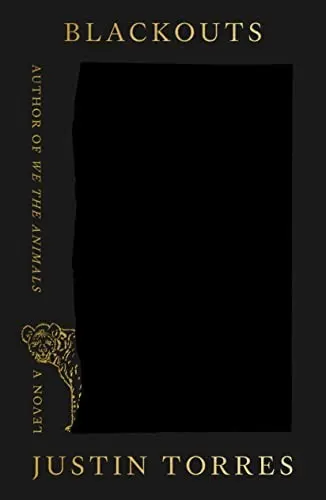
An unnamed narrator sits beside the dying Juan Gay, listening as Juan recounts a suppressed history of queer life through conversation, photographs, and pages transformed by blacked-out text. Like Rosenberg, Torres treats the archive not as neutral evidence but as a battleground: who collected these lives, who classified them, and what new meanings can be made from the damage?
Yet Blackouts is no academic puzzle box. Its documentary experiments become intimate—an exchange of stories between two people confronting desire, shame, inheritance, and disappearance. Winner of the 2023 National Book Award for Fiction, it has the rare combination of formal daring and emotional immediacy. If Confessions made footnotes feel erotic and insurgent, Blackouts will make erasure feel like testimony.
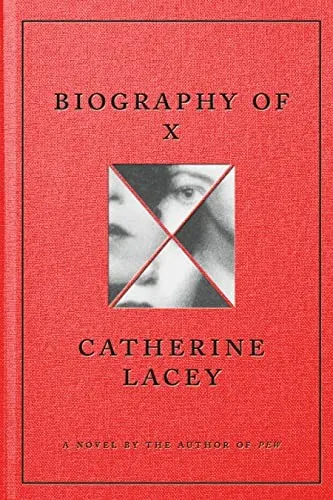
After the death of the elusive artist known as X, her widow begins writing her biography—and discovers that nearly everything X said about herself may have been fabricated. Lacey builds the investigation from invented interviews, photographs, citations, and an audacious alternate American history, creating the same delicious uncertainty Rosenberg produces between scholarship and fiction.
Its deeper kinship lies in its suspicion of ownership. Can an editor, biographer, or lover ever possess another person’s story? Is identity a truth to uncover or an artwork continually remade? Biography of X turns those questions into a compulsive mystery and a bruising portrait of marriage. Its documentary machinery dazzles, but the emotional cost of knowing someone is what gives the novel its unnerving force.
Bình, a Vietnamese cook employed by Gertrude Stein and Alice B. Toklas in 1930s Paris, tells a story that the celebrated literary household could never contain. Truong shifts attention from the famous women preserved by cultural history to the colonial subject preparing their meals, navigating exile, labor, language, and forbidden desire.
Where Rosenberg is unruly and argumentative, Truong is sensuous and exquisitely controlled: salt becomes flavor, sweat, tears, wages, and the taste of displacement. The novel’s acclaimed, prize-winning debut established Truong as a major voice because its reclamation of the past never feels dutiful; it is intimate, witty, and hungry. It offers the same corrective pleasure as Confessions—the realization that history changes completely when the person treated as a footnote begins speaking.