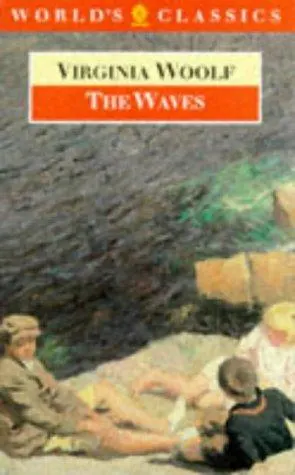
Books like The Waves
Jennifer Egan’s punk musicians and publicists may seem far from Woolf’s sea-lit voices, yet her novel shares The Waves’ deepest fascination: how time changes the music of a self. The other two recommendations push Woolf’s rhythmic inwardness toward metaphysical extremity and spiritual calm.
If you liked The Waves, you’ll love these
Not lookalikes — kindred books. Each one shares something essential with The Waves, and we tell you exactly what.
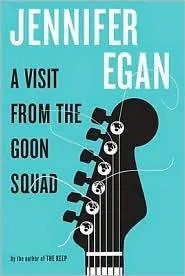
Egan composes character as Woolf does: through counterpoint. Thirteen linked chapters shift among voices, periods, and forms—including a celebrated PowerPoint chapter—so that no person belongs entirely to one perspective. Identity accumulates in echoes, omissions, and other people’s memories.
Its real subject is time, imagined not simply as loss but as a force that alters rhythm: pauses become meaningful, youthful noise acquires pathos, and minor figures step forward to claim the melody. Winner of both the Pulitzer Prize and the National Book Critics Circle Award, it is that rare formally daring novel whose experiments intensify rather than interrupt its emotional power.
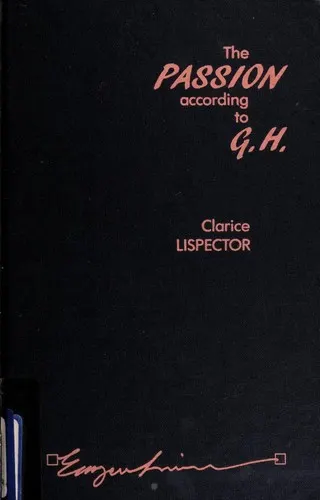
Where The Waves distributes consciousness among six speakers, Lispector takes one mind and subjects it to almost unbearable pressure. G.H., alone in her maid’s room after a disturbing encounter, tries to describe an experience that seems to dismantle every comfortable distinction—self and world, beauty and disgust, language and whatever lies before language.
The sentences advance, recoil, repeat, and correct themselves; reading them feels less like following an argument than witnessing thought being created under your eyes. Lispector’s masterpiece has inspired fierce devotion because it makes philosophy bodily and revelation frightening. If Woolf’s interludes gave you the sensation of consciousness touching something vast and impersonal, this novel goes straight toward that sensation and refuses to look away.
Fosse begins with a painter contemplating two crossing lines, then draws the reader into a vast, nearly unbroken current of memory, prayer, daily routine, and doubling. His long sentences circle through recurrent phrases with tiny variations, creating a tidal rhythm in which past and present coexist rather than follow one another.
Like Woolf, Fosse makes repetition revelatory: each return alters what we hear. His characters seem at once distinct and strangely continuous, as though a life might contain several possible selves. Septology is long, but its hypnotic clarity makes it feel inhabited rather than traversed. Shortlisted for the International Booker Prize, it is a culminating work by the 2023 Nobel laureate—and one of the few contemporary novels that matches The Waves in turning rhythm itself into a vision of existence.