Author
Books like Thomas Mann
8 books we recommend to Thomas Mann readers, drawn from The Magic Mountain, Buddenbrooks and Doctor Faustus — each with the reason why.
If you loved The Magic Mountain
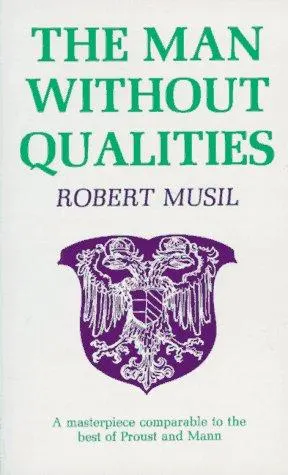
Ulrich, an intellectually restless mathematician, takes a leave from ordinary life and is drawn into a grandiose committee preparing a patriotic celebration in prewar Vienna. Like Hans Castorp, he becomes the amused, susceptible center of a world in which every person embodies a theory—and every theory is both seductive and faintly absurd.
Musil matches Mann’s rare fusion of comic social observation, philosophical inquiry, and historical foreboding. His unfinished masterpiece can pause over morality, mathematics, desire, or bureaucracy without losing its dry sparkle. If you loved the sanatorium debates because they made Europe itself seem to be arguing in a drawing room, this monumental classic of modernism is indispensable.
Broch’s trilogy begins in 1888 with Joachim von Pasenow, a Prussian officer clinging to uniform, hierarchy, and inherited certainty even as modern life makes those forms feel increasingly hollow. Across the novel’s widening design, styles and perspectives fracture along with the values they attempt to describe.
Where Mann diagnoses Europe through irony and debate, Broch makes disintegration happen inside the prose. Narrative gives way to essay, lyric, and competing voices; private bewilderment becomes a philosophy of an age losing its moral center. One of high modernism’s great achievements, The Sleepwalkers offers the intellectual scale of The Magic Mountain with a darker, more formally daring pressure.
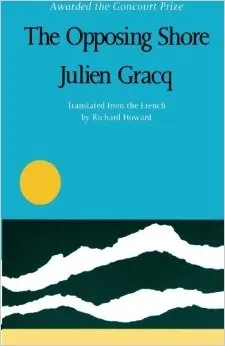
Aldo, a young aristocrat weary of metropolitan life, accepts a posting to a remote naval outpost facing a forbidden enemy coast. Almost nothing is supposed to happen there—and Gracq turns that suspended condition into an atmosphere of almost unbearable expectancy.
Readers who loved Mann’s strange elasticity of time will recognize the spell: routine becomes ritual, landscape becomes thought, and waiting acquires the force of an event. Yet Gracq’s prose is more dreamlike and sensuous, charged by coastlines, maps, fog, and the dangerous allure of crossing a boundary. The novel won France’s Prix Goncourt in 1951, which Gracq famously refused; it remains a French classic whose hypnotic tension is unlike anything else.
If you loved Buddenbrooks
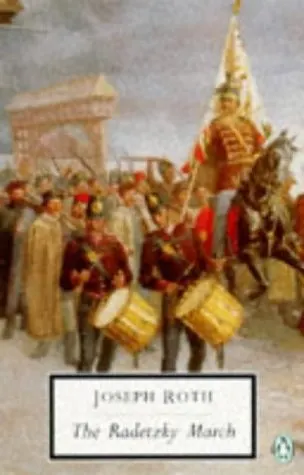
Roth achieves in a shorter span what Mann does across generations: he makes a family's decline inseparable from the collapse of the world that gave it meaning. The Trottas owe their status to an act of heroism at Solferino, but the legend soon hardens into a burden inherited by men less able to inhabit it.
The kinship lies above all in tone. Roth regards uniforms, ceremonies, official portraits, and paternal authority with exquisite irony, yet he never sneers at those who depend on them. Like Mann, he understands that obsolete institutions can remain emotionally indispensable. The result is one of the great novels of the Austro-Hungarian Empire: lucid, melancholy, and devastating precisely because its doomed world is rendered with such tenderness.
If the social comedy of Buddenbrooks delighted you as much as its tragedy, The Maias is essential. Eça places the cultivated young Carlos da Maia in a grand Lisbon household whose confidence, taste, and inherited position conceal deeper forms of exhaustion. Around him swirls a society of fashionable doctors, journalists, politicians, artists, and professional conversationalists, all brilliantly alive and mercilessly observed.
Eça's irony is quicker and more sparkling than Mann's, but it serves a similar purpose: every drawing room and dinner becomes a test of whether refinement is genuine or merely decorative. The novel's architecture is extraordinarily assured, gradually turning comedy into something far more painful without sacrificing its wit. Widely regarded as Eça's masterpiece and a summit of Portuguese fiction, it offers the rare pleasure of a vast social novel in which nearly every polished sentence carries a small blade.
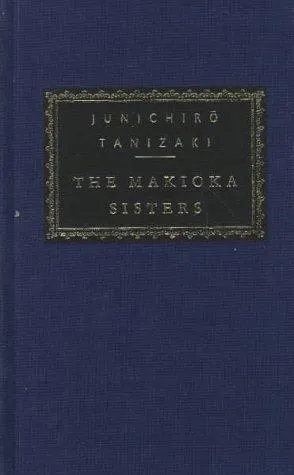
Tanizaki's masterpiece begins with an apparently modest family problem: finding a suitable husband for one of four sisters. But each prospective match exposes another tension between family prestige, money, personal desire, and the demands of a changing society. Reputation is maintained through letters, visits, clothes, tactful omissions, and exhausting negotiations—the domestic machinery of status that Mann understood so well.
What makes the novel irresistible is its patience. Tanizaki lets seasons, festivals, illnesses, and tiny breaches of decorum gather emotional force until an entire threatened order seems present in a kimono choice or a delayed reply. The sisters are not symbols but sharply distinct, complicated women, and the novel's beauty never prettifies their constraints. Few books make ordinary family rituals feel so absorbing—or make their gradual disappearance seem like such an immense loss.
If you loved Doctor Faustus
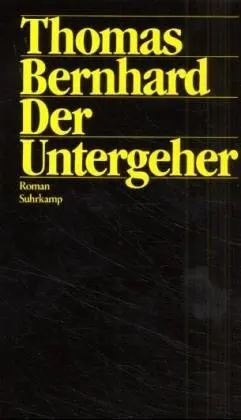
A pianist recalls his friendship with Glenn Gould and another gifted student, circling obsessively around the moment Gould’s genius made their own ambitions seem futile. From that premise Bernhard creates a single, torrential monologue in which admiration curdles into envy, self-accusation, comedy, and metaphysical rage.
A reader captivated by Adrian Leverkühn will recognize the terrifying idea of artistic greatness as an inhuman absolute—something that may demand the destruction of ordinary life. But Bernhard’s method is utterly his own: repetitions return like musical phrases, each slightly altered, until the narrator’s bitterness becomes both virtuoso performance and involuntary confession. The Loser is among Bernhard’s most admired novels, and few books make failure sound so ferociously, hilariously alive.
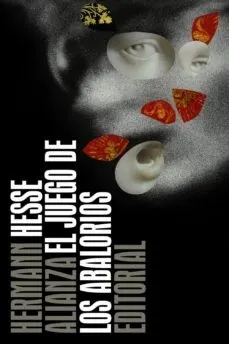
Hesse’s final novel presents the life of Joseph Knecht, a master of an elusive intellectual game that synthesizes music, mathematics, philosophy, and cultural memory. The biography is delivered through scholarly records from an imagined future, with the same fertile tension Mann creates between an earnest narrator and a protagonist whose brilliance exceeds—and unsettles—the account meant to contain him.
Yet this is not simply another novel about a rarefied genius. Hesse tests whether cultivated detachment is wisdom or evasion: can art preserve civilization if it withdraws from suffering, politics, and responsibility? Music is both discipline and moral language, while the mock-academic apparatus gives the book an undercurrent of gentle irony. Often regarded as Hesse’s crowning achievement, The Glass Bead Game is one of the few novels capacious enough to stand beside Doctor Faustus as an invented life, a philosophy of culture, and a challenge to the reader’s own idea of the intellect.