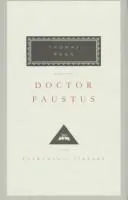
Books like Doctor Faustus
Aftershocks. What endures in Doctor Faustus is its fusion of musical form, intellectual audacity, black comedy, and a civilization diagnosing its own ruin. These three novels pursue that achievement in strikingly different ways.
If you liked Doctor Faustus, you’ll love these
Not lookalikes — kindred books. Each one shares something essential with Doctor Faustus, and we tell you exactly what.
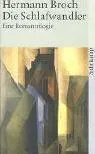
Broch’s great trilogy is the closest match to Mann’s ambition: not merely to portray a historical catastrophe, but to make the novel itself an instrument for understanding it. Across three linked stories set before the First World War, conventional realism gradually fractures into satire, poetry, reportage, and philosophical essay as Europe’s inherited values lose their authority.
Like Doctor Faustus, it asks how private eccentricity, aesthetic abstraction, and moral failure belong to a wider cultural collapse. Broch’s intelligence is formidable, yet the book is also mordantly funny and filled with painfully tangible people. Long recognized as a landmark of European modernism, The Sleepwalkers offers the rare exhilaration of watching a novel reinvent its form because ordinary storytelling is no longer adequate to its subject.
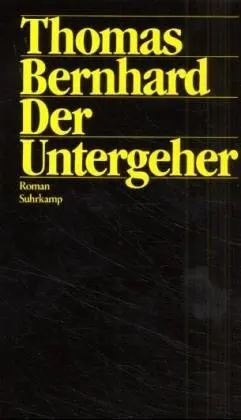
A pianist recalls his friendship with Glenn Gould and another gifted student, circling obsessively around the moment Gould’s genius made their own ambitions seem futile. From that premise Bernhard creates a single, torrential monologue in which admiration curdles into envy, self-accusation, comedy, and metaphysical rage.
A reader captivated by Adrian Leverkühn will recognize the terrifying idea of artistic greatness as an inhuman absolute—something that may demand the destruction of ordinary life. But Bernhard’s method is utterly his own: repetitions return like musical phrases, each slightly altered, until the narrator’s bitterness becomes both virtuoso performance and involuntary confession. The Loser is among Bernhard’s most admired novels, and few books make failure sound so ferociously, hilariously alive.
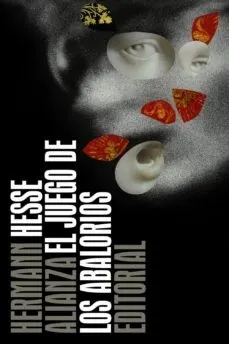
Hesse’s final novel presents the life of Joseph Knecht, a master of an elusive intellectual game that synthesizes music, mathematics, philosophy, and cultural memory. The biography is delivered through scholarly records from an imagined future, with the same fertile tension Mann creates between an earnest narrator and a protagonist whose brilliance exceeds—and unsettles—the account meant to contain him.
Yet this is not simply another novel about a rarefied genius. Hesse tests whether cultivated detachment is wisdom or evasion: can art preserve civilization if it withdraws from suffering, politics, and responsibility? Music is both discipline and moral language, while the mock-academic apparatus gives the book an undercurrent of gentle irony. Often regarded as Hesse’s crowning achievement, The Glass Bead Game is one of the few novels capacious enough to stand beside Doctor Faustus as an invented life, a philosophy of culture, and a challenge to the reader’s own idea of the intellect.