Books like The Sleepwalkers
In The Sleepwalkers, civilization does not simply collapse around the characters; its exhausted values invade the very form of the novel, until storytelling itself must answer for the age.
If you liked The Sleepwalkers, you’ll love these
Not lookalikes — kindred books. Each one shares something essential with The Sleepwalkers, and we tell you exactly what.
This is the indispensable companion to Broch’s trilogy: another immense Austrian modernist novel in which ideas are not decorations but forces acting upon people. Ulrich, a gifted man who has suspended his career to take a “year’s leave from life,” becomes involved in a grand patriotic committee whose lofty ambitions expose the vacancy beneath public ideals.
Musil is more playful and ironic than Broch, but equally exact about a society that possesses countless systems of thought and no convincing reason to live by any of them. His astonishing sentences move from comedy to mathematics, erotic possibility, politics, and moral philosophy without losing their pressure. Unfinished yet monumental, the novel has the peculiar authority of a book that seems to have diagnosed modernity before modernity fully arrived. Anyone exhilarated by Broch’s fusion of narrative and essay should experience Musil’s even larger, stranger attempt to make a novel think.
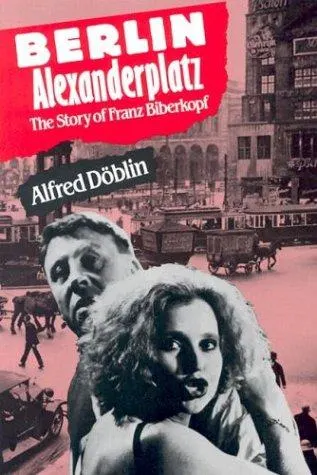
Broch charts disintegration through changing intellectual and literary forms; Döblin makes it audible. When Franz Biberkopf emerges from prison determined to live honestly, Berlin assaults that resolution through crowds, advertisements, songs, newspaper reports, bureaucratic language, and the clatter of commerce. The city does not remain a backdrop—it enters the novel’s bloodstream.
The result, one of the defining works of German modernism, is a fierce montage of private bewilderment and impersonal social power. Döblin’s method is rougher and more kinetic than Broch’s, but the kinship lies in their refusal to treat moral failure as merely individual. Both ask what becomes of a person when inherited codes have lost their authority and newer systems reduce human beings to functions. Reading Berlin Alexanderplatz after The Sleepwalkers reveals another way the novel learned to embody a fractured world rather than merely describe one.
The Recognitions carries Broch’s crisis of value into postwar America and turns it into a vast comedy of counterfeits. Its central figure, Wyatt Gwyon, is a painter whose extraordinary technical gifts draw him toward forgery; around him gathers a crowded world of dealers, critics, clergy, writers, and social climbers who cannot reliably distinguish originality from imitation, belief from performance, or worth from price.
Gaddis demands attention, then rewards it lavishly: conversations overlap, identities blur, jokes ignite hundreds of pages after being planted, and apparently chaotic gatherings reveal an almost musical design. Initially misunderstood, the novel has become a touchstone for generations of ambitious American writers and has inspired unusually devoted readers. Like Broch, Gaddis treats cultural breakdown not as an abstract thesis but as a problem of style, consciousness, and judgment. To miss The Recognitions would be to miss one of the boldest later answers to the question The Sleepwalkers leaves burning: what can authenticity mean in a civilization organized around substitutes?