Author
Books like Samuel R. Delany
9 books we recommend to Samuel R. Delany readers, drawn from Dhalgren, Nova and Stars in My Pocket Like Grains of Sand — each with the reason why.
If you loved Dhalgren
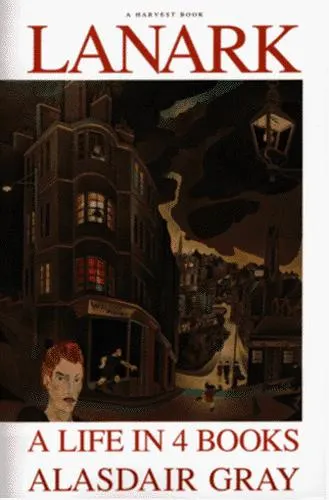
Gray’s monumental debut begins with an amnesiac arriving in Unthank, a city whose civic decay, obscure institutions, and bodily afflictions feel like the outward form of an inner crisis. Like Bellona, it is less a setting than a machine for altering everyone who enters it.
The novel’s four books appear out of order, shifting between hallucinatory fantasy and painfully intimate realism. Gray also designs the page itself—type, illustrations, structural jokes—as part of the fiction. Yet beneath the bravura lies the same question that gives Dhalgren its emotional force: can art, sex, friendship, or political engagement make a damaged life cohere?
Published in 1981 after decades of work, Lanark became a landmark of modern Scottish fiction and a fiercely cherished cult classic. Anyone drawn to Dhalgren as an immense, unruly city-book should experience Gray’s equally singular construction.
A nameless young woman moves through the Pacific Northwest with a feral band of teenage vampire drifters, but the ostensible story is only the current carrying Krilanovich’s prose. Memories recur in altered forms; time stutters; desire, violence, pop culture, and roadside squalor fuse into a single feverish consciousness.
Where Dhalgren finds strange forms of community among people abandoned by ordinary society, The Orange Eats Creeps plunges into the unstable intimacy of a street tribe. Its young bodies are vulnerable, predatory, erotic, and constantly reinvented through language. The effect is not conventional horror but a punk trance: ugly, funny, mournful, and frighteningly alive.
Krilanovich was named one of the National Book Foundation’s 5 Under 35 for this debut, which has since attracted the kind of devoted readership reserved for books that seem to have arrived from nowhere. It is short enough to devour and strange enough to remain lodged in the nervous system.

A celebrated pianist arrives in an unnamed European city for an important performance. Almost immediately, appointments multiply, strangers make intimate demands, corridors open into impossible locations, and minutes stretch into hours or collapse without warning. Ishiguro never breaks the dream by explaining it; he makes dream logic the novel’s ordinary physics.
A lover of Dhalgren will recognize the peculiar pleasure of learning to navigate a world that refuses stable geography or chronology. The city seems to generate obligations faster than its protagonist can understand them, producing a mixture of dread, absurd comedy, and aching emotional failure. Ishiguro’s calm, precise sentences make every impossibility feel unnervingly reasonable.
Initially one of his most divisive novels, The Unconsoled has become, for many of Ishiguro’s most passionate readers, his secret masterpiece. Its scale and sustained audacity are unlike anything else he wrote: surrender to its rhythm, and ordinary realist fiction may briefly seem like the stranger convention.
If you loved Nova
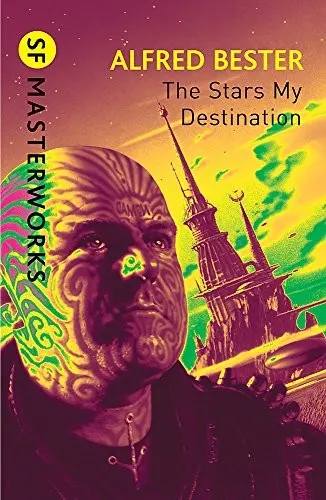
Bester supplies the concentrated voltage that Nova turns into symphonic space opera. Gully Foyle, an ordinary crewman abandoned aboard a wreck, begins as raw appetite and grievance; his ensuing transformation drives a novel of class violence, technological disruption, and furious self-invention. Like Delany, Bester treats pulp conventions not apologetically but as instruments capable of tremendous formal daring.
The prose lunges, flashes, and eventually breaks across the page in typographic experiments meant to represent altered sensation. Published in 1956, it became a foundational work of modern science fiction and a clear ancestor of cyberpunk. If Nova’s speed, danger, and hallucinatory intensity delighted you, missing Bester would mean missing one of the furnaces in which that aesthetic was forged.
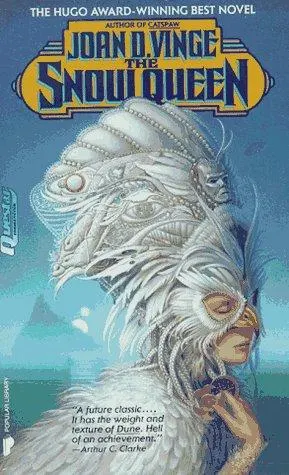
Vinge shares Delany’s gift for making an advanced civilization feel both futuristic and ancient. On the isolated world of Tiamat, political rule follows a ritual cycle while an interstellar power quietly manipulates local resources and beliefs. The fairy-tale architecture is never decorative: myth, ecology, colonial economics, and personal longing lock together until each explains the others.
Where Nova is hot, metallic, and compressed, The Snow Queen is expansive and immersive, giving its rivalries and divided loyalties room to ache. Its Hugo Award was recognition for a novel that proved grand space opera could be intellectually serious, emotionally lavish, and structurally intricate. Readers who loved how Delany placed a mythic quest inside a material history will find Vinge’s world difficult to leave.
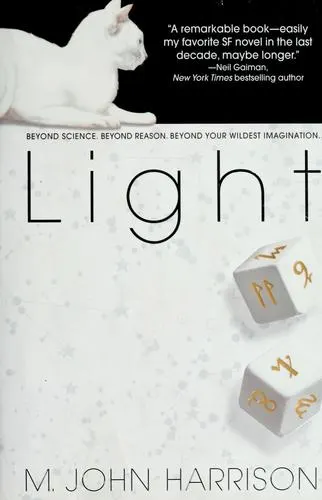
Light is what happens when Nova’s radiant space-opera energies pass through several decades of physics, cyberpunk, and literary skepticism. Its three opening strands—one involving a dangerously compromised physicist near the end of the twentieth century, two unfolding in a bewildering far future—are written in prose that can turn from hard brilliance to bruised intimacy in a sentence. Harrison’s universe is crowded with wonders, yet his real subject is the human hunger to escape identity, history, and consequence.
Winner of the James Tiptree Jr. Award, Light is revered as one of the defining literary space operas of the early twenty-first century. It refuses tidy world-building explanations and makes strangeness something the reader experiences rather than merely catalogs. Anyone who loved Nova for its density, erotic charge, fractured characters, and refusal to separate cosmic spectacle from private obsession should consider Light essential.
If you loved Stars in My Pocket Like Grains of Sand
Maya Andreyeva is a journalist whose nervous system lets distant audiences experience what she experiences—a gift inseparable from surveillance, censorship, and control. Carter turns that premise into an extraordinarily intimate study of mediated desire: who owns a person’s perceptions, and can love remain private when consciousness itself is networked?
Like Delany, Carter refuses to separate sexuality from technology or political power. The prose is dense with implication, the future feels socially evolved rather than cosmetically decorated, and every intimacy carries structural consequences. Long cherished as a cult classic, this singular novel has the compressed brilliance of a major work that science fiction is still catching up with.
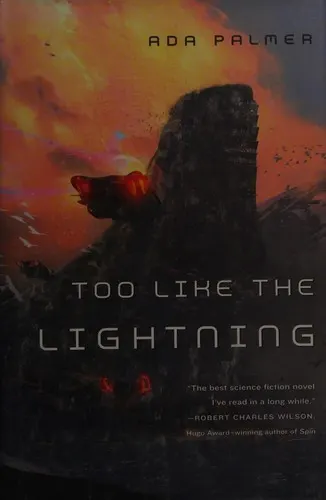
Palmer offers the rare future society elaborate enough to stand beside Delany’s: nations have been replaced by voluntary global affiliations, public religion is forbidden, gendered language is contentious, and the narrator insists on describing this world through the rhetoric of the eighteenth century.
That narrator—servant, criminal, intellectual virtuoso, and possible manipulator—makes reading an active negotiation. The novel continually forces you to revise your understanding of its customs, institutions, and categories, much as Stars in My Pocket teaches you how to read its universe rather than translating it into familiar terms. A Hugo finalist and the opening of the fiercely admired Terra Ignota sequence, it is audacious, difficult, funny, and alive with ideas few other writers would dare combine.
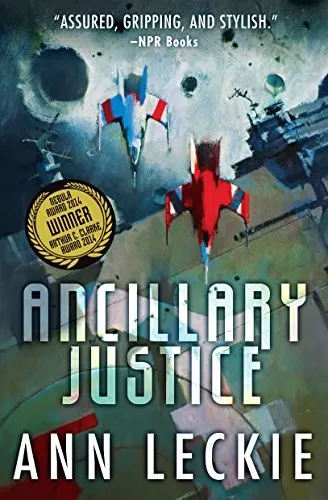
Leckie’s narrator was once the distributed intelligence of an immense troop-carrying starship, simultaneously inhabiting many bodies; now she occupies only one. From that opening fracture, the novel builds a powerful inquiry into personhood, memory, loyalty, and the emotional violence hidden inside imperial systems.
Its famous use of feminine pronouns is not a gimmick but a sustained act of estrangement: you become conscious of how grammar trains perception, just as Delany makes vocabulary and naming carry entire social orders. Beneath the conceptual elegance lies a sharp story of grief and attachment, told by a consciousness struggling to understand what individuality costs. Its unprecedented sweep of the Hugo, Nebula, and Arthur C. Clarke awards reflected a real achievement: Leckie made radically unfamiliar ways of being feel emotionally unavoidable.