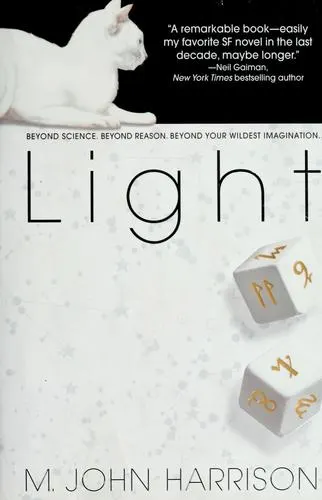
Books like Light
Light keeps changing in memory: its images remain dazzling, but its deepest pull is the suspicion that beneath the starships, jokes and quantum pyrotechnics lies something intimate, damaged and impossible to resolve. These three novels exert that same lingering pressure.
If you liked Light, you’ll love these
Not lookalikes — kindred books. Each one shares something essential with Light, and we tell you exactly what.
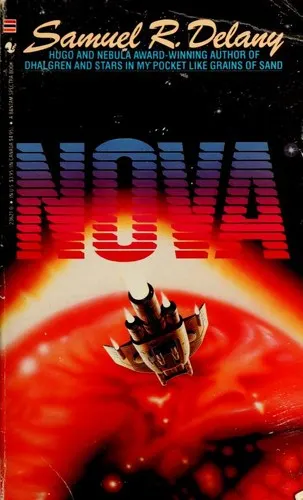
Lorq Von Ray gathers a gloriously mismatched crew for a voyage into a stellar catastrophe, but Delany treats space opera less as escapism than as a collision among myth, capital, art and obsession. Tarot cards coexist with new technologies; sensory experience becomes music; a scarred adventurer’s private compulsion reshapes an interstellar struggle.
Like Harrison, Delany can suggest an immense future without embalming it in exposition. His universe arrives through slang, bodies, work and competing interpretations—and his characters never become tidy instruments of the plot. Published in 1968, Nova helped supply the stylistic and conceptual vocabulary later claimed by cyberpunk. It remains startlingly compressed and modern: the rare ancestor of Light that can still meet it brilliance for brilliance.
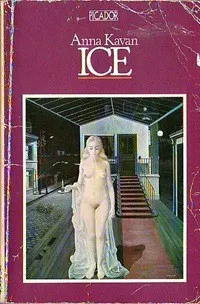
An unnamed man pursues an elusive woman while walls of ice advance across the world. That premise soon feels less like conventional apocalypse than a fever in which desire, cruelty and environmental collapse have become indistinguishable.
What connects Ice to Light is its refusal to tell you which level of reality deserves your trust. Scenes recur in altered forms; fantasy invades observation without warning; the narrator’s authority decays even as his voice exerts a terrible fascination. Kavan’s prose is cold, lucid and hallucinatory, making each impossible transition feel inevitable. Since its 1967 publication, Ice has grown into a fiercely admired cult classic because no explanatory key can exhaust it. You finish it haunted rather than satisfied—and then discover that its white landscapes have lodged permanently in your imagination.
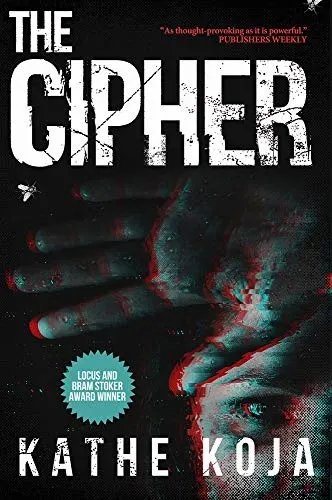
Nicholas, a failed poet living in urban squalor, and the dangerously magnetic Nakota discover a lightless hole in a storage room. They call it the Funhole. Their first experiments with it are grubby, reckless and impossible to stop.
The Cipher shares Harrison’s conviction that contact with the unknowable would not ennoble humanity. It would attract vanity, lust, artistic ambition and self-destruction. Koja writes physical disgust with almost ecstatic precision: stained rooms, exhausted bodies and bad relationships become the medium of metaphysical horror. Nicholas’s bitter, skittering voice is repellent and painfully alive.
Winner of the Bram Stoker Award for First Novel, The Cipher spent years as an elusive cult book before returning to print. Its devotees are right: few novels make cosmic mystery feel so intimate, sordid and transformative. If Light’s union of transcendence and human wreckage is what seized you, leaving the Funhole unexplored would be a serious mistake.