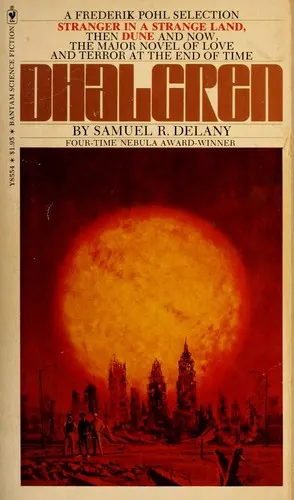
Books like Dhalgren
Streets lose their bearings, identity flickers, and language becomes both map and maze. These three novels preserve that exhilarating sense that confusion is not a defect to be solved but a world to inhabit.
If you liked Dhalgren, you’ll love these
Not lookalikes — kindred books. Each one shares something essential with Dhalgren, and we tell you exactly what.
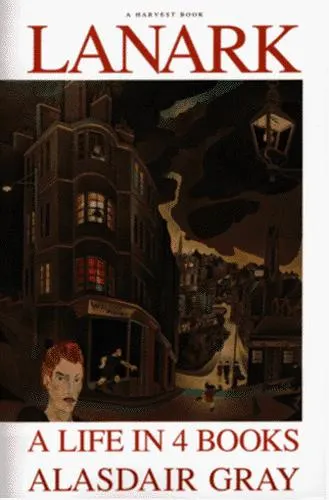
Gray’s monumental debut begins with an amnesiac arriving in Unthank, a city whose civic decay, obscure institutions, and bodily afflictions feel like the outward form of an inner crisis. Like Bellona, it is less a setting than a machine for altering everyone who enters it.
The novel’s four books appear out of order, shifting between hallucinatory fantasy and painfully intimate realism. Gray also designs the page itself—type, illustrations, structural jokes—as part of the fiction. Yet beneath the bravura lies the same question that gives Dhalgren its emotional force: can art, sex, friendship, or political engagement make a damaged life cohere?
Published in 1981 after decades of work, Lanark became a landmark of modern Scottish fiction and a fiercely cherished cult classic. Anyone drawn to Dhalgren as an immense, unruly city-book should experience Gray’s equally singular construction.
A nameless young woman moves through the Pacific Northwest with a feral band of teenage vampire drifters, but the ostensible story is only the current carrying Krilanovich’s prose. Memories recur in altered forms; time stutters; desire, violence, pop culture, and roadside squalor fuse into a single feverish consciousness.
Where Dhalgren finds strange forms of community among people abandoned by ordinary society, The Orange Eats Creeps plunges into the unstable intimacy of a street tribe. Its young bodies are vulnerable, predatory, erotic, and constantly reinvented through language. The effect is not conventional horror but a punk trance: ugly, funny, mournful, and frighteningly alive.
Krilanovich was named one of the National Book Foundation’s 5 Under 35 for this debut, which has since attracted the kind of devoted readership reserved for books that seem to have arrived from nowhere. It is short enough to devour and strange enough to remain lodged in the nervous system.
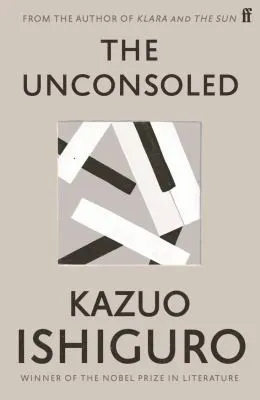
A celebrated pianist arrives in an unnamed European city for an important performance. Almost immediately, appointments multiply, strangers make intimate demands, corridors open into impossible locations, and minutes stretch into hours or collapse without warning. Ishiguro never breaks the dream by explaining it; he makes dream logic the novel’s ordinary physics.
A lover of Dhalgren will recognize the peculiar pleasure of learning to navigate a world that refuses stable geography or chronology. The city seems to generate obligations faster than its protagonist can understand them, producing a mixture of dread, absurd comedy, and aching emotional failure. Ishiguro’s calm, precise sentences make every impossibility feel unnervingly reasonable.
Initially one of his most divisive novels, The Unconsoled has become, for many of Ishiguro’s most passionate readers, his secret masterpiece. Its scale and sustained audacity are unlike anything else he wrote: surrender to its rhythm, and ordinary realist fiction may briefly seem like the stranger convention.