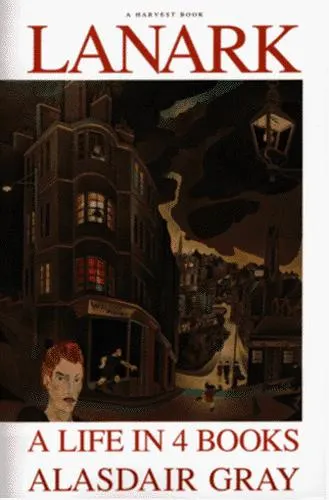
Books like Lanark: A Life in Four Books
Lanark’s great trick is that Duncan Thaw’s wounded Glasgow and Unthank’s impossible bureaucracy feel less like separate worlds than the same sickness translated into different languages. These novels achieve comparable fusions of private anguish, social diagnosis and formal audacity.
If you liked Lanark: A Life in Four Books, you’ll love these
Not lookalikes — kindred books. Each one shares something essential with Lanark: A Life in Four Books, and we tell you exactly what.
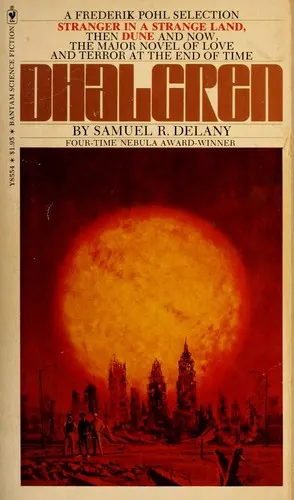
A nameless young man enters Bellona, an American city where ordinary chronology and social order have broken down. Like Gray, Delany makes the city both solidly inhabited and impossible: streets, communes and damaged buildings coexist with inexplicable phenomena, while the protagonist’s troubled identity becomes entangled with the book’s unstable form.
Dhalgren also shares Lanark’s conviction that art, sex, illness and civic collapse cannot be neatly separated. Its loops and textual fractures demand active reading, yet its countercultural communities have a lived-in warmth absent from merely cerebral experiments. A million-selling landmark with passionately divided readers, it is one of American fiction’s great beautiful monsters—and anyone exhilarated by Lanark’s scale should experience it.
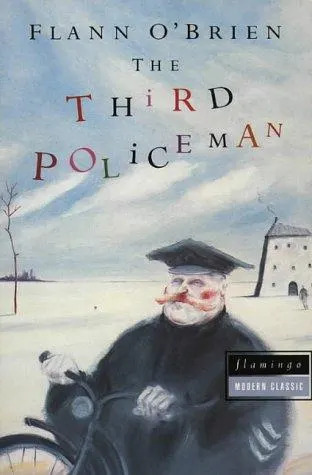
O’Brien begins with a murder confession, then calmly walks his narrator into a countryside governed by homicidal logic, eccentric policemen and an alarming metaphysics of bicycles. The comedy is delivered with perfect bureaucratic solemnity: impossibility is not a rupture in reality but another regulation to be explained by an official.
A Lanark reader will recognize the peculiar pleasure of watching institutions turn metaphysical terror into administrative procedure. Footnotes about the preposterous philosopher de Selby create a rival book beneath the book, while verbal jokes gradually acquire existential force. Rejected during O’Brien’s lifetime and published posthumously, it became a cult masterpiece whose influence runs through modern comic surrealism. Few novels are simultaneously this funny, this exact and this profoundly unsettling.
Donoso’s masterpiece begins amid a decaying religious institution populated by old women, servants, whispered legends and Mudito, a man whose place in the household is already becoming uncertain. From there, voices and identities fold into one another until the novel seems to be dreaming—and deforming—itself.
Where Lanark turns eczema, mouths and disappearing bodies into a social language, Donoso makes bodily grotesquerie express class terror, shame and the violence of being defined by others. His labyrinth is denser and more feverish than Gray’s, but it has the same refusal to distinguish cleanly between psychological damage and a damaged world. A major achievement of the Latin American Boom, it inspires the special devotion reserved for difficult books that seem inexhaustible. Reading it feels less like following a story than entering a living, mutating structure.