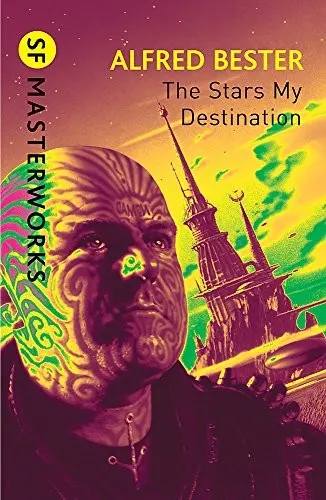
Books like The Stars My Destination
Begin in 1844, with no rockets or teleportation: Bester’s furious modernity has deep roots in Alexandre Dumas. These three novels reproduce not his scenery but his propulsion, verbal daring, dangerous protagonists, and fascination with people who remake themselves into weapons.
If you liked The Stars My Destination, you’ll love these
Not lookalikes — kindred books. Each one shares something essential with The Stars My Destination, and we tell you exactly what.
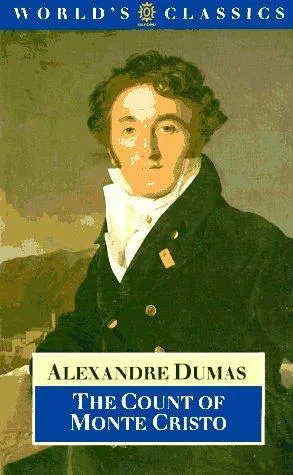
Edmond Dantès, a young sailor with every reason to expect happiness, is abruptly swallowed by a machinery of betrayal and power. From that simple catastrophe, Dumas builds the great architecture of the revenge novel—and the clearest ancestor of Gully Foyle’s consuming drive.
What Bester inherits is more than a vendetta: it is the intoxicating spectacle of identity becoming an instrument of will. Dumas sustains suspense across an enormous canvas with the cliffhanger mastery of a born serial storyteller, while asking what obsession does to the person who feeds it. Its enduring worldwide readership is not dutiful admiration for a classic; readers still disappear into it. Anyone captivated by Foyle’s terrible self-creation should meet the character whose shadow lies behind him.
Alex’s voice seizes the reader before judgment can catch up. His slang, Nadsat, initially feels alien; within pages it becomes horribly fluent, pulling you into the rhythm of a charismatic young thug and making language itself part of the novel’s moral trap.
That is the kinship with Bester: velocity fused with formal invention, and exhilaration made ethically uncomfortable. Burgess attacks easy ideas about free will, punishment, and social engineering without turning the book into a lecture. Few twentieth-century novels have coined such an instantly recognizable verbal world, and fewer remain so fiercely disputed. Read it for the same reason one rereads Bester: the prose does not merely describe dangerous energy—it transmits it.
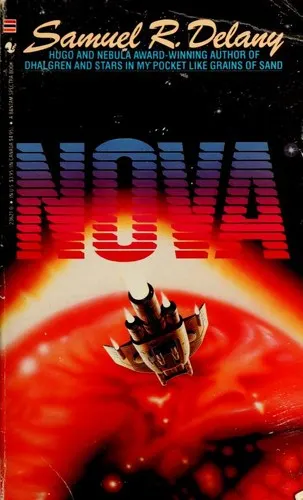
A scarred aristocrat recruits an eccentric crew for an expedition into the heart of a stellar catastrophe, but Delany treats space opera as raw material for something denser and stranger. Corporate dynasties, labor, myth, technology, and personal obsession collide in a novel that is both spectacularly adventurous and intellectually alive.
Like Bester, Delany refuses to pause politely while explaining his future. He throws the reader into it through charged dialogue, sensuous detail, abrupt invention, and characters whose bodies and ambitions bear the marks of their civilization. Published in 1968, Nova became a landmark whose cyborg laborers and information-saturated society helped prepare the ground later occupied by cyberpunk. It has the rare combination The Stars My Destination possesses: the speed of pulp, the compression of poetry, and enough ideas to keep detonating long after the action ends.