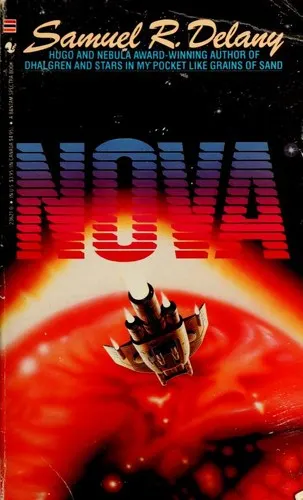
Books like Nova
Nova catches readers who want space opera at full burn without surrendering literary density: myth and machinery, reckless momentum, sensuous prose, and whole economic orders made visible through damaged, desiring people. These three novels strike that rare balance in distinct ways.
If you liked Nova, you’ll love these
Not lookalikes — kindred books. Each one shares something essential with Nova, and we tell you exactly what.
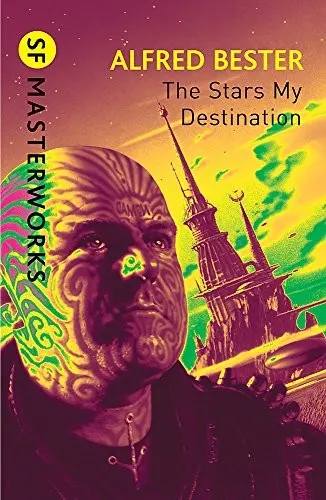
Bester supplies the concentrated voltage that Nova turns into symphonic space opera. Gully Foyle, an ordinary crewman abandoned aboard a wreck, begins as raw appetite and grievance; his ensuing transformation drives a novel of class violence, technological disruption, and furious self-invention. Like Delany, Bester treats pulp conventions not apologetically but as instruments capable of tremendous formal daring.
The prose lunges, flashes, and eventually breaks across the page in typographic experiments meant to represent altered sensation. Published in 1956, it became a foundational work of modern science fiction and a clear ancestor of cyberpunk. If Nova’s speed, danger, and hallucinatory intensity delighted you, missing Bester would mean missing one of the furnaces in which that aesthetic was forged.
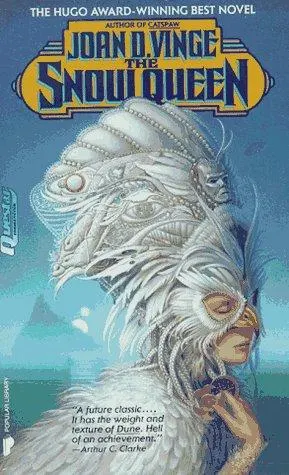
Vinge shares Delany’s gift for making an advanced civilization feel both futuristic and ancient. On the isolated world of Tiamat, political rule follows a ritual cycle while an interstellar power quietly manipulates local resources and beliefs. The fairy-tale architecture is never decorative: myth, ecology, colonial economics, and personal longing lock together until each explains the others.
Where Nova is hot, metallic, and compressed, The Snow Queen is expansive and immersive, giving its rivalries and divided loyalties room to ache. Its Hugo Award was recognition for a novel that proved grand space opera could be intellectually serious, emotionally lavish, and structurally intricate. Readers who loved how Delany placed a mythic quest inside a material history will find Vinge’s world difficult to leave.
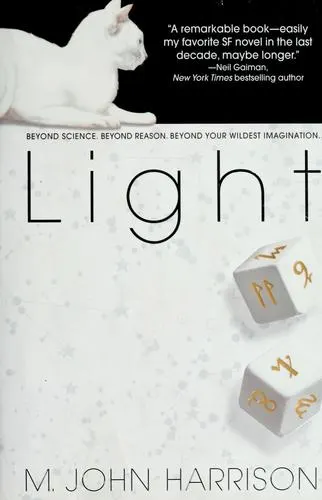
Light is what happens when Nova’s radiant space-opera energies pass through several decades of physics, cyberpunk, and literary skepticism. Its three opening strands—one involving a dangerously compromised physicist near the end of the twentieth century, two unfolding in a bewildering far future—are written in prose that can turn from hard brilliance to bruised intimacy in a sentence. Harrison’s universe is crowded with wonders, yet his real subject is the human hunger to escape identity, history, and consequence.
Winner of the James Tiptree Jr. Award, Light is revered as one of the defining literary space operas of the early twenty-first century. It refuses tidy world-building explanations and makes strangeness something the reader experiences rather than merely catalogs. Anyone who loved Nova for its density, erotic charge, fractured characters, and refusal to separate cosmic spectacle from private obsession should consider Light essential.