Author
Books like Robert A. Heinlein
7 books we recommend to Robert A. Heinlein readers, drawn from Starship Troopers, Stranger in a Strange Land and The Moon Is a Harsh Mistress — each with the reason why.
If you loved Starship Troopers
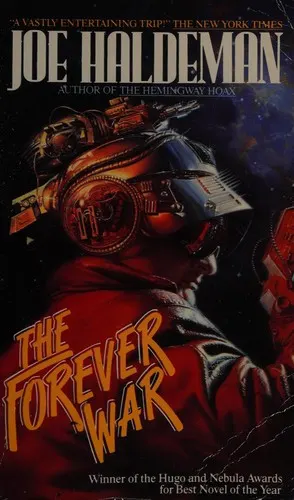
The essential companion to Starship Troopers. Haldeman, a Vietnam veteran, begins with recruits undergoing lethal training before sending them into an interstellar war distorted by relativity. His soldiers are capable professionals; his combat is lucid, physical, and frightening. But where Heinlein asks how service can create citizens, Haldeman asks what prolonged service does to a person whose society keeps changing without him.
Winner of the Hugo, Nebula, and Locus awards, The Forever War is not a simple rebuttal to Heinlein but a formidable argument conducted on the same ground. Reading only one side means missing half of military science fiction’s greatest conversation.
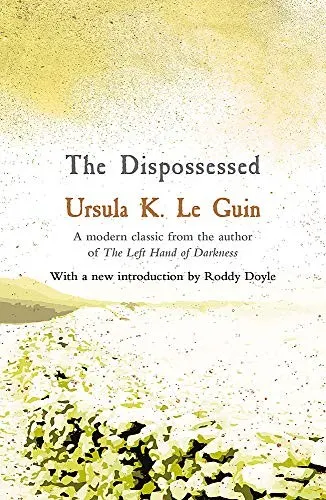
If what gripped you was Heinlein’s willingness to turn a novel into a serious debate about citizenship, freedom, property, and responsibility, read this. Physicist Shevek leaves the austere anarchist moon that formed him for its wealthy capitalist neighbor, discovering that both societies’ ideals look different from inside their institutions.
Le Guin gives political theory the pressure and intimacy of lived experience: work assignments, sexual customs, ambition, scarcity, public opinion. Like Heinlein, she respects readers enough to make ideas carry dramatic weight; unlike him, she distrusts every system’s claim to have solved human nature. This Hugo- and Nebula-winning classic is one of science fiction’s rare political novels that people continue arguing with decades later.
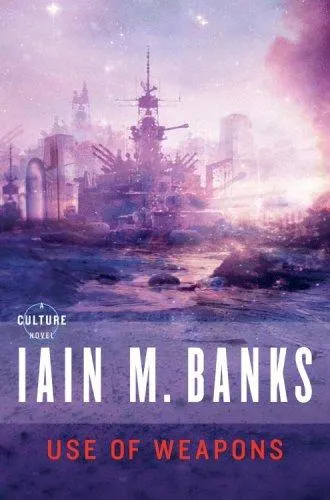
Banks’s mercenary protagonist, Cheradenine Zakalwe, has the battlefield intelligence, endurance, and professional focus that make Heinlein’s Mobile Infantry so compelling. He is employed by the Culture—a seemingly utopian civilization that nevertheless needs specialists willing to enter violent, morally compromised conflicts on its behalf. The result is a bracing examination of whether clean political ends can ever justify dirty instruments.
Banks delivers ingenious campaigns and formidable competence, but the novel’s real weapon is its structure: two interlocking narratives force you to reconsider what military excellence means and what it costs. Widely regarded as one of the Culture series’ high points, it offers the exhilaration of watching a master soldier work—and then refuses to let that exhilaration remain morally comfortable.
If you loved Stranger in a Strange Land
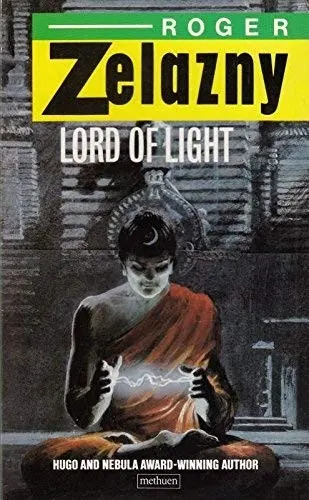
If Stranger in a Strange Land delighted you by turning religion into something at once sincere, theatrical, liberating, and dangerous, Lord of Light is indispensable. On a colonized planet, technologically enhanced rulers have assumed the identities of Hindu gods. Against them stands the elusive Sam, who adopts the language of Buddhism as both spiritual challenge and revolutionary weapon.
Zelazny writes with swagger, wit, and mythic radiance; theological debate can become political sabotage, and a joke can suddenly open onto metaphysics. Yet beneath the dazzling conceit lies Heinlein’s favorite kind of troublemaker: a charismatic man using ideas to break humanity out of a system it has mistaken for the natural order. This Hugo-winning classic remains one of science fiction’s most audacious treatments of invented divinity—and few novels make rebellion sound so seductive.
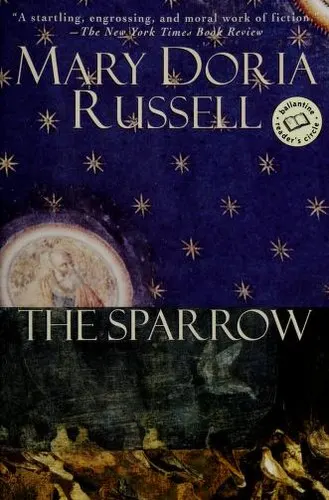
The Sparrow begins with an irresistible first-contact proposition: after music is detected from another world, a Jesuit-sponsored expedition sets out to meet its makers. Its central figure, Emilio Sandoz, is a gifted linguist and priest whose intelligence, humor, friendships, and faith give the mission its emotional center.
Where Heinlein imagines the spiritual upheaval caused by a human raised among aliens, Russell asks what happens when humans carry their deepest convictions into an alien culture they do not yet understand. The result is warmer, more psychologically searching, and ultimately more harrowing than Heinlein—but it shares his fascination with language, communal love, religious authority, and the perilous confidence that one has finally learned to “grok” another people. Winner of the Arthur C. Clarke Award and cherished by readers far beyond science-fiction circles, it is the kind of novel that leaves its theological argument reverberating long after the story ends.
If you loved The Moon Is a Harsh Mistress
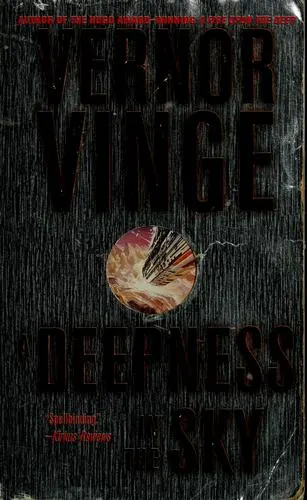
For the exhilarating competence of Mannie, Mike, and the lunar conspirators, turn to Vinge’s enormous, ingenious novel about rival expeditions reaching an alien world. Its traders, programmers, translators, and saboteurs fight with information, technical improvisation, patience, and a precise understanding of how organizations fail.
Vinge’s great subject is the political power hidden inside technology: who controls the interfaces, who defines reality, and how intelligent people preserve freedom inside a system built to manipulate them. The plot operates like an immense machine whose components gradually reveal their purpose, while the characters give its struggle real moral weight. This Hugo winner is widely regarded as one of Vinge’s masterpieces; few novels offer a richer feast for readers who want their revolutions engineered rather than merely proclaimed.
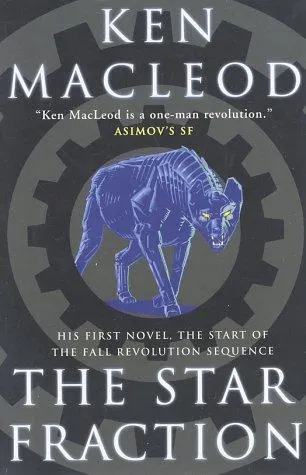
MacLeod takes Heinlein’s intoxicating mixture of political theory, weaponry, jokes, factional maneuvering, and dangerous computing, then throws it into a fractured near-future Britain where every ideology seems to have acquired its own border checkpoint. A mercenary and a young programmer become entangled with an artificial intelligence whose political significance may exceed anyone’s plans.
The pleasure lies in the speed and density of the argument. Marxists, libertarians, nationalists, soldiers, and machines all have ideas sharp enough to wound one another; nobody exists merely to lose a debate. MacLeod’s Arthur C. Clarke Award–shortlisted debut became a cult favorite because it has both the brain of a political thought experiment and the pulse of a thriller. It feels less like an imitation of Heinlein than a brilliant, unruly descendant determined to continue the family argument.