Books like Lord of Light
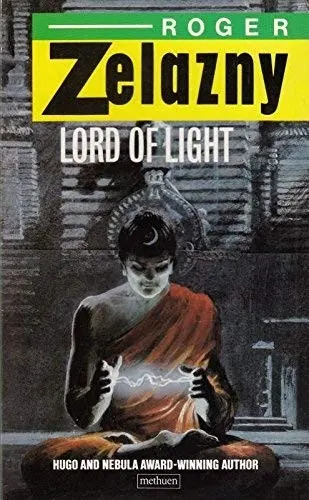
Lord of Light’s great trick is not that its gods are machines, but that theology, political revolt, and a charismatic rogue’s sleight of hand all become the same kind of combat.
If you liked Lord of Light, you’ll love these
Not lookalikes — kindred books. Each one shares something essential with Lord of Light, and we tell you exactly what.
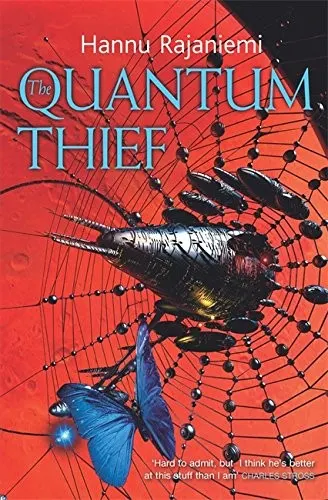
Jean le Flambeur begins in a prison where cooperation and betrayal are enforced as game theory; his rescue only recruits him into a far stranger contest. Rajaniemi, like Zelazny, trusts readers to catch up with a world of posthuman powers, engineered identities, contested memories, and technology so advanced that it governs existence like divine law.
But the deeper resemblance is Jean himself: a flamboyant strategist whose wit, vanity, and concealed purposes make intelligence feel thrilling. This dazzling debut helped restore genuine mystery to hard science fiction. If you loved watching Sam turn metaphysics into insurgent theater, you need to meet Jean le Flambeur.
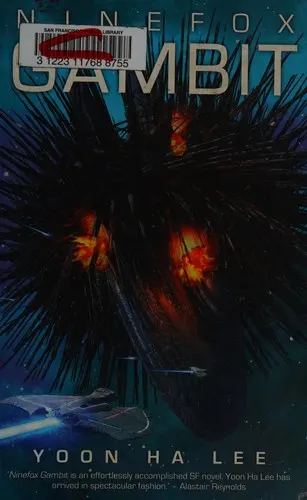
In Yoon Ha Lee’s empire, ritual observance and mathematical calendars determine what technology can do. When Captain Kel Cheris commits an act of tactical heresy, she is ordered to retake a fortress with the help of Shuos Jedao—a brilliant, centuries-dead general preserved as a weapon and remembered as a mass murderer.
Here is the Lord of Light kinship at its sharpest: belief is infrastructure, orthodoxy is coercion, and rebellion means altering the conceptual machinery of reality. Lee replaces Zelazny’s swagger with icy tactical pressure, then grounds the strangeness in the charged relationship between Cheris and Jedao. Winner of the Locus Award for Best First Novel and a Hugo and Nebula finalist, it is one of the defining space operas of its generation.
Jane is an enslaved changeling working in a factory when she encounters a damaged, sentient iron dragon—a predatory machine with the shape of legend and plans of its own. From there Swanwick builds a faerie world of assembly lines, shopping malls, magical hierarchies, and ancient rites, refusing to let myth remain picturesque or innocent.
The pleasure for a Zelazny reader lies in the collision: sacred archetypes meet ruthless modern systems, while a resourceful protagonist tries to use those systems without being consumed by them. Swanwick’s prose is fast, sardonic, and barbed; his wonders always have teeth. Now regarded as a cult classic of anti-fantasy, this is the rare book that fuses machinery and mythology without reducing either to decoration.